Bella Chen, Betsy Chen, Hannah Zhong, Rachel Zhang
Mira still remembers the exact texture of those first three days in Bangkok. The hunger of her children, the sound of her own crying, the money that had vanished into a stranger’s pockets before she had the chance to learn how to say thank you in Thai. She had crossed a border to escape one kind of danger only to be met with another. This was not the freedom she had imagined.
Mira’s family left Pakistan because of their religion. As Ahmadiyya Muslims, they were targeted because of their faith, leaving them completely exposed to danger. Her husband faced armed robbery for funds he had already deposited in the bank. Her home was broken into while her children slept. “We were born in Pakistan, but because we are Ahmadiyya Muslims, the majority does not accept us,” Mira explains. Although Thailand may have been distant and unfamiliar, it offered what Pakistan never could; the ability to walk outside without constant fear or paranoia.
Yet safety did not bring legal security. While Thailand has a history of hosting displaced populations, it remains non-signatory to the 1951 Refugee Convention and its 1967 Protocol, causing people like Mira to live with little legal protection. Without official status or legal protection, they are left dangerously exposed to exploitation. Mira and her family learned this the hard way before even leaving the airport. A stranger offered to help her family navigate immigration, only to take off with everything they had, taking advantage of the fact that they were terrified, did not speak the language, and were powerless to report him.
Mira’s experience reflects a broader paradox faced by many refugee women in Bangkok. While displacement may provide safety from persecution and greater personal freedom, the absence of legal protection creates new forms of insecurity that shape everyday life.
Safety without Security: Living in Legal and Economic Uncertainty
Legal insecurity
The absence of legal recognition is one of the most significant factors shaping refugees’ everyday lives in Thailand. Without legal status, many asylum seekers live in a constant state of uncertainty, fearing arrest, detention, and deportation. Mira described the challenges of living under the constant fear of possible arrest and detention, explaining that she and her family must live quietly because neighbors have threatened to report them to the police for being too loud.
This insecurity is not experienced by Mira alone; numerous asylum seekers and refugees live under anxiety due to their undocumented status. “Living in Thailand as a single mother without a valid visa is extremely challenging. We are always afraid of being arrested by the police,” one Sri Lankan woman explained. She explained how her undocumented status made simple daily activities such as going to a clinic risky, as waiting at a bus stop could expose refugees to police checks and possible arrest. Her experience illustrates that legal insecurity affects far more than refugees’ legal status itself—it shapes their everyday decisions, limits their freedom of movement, and restricts access to essential services. Legal insecurity therefore becomes part of everyday life, making even ordinary activities feel uncertain.
Beyond the constant fear of arrest and detention, legal exclusion also produces severe economic consequences by preventing asylum seekers from accessing formal employment.
Economic insecurity
Beyond these insecurities, their lack of legal status creates an additional financial burden, making them economically dependent and affecting their daily lives. Mira arrived in Bangkok with limited financial resources, and her and her husband’s inability to work legally created severe economic hardship. “I would do anything for money,” said Mira, expressing the desperation caused by financial pressure. Her statement reflects more than just personal struggles; it highlights how structural barriers force refugees into situations where survival depends on accepting any opportunities that are available, even when those opportunities are unstable or risky
Financial stress affects nearly every aspect of asylum seekers’ and refugees’ lives. Many have stated that the inability to work and ongoing financial pressure remain among their “biggest challenges.” For example, another Pakistani family of three experienced severe hardship due to financial difficulties. Both parents were unable to work legally. As a result, they were unable to pay rent for two months, resulting in the landlord repeatedly threatening eviction. Their unstable income also resulted in food insecurity, with the family sometimes surviving on only one meal a day or none at all. This illustrates how a lack of legal work rights creates a chain reaction: one restriction triggers multiple deprivations. Economic insecurity is not a temporary difficulty; it becomes prolonged, making it increasingly difficult for asylum seekers and refugees to regain stability or improve their living conditions.
However, the consequences of economic insecurity extend beyond material deprivation and increasingly affect refugees’ psychological well-being.
Psychological consequences
Mira described experiencing anxiety and mental illness, explaining that her mouth becomes dry and she gets headaches simply from thinking about her struggles. These reactions reflect how structural challenges turn into ongoing psychological strain.
Another Pakistani woman shared a similar sense of distress. “This is very harmful for me because God gave me hands to work, but I have no opportunity. This is very painful for me,” she said. Her words reveal the deeper emotional impact of economic insecurity and the loss of independence and purpose that can come with being unable to work. Being unable to work not only limits income, but also takes away individuals’ independence and sometimes even self-worth. Although she finds joy in helping others, her inability to support herself has resulted in depression, leading her to take antidepressants.
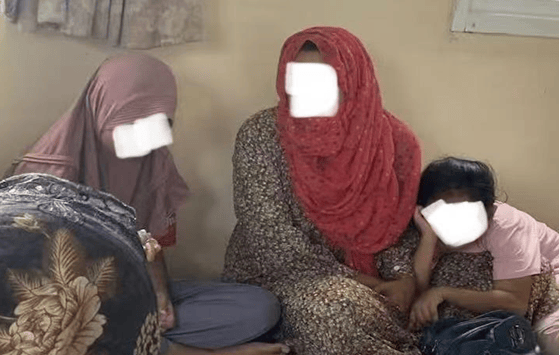
Many asylum seekers in Thailand face similar emotional and psychological challenges, as prolonged uncertainty, financial instability, and lack of opportunity continue to impact their mental health and overall well-being.
Legal exclusion therefore creates a chain reaction: it limits the ability to work, contributes to economic insecurity, and can create significant psychological distress. These interconnected challenges make it extremely difficult for asylum seekers and refugees to rebuild stable and meaningful lives.
Bearing More than Survival: Women’s Invisible Burdens
Beyond the shared insecurity of displacement- the missing legal status, the informal work, the constant financial pressure- female asylum seekers in Bangkok carry a second, less visible layer of hardship: one shaped specifically by their gender. Mira’s own story, marked as it is by fear and loss, is in some ways a fortunate one. She has landed in a relatively safe and supportive community, and by her own account, has not faced the most severe risks that other women describe. Her relative safety, however, does not make those other experiences less important. Instead, the different experiences of these women show that displacement and legal insecurity are not experienced in exactly the same way by everyone.
Personal safety and access to protection
For many women, the danger does not end at the border; it simply changes shape. One Sri Lankan woman described being followed by a drunk man in Thailand, and said plainly that Thailand did not feel safe to her. Her undocumented status meant that calling the police was not an option, because doing so risked her own arrest rather than protection. This creates a difficult choice: women may have to weigh the danger of seeking help against the risk created by their own legal status. The system that should provide protection can therefore become another source of fear.
Gendered economic and health challenges
The burden of financial insecurity also falls unevenly along the lines of gender, most visibly in the smallest, most unavoidable expenses. One woman estimated spending around 100 Thai Baht a month on sanitary pads; while financially modest, it is a real strain against an unstable income. Another woman had no such budget to speak of; she could not afford pads at all. Instead, she cut cloth into pieces to use in their place. These are not dramatic crises in the way that violence or arrests are, but they are constant, and they accumulate.
This economic disadvantage extends into employment as well. Several women reported eating less than men, largely because the limited work available to asylum seekers tends towards manual labor- physically demanding jobs that women, facing their own physical limitations or simply fewer opportunities, are less able to access on equal terms. Women are left with a weaker financial safety net than men, even in communities already struggling with poverty.
These examples do not mean that all female asylum seekers experience the same difficulties, or that men do not face serious hardship. Rather, they show how gender can shape the specific ways in which economic insecurity is experienced.
Motherhood and caregiving
For mothers, these pressures compound. Several women described motherhood as one of the most challenging parts of their situation. In conditions with so little to give, their intense devotion to their children creates burdens that are nearly impossible to bear. Mira’s sisters, raising three sons alone, talked about how neighbors complained about her children’s behavior, one more source of stress layered onto an already exhausting effort to survive. Her sons, she said, “didn’t understand my struggles,” a brief statement that carries the loneliness of caregiving without support, without a partner, without anyone fully able to see what the effort costs her. And yet it is this same motherhood that gives her a reason to keep going. “If I die today, or if I die tomorrow, what will happen to my children?” she asked. Far from reflecting defeat, these words define the exact reason she continues to fight.
Female asylum seekers and refugees, then, may carry forms of pressure that are closely connected to gender and caregiving: the risk of gender-based violence, health needs tied to their bodies, and the disproportionate share of caregiving labor. These pressures act on women both physically and mentally, often invisibly. And yet within that same burden lies something like its opposite. For many mothers, their children are not only a source of pressure but a source of purpose, the reason hardship becomes survivable. This is why gender cannot be folded into a general account of vulnerability. Gender is not a category of hardship among others. It is a lens that changes what vulnerability even looks like, reshaping how danger, poverty, and resilience are experienced from the inside. It is this same lens, turned towards purpose rather than pressure, that reveals what comes next: women are not passive beneath the heavy weights they carry.
Displacement is not experienced in the same way by all refugees. For women, legal exclusion is further compounded by gender roles and caregiving responsibilities, creating challenges that extend beyond legal status alone.
This is why gender is important to understanding vulnerability. Legal insecurity, poverty, and displacement are shared problems, but women may experience and respond to these problems differently because of their gender roles and responsibilities.
Rebuilding Lives: Agency and Resilience amid Uncertainty
The challenges above do not mean that women are simply passive victims of their circumstances. Instead, the interviews show how they actively try to rebuild their lives within the limited choices available to them.
Livelihood strategies
Yet despite the overwhelming obstructions, female asylum seekers and refugees have exhibited remarkable determination while incessantly seeking to re-establish their normal lives in Bangkok. For some, navigating urban survival has meant acquiring new skills, earning small but inconsistent amounts of income, and finding a sense of purpose at the same time.
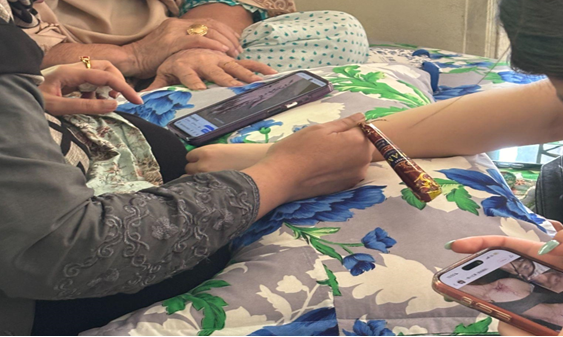
For Mira, her husband was displaced from his workplace after seven years of arduous manual labor because of government inspection of work permits. This urged her to seek work through catering orders at BRC, an NGO working under UNHCR, and ultimately the Click Aroi Project by Asylum Access Thailand (AAT), and she became well known as “Chef Mira”. In her words: “I [she] had four children: my two daughters, my son, and my husband.” Cooking for her has become more than a survival tool and a hobby. It has become a way for her to use her own skills, earn an income, maintain connections with NGOs, and regain a sense of value within her community. In the following years, she maintained her connection with several local NGOs. Because of her comparatively stable income and plentiful resources, she steadily progressed to become an admired figure in the community. Her example shows how women can use their existing skills and new opportunities to regain some degree of control over their lives, even when their legal and economic choices remain limited.
Mira is not the only example. Other female refugees in the community have also explored their unique ways of finding meaning and reducing stress. For instance, Mira’s sister sometimes stays awake in the middle of the night while her three children are sound asleep. After a day of exhausting work, having no time for herself to rest, she relieves her stress and changes her mindset through nail polishing or makeup. Like her, through those small hobbies and pleasures, many female refugees are able to comfort themselves from overwhelming stress and anxiety. For most of them, minor moments like this, combined with their unfaltering sense of responsibility as a mother, can help them maintain a sense of normality and personal identity during an exhausting period.
These examples show that rebuilding does not always take the form of major achievements. Sometimes it means finding a way to earn a small income, learning a new skill, maintaining a hobby, or simply creating a few moments of normal life.
Community support
In Bangkok, refugees and asylum seekers have actively sought assistance from NGOs as one way of rebuilding their livelihoods and supporting one another. For instance, aside from providing lessons in cutting and sewing, the NGO Hope-Bangkok created a platform to sell those refugee-made fabric products that allows refugees to cover basic consumption costs. Navigating the platform provided by Hope-Bangkok, a Sri Lankan woman previously with no means of income could earn approximately 5000-15000 Thai Baht each month, varying depending on the season. “We talk to each other and encourage one another to stay strong, be peaceful, and avoid falling into depression,” she claims. Hence, those handcrafts and other similar activities not only illustrate the refugees’ efforts to create income but also exhibit the deep reciprocity and altruism that emerges within those refugee communities through such activities.
However, community support does not merely apply to NGOs that provide assistance programs. Female refugees who were empowered by their experiences also devoted time and effort to create a supportive community. In Mira’s example, she offered help to the best extent to her community members who experienced similar distress. “I want to help people because once I was struggling, and no one helped me. But [when] I met some people who helped me…they said that they don’t need thanks. When you are able to help, you can help. So, it makes a chain to help each other.”
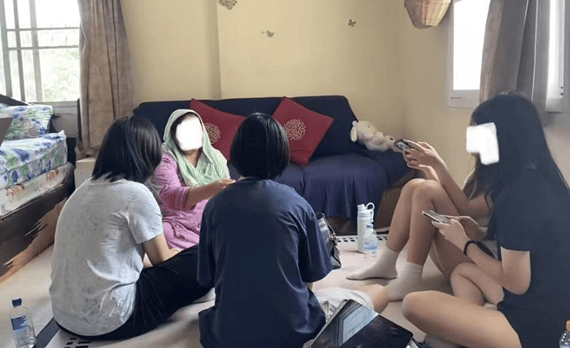
Mira’s story shows a movement from receiving help to becoming someone who provides help to others. Her experience of vulnerability therefore became part of the reason she wanted to support people facing similar difficulties. Being able to consider beyond their own survival and well-being and behave altruistically requires considerable compassion and courage, especially when female refugees like Mira simultaneously experience similar hardships as the benefactors do. Her example, thus, illustrates that their lives are not merely shaped by vulnerabilities, but also by their ability to maintain relationships, support others, and exercise some degree of agency within their community.
At the same time, it is important to distinguish between external support and refugee agency. NGOs provide resources and opportunities, while refugees themselves decide how to use those opportunities and how to support one another. Their ability to rebuild therefore depends on both available support and their own efforts.
Identity reconstruction
Further, their experiences in overcoming hardship can also contribute to their character growth in resilience and self-efficacy on a personal level. To Mira, her journey was indeed hellacious, but this experience has also enabled her to reconsider her potential. In the interview, she claimed that: “If I had not come here, maybe my children and I would not be stronger…we learn more things [here]. We become stronger.” As such, like the pioneer plants that sprout from bare volcanic land, where scarce water and boiling heat engulf every hint of life, she relentlessly alters the environment that she is bound to, just to provide a more habitable shelter for her family and others entering the city. Her experience has changed how she understands herself: not simply as someone who has suffered displacement, but also as a mother, worker, community member, and someone capable of helping others. At the end, she emphasized how she strived to become a role model for her children and said: “I am proud of myself and my child”.
Their experiences as a refugee didn’t only make them stronger as individuals; they also reshaped their aspirations for the future and their understanding of what they could contribute to others. For example, Jannah is studying law in an online UK university she applied for while in Bangkok. “I really want to become a human rights lawyer. I want to work with NGOs like Geneva or UNHCR to know how they handle refugee cases and what the limits are,” she said. Her struggles as a female refugee in Bangkok encouraged her to provide all the support that she could to other refugees, which ultimately determined the direction of her future studies. “I want to provide help as much as I can,” she added. Her goals reveal how refugees can turn their experiences into a desire to support others, consequently, it enables them to navigate their identity by supporting those in their community.
These female refugees have revealed their utmost strength and both practical and psychological resilience when confronting their challenges. This tenacity made them stronger and encouraged them to dispense benevolence to others facing similar predicaments, reshaping their identity, and eventually contributing to the reconstruction of their lives. However, this does not mean that suffering itself is positive or that hardship automatically makes people stronger. Instead, their resilience can be understood as a response to difficult circumstances. They continue to work, care for their families, support others, and imagine futures for themselves, even when the conditions around them remain uncertain. Their agency allows them to navigate their circumstances, but it does not remove the structural barriers they face.
Conclusion
Ultimately, the experience of refugees in Thailand demonstrates the far-reaching impacts of displacement. For women like Mira, reaching Thailand may have provided safety from the dangers they faced in their home countries, but it did not necessarily mean that they had found lasting security. Their stories reveal that forced migration, while offering freedom, often pushes them into a state of legal, financial, and mental insecurity. For women like Mira, these challenges are further shaped by their gender and caregiving responsibilities.
Despite these obstacles, they continue to show resilience by seeking work opportunities, fostering supportive communities, and building inner strength. Mira’s journey from someone who once needed help to someone who now helps others, as well as Jannah’s decision to study law and support other refugees, shows how women can find new forms of purpose and agency while rebuilding their lives. However, this resilience should not be understood as a solution to the structural problems they face. Their ability to adapt and support one another does not remove the legal and economic barriers that continue to shape their lives.
However, their determination alone is far from solving the survival issues completely. Their efforts to rebuild their lives remain vulnerable because the conditions around them remain uncertain. Many communities face the gradual closure of NGOs following the cut of United Nations funding. The termination of such organizations can significantly limit legal, financial, and educational support available for refugees. Moreover, the legal uncertainty surrounding their status remains unsolved. Without legal permission to work, refugees are unable to acquire stable, sufficient-income jobs or become financially independent from charities. As those lingering issues persist, they may continuously affect the well-being of future generations, trapping them in the constant cycle of trauma.
Thus, structural changes regarding secure legal status for refugees, more efficient screening mechanisms, and shorter wait periods for resettlement are necessary. The experiences of these women show that refugees are already willing and able to rebuild their lives; what they lack is a stable environment in which those efforts can succeed. Only when their resilience is supported by greater legal security and continued social support can refugees build a future with greater security, dignity, and independence.

