Yuhao Zhou
Every year, thousands of refugees flee to Thailand from war, religious persecution and violence. From Ahmadi Muslims in Pakistan escaping targeted attacks, to Sri Lankan Tamils escaping government persecution, to Somalian women escaping forced marriage and abuse, and to Burmese communities being pushed out by conflict, they are all hoping to achieve a better life in Thailand.
Yet Thai law does not grant any of these refugees the legal right to work, to earn a living to sustain their families. Thailand is not a signatory to the 1951 Refugee Convention, and without legal status or permission to work, many refugees face constant fear and live in danger of being arrested or detained. Faced with this predicament, refugees turn to informal channels instead. Informal labor such as sewing, teaching, or trash disposal, skill training through NGOs, reliance on community and family, and even NGO donations, are all methods that have been used by refugees to survive. However, while these strategies help refugees meet their immediate needs, they can also leave them vulnerable to legal insecurity, economic exploitation, and uncertainty about their long-term futures.
How refugees adapt to legal work restrictions
Earning an income through informal work
Refugees in Bangkok try to earn a living wage through small, informal jobs. Cooking, sewing, and teaching are some of the most common jobs, as many of these refugees already possess these skills. It also helps that this kind of work rarely requires strict regulation and oversight, allowing them to work under the radar.
A Pakistani college student teaches Thai to other refugee children in her community, helping them reach the level required to be able to attend local schools while also making 350 baht per month, helping to support her family’s financial situation. Her mother cooks and prepares dishes as part of NGO-led events, work that was routed to her by the NGO.
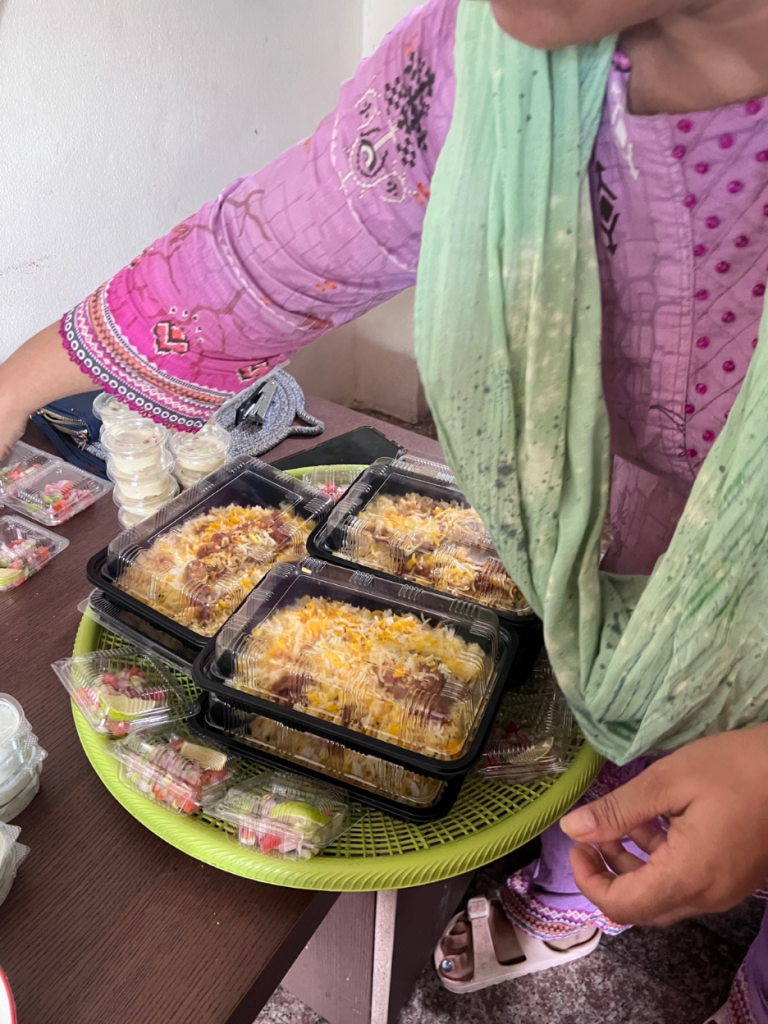
These jobs often do not require higher education or formal employment arrangements, meaning refugees can enter them relatively quickly and draw on skills that they may already have to earn a living, rather than waiting on more formal job opportunities that they are barred from.
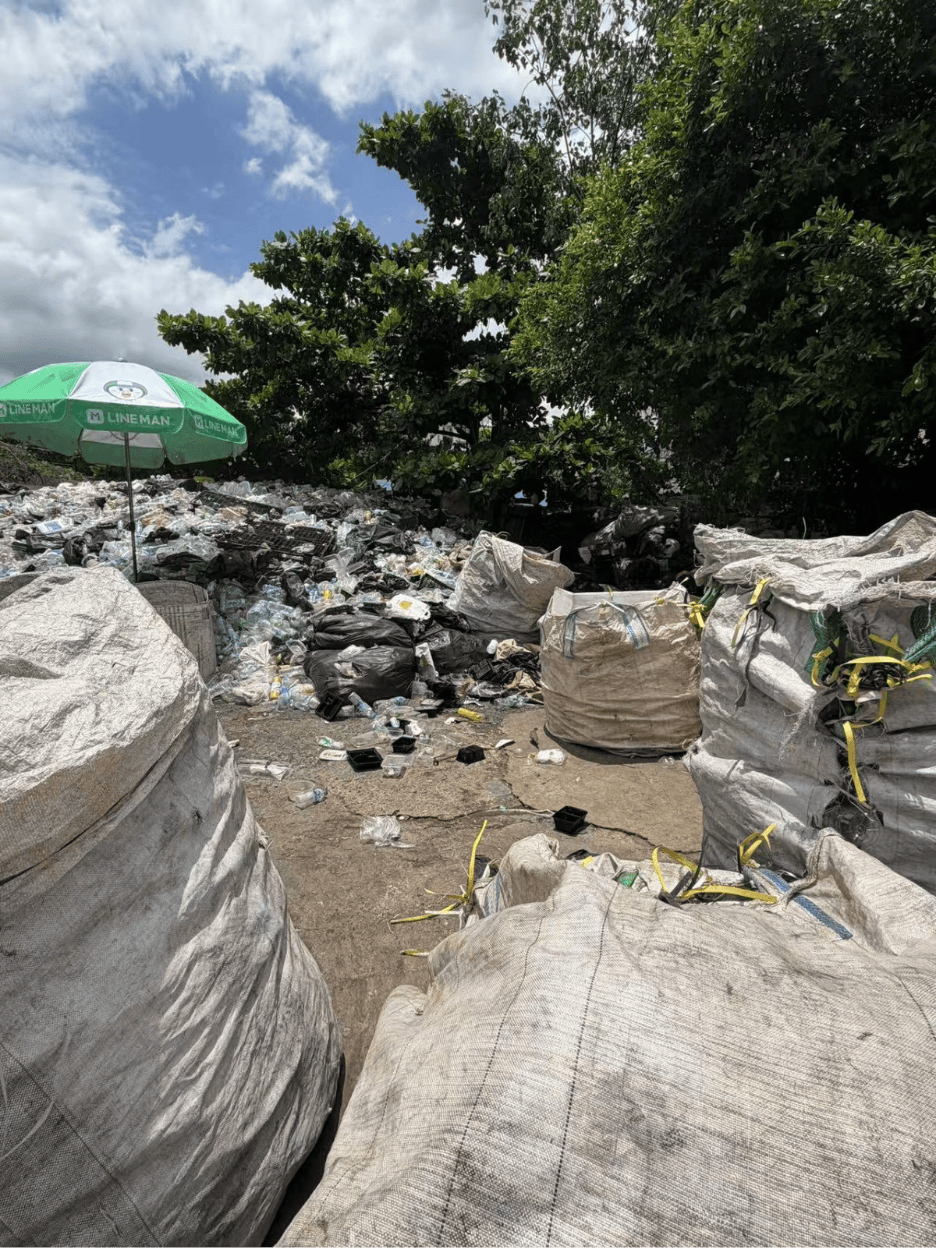
For some, there are also more organized forms of labor available based around demand and necessity. In large Burmese communities, trash disposal has emerged as a steadier form of labor available for them. Private trash disposal firms also prefer hiring these Burmese migrants, as they can work at a lower wage and therefore lower the firm’s costs. A local NGO worker, who has over 30 years of experience in Thailand, explained that these people are able to earn around 300 baht per day for collecting and disposing trash, work that only exists because young Thai people are unwilling to do it. The essential nature of this work also creates a relatively steady demand for labor, providing some refugees with a more stable source of income than other forms of informal work.
These examples show that refugees enter different forms of informal work depending not only on the skills they already possess, but also on the kinds of labor that are available and in demand. While these jobs provide an important source of income, the conditions and stability of the work can vary considerably.
Developing skills to improve livelihood opportunities
This pattern of developing skills that can also generate income can be seen across almost every interview. At Hope Bangkok, refugees from countries like Afghanistan, Somalia, and Sri Lanka are trained in sewing and accessory making skills, while also being able to access English, computer, and math lessons. One young Afghan man had already learned sewing from his sister back home, allowing him to develop his skills and turn it into a source of income. People also learned these skills from scratch. A Sri Lankan woman only started learning sewing after her husband passed away in 2008, forcing her to find a way to provide income for her family. A Somalian woman who fled a forced and abusive marriage, only learned sewing after arriving at this NGO, with the support of the workers and training lessons.
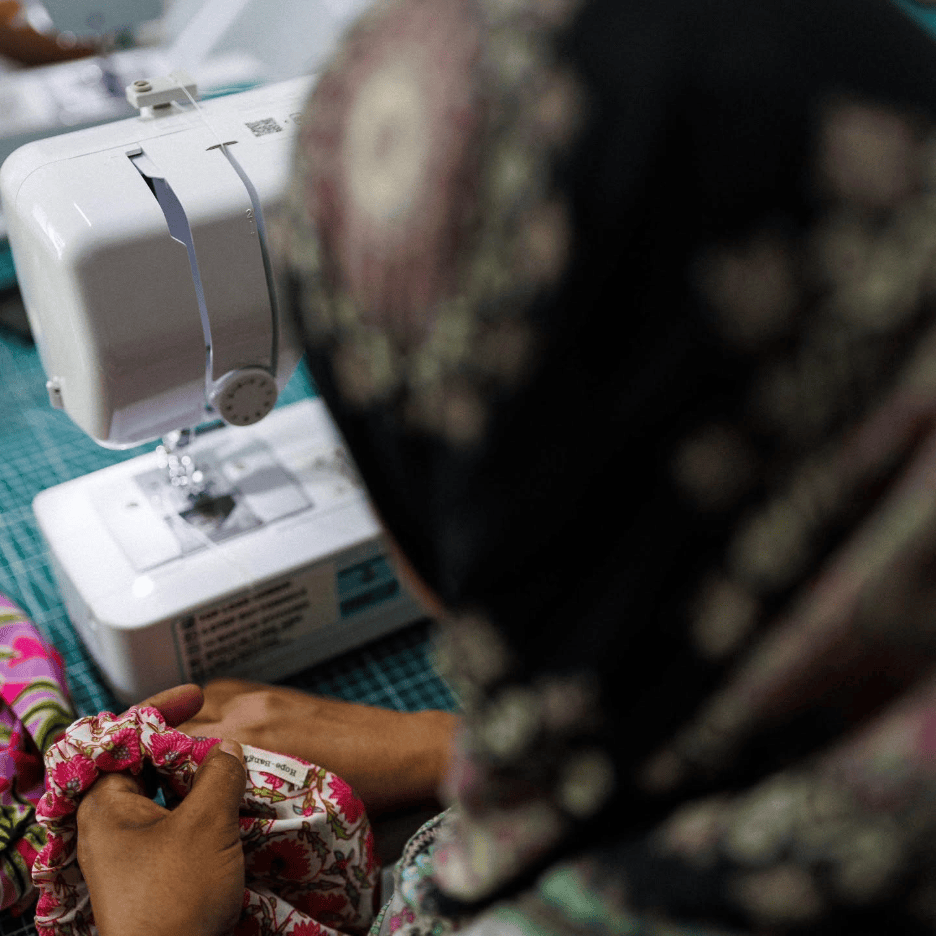
In each case, refugees are not just accepting whatever work is available, but deliberately building skills that can support them now and improve their prospects later. These sorts of skill development programs can also serve many immediate purposes. It helps refugees generate income in the present while also improving their confidence, employability, and preparedness for possible resettlement or future employment. This demonstrates refugees’ agency and long-term planning rather than portraying them simply as aid recipients.
Navigating everyday risks
Refugees also adapt to the risks associated with their legal situation in more direct ways, rather than relying entirely on NGOs. A Pakistani man, who has been in Thailand for 13 years, works as a driver and obtained a Thai driver’s license to reduce the risk of being detained by authorities. This kind of small adaptation can also be seen through language. A Sri Lankan woman, who has lived in Thailand for 12 years and can speak fluent Thai, mentioned how she is far less likely to be arrested compared to refugees who have just arrived. Language functions as its own form of protection, allowing these refugees to better assimilate into the Thai community and build their lives there.
For these interviewees, language, practical knowledge, and familiarity with the local environment have become ways of navigating everyday risks. These adaptations do not remove the legal insecurity they face, but they allow refugees to feel more capable of navigating their daily lives and work in Thailand.
Surviving through community and NGO support
However, for most refugees, especially if they are not able to receive support from NGOs, covering their monthly living costs, such as rent, food, and other living expenses, poses a challenge.
When this happens, refugees turn to their community for help. Families rely on neighbors, donations, and even kind landowners, who are more understanding of their situation and therefore not as strict on collecting rent. One family even outright said they sometimes go full days without eating, having to rely on support from neighbors and friends.
Survival for these refugees often depends on the actions of the collective instead of their individual families. These community networks act as a safety net, helping these refugees when work is unstable, income is insufficient, or employment is temporarily unavailable.
Taken together, these examples show that refugees respond to restrictions on formal employment through a range of strategies. Some rely on skills they already possess to find informal work, while others develop new skills, adapt their behavior to navigate everyday risks, or rely on community support when their own income is insufficient. These strategies allow refugees to maintain a degree of independence and stability, but they do not remove the legal and economic insecurity underlying their situation.
Risks faced by refugees in the informal economy
While informal work provides an important source of income, it also exposes refugees to multiple forms of insecurity. These risks extend beyond employment itself and include economic vulnerability, legal insecurity, long-term social consequences, and growing uncertainty as institutional support declines.
Economic insecurity and labor exploitation
Because refugees lack legal work rights and labor protection, they often face unstable employment, low wages, and exploitation within the informal economy.
One Pakistani father, who suffers from back pain, mentioned occasionally finding work at a hotel but is consistently underpaid and has even been threatened with being reported to immigration. His wife, who had finally found a job after a long period of searching, lost it after their neighbor found out and effectively stole the job. This highlights how precarious even a seemingly secured job is, when these refugees are unable to resist or complain due to their lack of documentation.
However, not all may experience this kind of exploitation. A longtime NGO worker who helps Burmese communities explained that mistreatment is rare for Burmese people who work at these trash disposal companies, since the demand for this kind of labor is high. Employers want to be able to lower their costs and utilize cheaper wages for these people, so mistreatment rarely happens as they can also simply walk away.
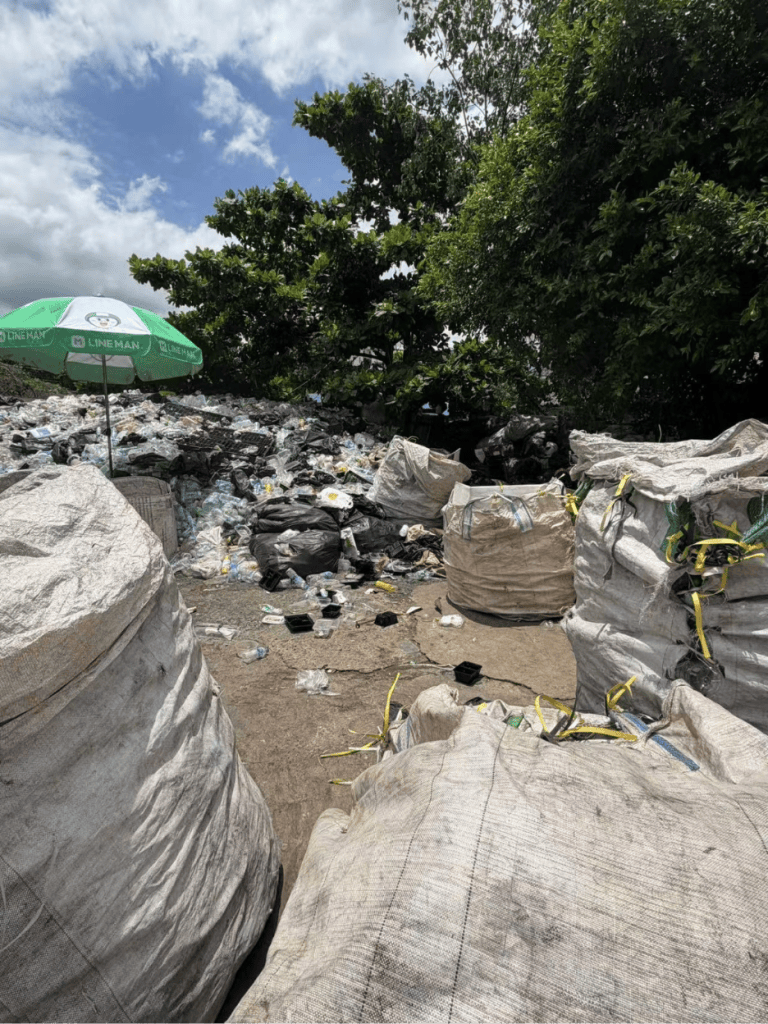
This suggests that the level of exploitation also varies depending on the demand for the kind of labor that refugees are providing, and the needs of local employers. Rather than affecting all refugees equally, vulnerability within the informal economy depends on factors such as labor demand, employer dependence, and the type of work available. Informal work therefore creates vulnerability, but it does not necessarily result in the same level or form of exploitation for every worker.
Legal insecurity and fear of detention
Beyond economic risks, refugees also face constant legal insecurity because they lack recognized legal status in Thailand.
Police raids have occurred at their living compounds, and several refugees describe having been arrested before. One father spent two months in a detention center after being arrested, during which an NGO routed extra cooking orders to his wife specifically so she could raise enough money to post his bail. This constant fear and insecurity shape their lives, leading them to look for jobs where safety is the priority. For example, driving with a Thai license instead of carrying a passport, teaching language lessons from home, and learning Thai are all methods that refugees have used to try and avoid police detection. For some, the fear of detection or arrest never truly disappears, especially for refugees who have never been arrested before.
These examples show that refugees continuously adapt their behavior to reduce legal risks. However, such adaptations can only minimize rather than eliminate the insecurity associated with their legal status.
Long-term social consequences
The effects of legal and economic insecurity extend far beyond employment, influencing refugees’ health, education, and future opportunities. Healthcare access still remains incredibly difficult, due to high costs and also lack of availability since they do not have official documentation. These consequences are not equally distributed either: some families may have injured or sick members that require more attention and healthcare than others, causing them to fall even further behind.
Children’s education also suffers due to families being uprooted and coming to a country with a completely new environment and language. Some kids are unable to receive schooling at all, while others are able to go to school but still face discrimination or language issues at Thai schools, making it harder for them to receive a proper education. In one Pakistani family, their son had to quit school due to their family’s financial struggles, instead also joining the work force as a driver. The futures of these refugee children often have to be sacrificed to ensure that they can survive now.
These challenges demonstrate that the consequences of legal exclusion accumulate over time, affecting not only refugees’ current livelihoods but also their long-term wellbeing and prospects.
Declining institutional support
These challenges have become even more severe as many NGOs experience declining funding and reduced capacity to provide support. Interviewees mentioned how NGO funding has decreased, and some NGOs have even planned to close as a result. Many NGOs who once relied on US aid and US funding now find themselves struggling to find funding due to US aid cuts. Families that rely on these NGOs for food packages, donations, or healthcare referrals now find themselves having to face these risks on their own.
This decline in institutional support is particularly significant because many refugees already depend on a combination of informal work, community support, and NGO assistance to meet their basic needs. When NGO support becomes less available, families may have fewer alternatives when work is unstable, income is insufficient, or healthcare and other essential needs arise. These pressures can also have deep psychological and emotional effects on refugees. One mother described taking medicine for depression and crying by herself at home while her children are at school, while another described living in a perpetual state of uncertainty, as institutional support from these NGOs shrink.
As institutional support weakens, refugee households become increasingly vulnerable, with financial insecurity, reduced access to services, and psychological stress reinforcing one another.
Resettlement over informal work
Informal work, skills training, and community support let refugees sustain their daily lives, but they cannot resolve the underlying problems that refugees face: the lack of legal status. Facing a combination of exploitation, legal problems, and shrinking support from NGOs, most refugees that were interviewed said they would prefer resettlement over having a work permit. While a work permit would allow refugees to work and earn a living, it does not resolve the underlying instability from an absence of status. Resettlement is therefore seen by these interviewees as offering a more fundamental form of security, including legal protection, more stable access to healthcare and education, and freedom from the constant fear of police or immigration raids—things that informal survival strategies or even a formal work permit alone cannot provide.
Yet the process to resettlement is often unclear and increasingly slow. A lot of refugees described having waited in Thailand for around 10 years, yet there have still been no signs that they are close to getting resettled. Families also reflected that resettlement seems to rely more on connections and sponsors abroad, rather than the actual situation and need of the families themselves. Those with relatives or friends abroad often find it easier to move through the process and eventually become resettled, while those with no connections often wait for long periods of time, even if their situation requires more immediate help.
For some refugees, however, their cases with UNHCR have already been closed. One family mentioned that due to their mother’s health problems after being detained at a detention center, they had no choice but to send her back to Sri Lanka. This led UNHCR to deem their case officially closed, even though 3 siblings still remained in Thailand. For these people, resettlement is no longer seen as a viable option. Instead, they try to find work in Thailand and aim for their long-term futures here, for example working at NGOs, taking university courses online, and learning Thai.
This shows that refugees’ choices are shaped not only by what they want, but also by what options remain available to them. For those who are able to continue pursuing resettlement, informal work and other survival strategies may be ways of getting through the waiting period. For those who can no longer rely on resettlement, these same strategies may become part of a longer-term effort to build a life in Thailand.
Conclusion
Suspended between their current living conditions and a long wait for resettlement, refugees are left to construct their lives with whatever skills they possess and whatever jobs they can find in Bangkok, be it sewing learned from a sister, driving learned from a father, or surviving on the kindness of neighbors. Their informal economy is evidence of a relentless need to adapt in a system which does not offer them any other solutions. But adaptation still has its limits. Without legal status or legal documentation, these risks will follow these refugees for the rest of their lives in Thailand, meaning that every strategy they find still remains fragile and vulnerable.
Resettlement may offer a more fundamental form of security for those who are able to pursue it, but the process is slow, uncertain, and not equally available to everyone. As a result, many refugees continue to rely on the same informal strategies that help them survive in the present but cannot, on their own, guarantee lasting stability, security, or dignity.

