Author: Zekun Chen, Qihan Liu, Ziyuan Liu, Zhixing Luo, Yixin Qiu (Listed alphabetically)
Introduction
The Three-River-Source region is located in southern Qinghai Province, covering the entire territory of the Yushu Autonomous Prefecture, Guoluo Autonomous Prefecture, Hainan Autonomous Prefecture, Huangnan Autonomous Prefecture as well as part of the Tanggula Mountains. It is the source of the Yangtze River, the Yellow River and the Lancang River. Herders account for more than half of the total population, and are the key group of concern in the sustainable development of Three-River-Source (Qinghai Provincial People’s Government, 2021; Qinghai Provincial People’s Government Information Office, 2024, October 28).
The sustainable development of the region involves four dimensions—ecology, business, culture, and community—which are mutually constraining and inseparable.
The ecological environment is the foundation of development. The Three-River-Source possesses vast alpine grasslands and rich biodiversity, but grassland degradation and the expansion of Heitutan (bare soil patches) caused by overgrazing have posed direct threats to herders’ subsistence. Local Tibetan culture serves as the spiritual bond of the community, with cultural elements such as Thangka, yak-hair tents, and the Tibetan language deeply embedded in residents’ daily lives. Yet in the process of modernization, these face inheritance challenges—the younger generation’s willingness to commit to Thangka and similar crafts has declined, and yak-hair tents have been almost entirely replaced by plastic tents in terms of practical utility. A harmonious and stable community is the carrier of development; the establishment of the Three-River-Source National Park has driven a large number of herders to transition from traditional grazing to roles such as park rangers. This restructuring of livelihoods has brought new income but is also accompanied by challenges such as language barriers and insufficient skills. Business development is a key component of economic growth, but current tourism revenue is highly dependent on government subsidies and constrained by seasonality, while handicrafts also face the impact of mechanized production.
The development across these four dimensions remains uneven: ecological protection has achieved some results, but a gap persists between herders’ environmental awareness and sustainable practices; cultural transmission faces the risk of disruption; participation in livelihood transformation remains low; and business development has yet to achieve self-sufficiency. Therefore, this paper takes the Three-River-Source region as its research subject, focusing on analyzing possible pathways for the four dimensions—ecology, business, culture, and community—to collaboratively advance regional sustainable development.
Ecological Resources Sustainability
Culture and Ecology
Tibetan culture in the Three-River-Source has been developed over thousands of years through generations, and the region’s cultural practices, lifestyles, and values have been shaped by the ecological conditions of the plateau. The significance of preserving Tibetan culture does not only lie in maintaining an essential symbol of Chinese heritage, but also about sustaining the balance between community, culture and environment
Local traditions and lifestyles are deeply tied to the natural environment, showing heavily on how natives’ daily practices connect deeply with the abundance of grasslands and water resources such as the Yangtze, Yellow, and Lancang Rivers. These resources allow Tibetan communities to cultivate a mature system of herding. Moreover, the natives are able to observe the environmental changes brought by climate and human actions, and thereby understand how humans should interact with nature and find the balance between resource use and preservation of the environment.
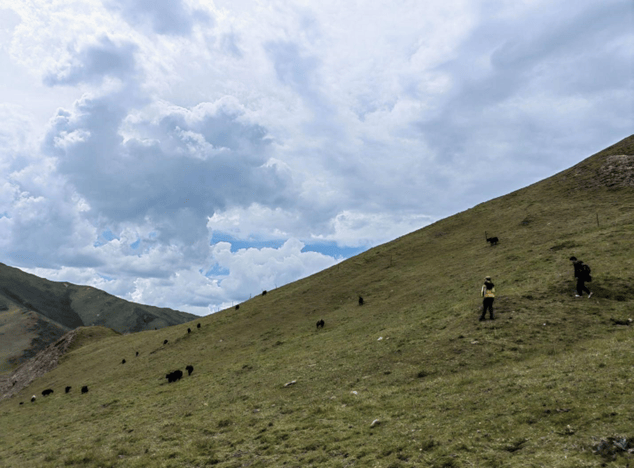
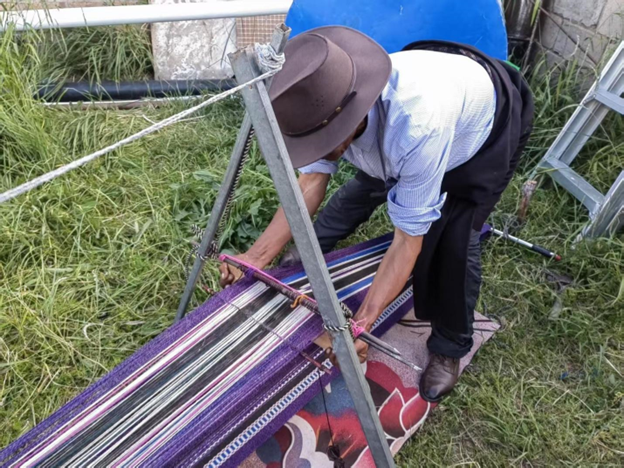
Cultural heritage further highlights the relationship between the Tibetan community and the environment. Traditional handicrafts, as a major recorder of culture, demonstrates the connection between community, culture and environment.
However, as modern communities start to develop and influence local Tibetans, the sustainability of these cultural practices and the environment faces new challenges.
Sustainability Challenges
Even with long-term interactions with the environment, sustainability is still not being perfectly achieved due to the difficulty of balancing traditional practices, ecological limitations, and the needs of community development.
One important challenge is the gap between environmental awareness and sustainable practices. Yet environmental awareness is not sufficient for long-term sustainability. Dancuo, a second-generation herder, points out that some residents, due to their lack of education and knowledge, tend to prioritize expanding their livestock production and receive more economic benefits while not fully recognizing the excessive livestock grazing can affect the huge area of grasslands through time.
The Qinghai Plateau Natural Museum guide says that excessive grazing can lead to grassland degradation, including reduced vegetation coverage and increased bare soil, which may further contribute to soil erosion and impacts on water resources. This shows that the resources, such as grasslands, can be greatly influenced by human actions and cannot support unlimited use. Nevertheless, Dancuo mentions that modern regulations cannot achieve the balance between natural resource use and the capacity of local ecosystems. Governments do not have the right to interfere too much with herding, and it is also not realistic to suppress their livelihoods in order to achieve the protection of sustainable development. Therefore, the lack of consciousness of impacts becomes a huge challenge.
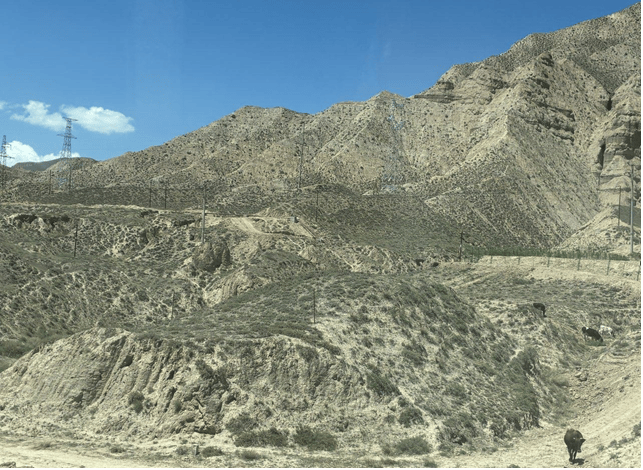
A further challenge appears when traditional cultural practices become connected with economic development. The creation of traditional handicrafts and publication create questions about how to maintain sustainable resources. Anpeng, the shopowner of Amdocraft, a profound handicraft producer company in Qinghai, claims that the sustainability of the use of raw materials still needs to be considered and refined in the future. Amdocraft prefer to use natural sheep wool, but they still consider using other wool that has been processed and manufactured from other factories to control the complexity and make their handicrafts easier to make and use. Even though Anpeng does look forward to achieving sustainable handicraft production, it is still challenging to fully achieve environmentally friendly in the face of economic revenues.
Overall, these reflect the complexity of maintaining the balance of understanding the ecological limitations of the environment and the social needs of local communities.
Community Roles
Despite the challenges, cultural preservation can bring numerous benefits to Tibetan communities by maintaining the long-term sustainability of communities that depend on these ecosystems.
The Qinghai Plateau Natural Museum guide explains how biodiversity brings numerous habitats and shapes the sustainability of the environment, making the ecosystem more resilient and resistant to environmental changes. The Qinghai Plateau Natural Museum guide explains it as a significant concept mentioned globally, and is one of the most critical elements of the environment. She also shows that local residents can be crucial participants protecting the environment and supporting broader ecological sustainability. Their experiences provide them knowledge and awareness toward climate changes and the effects to grasslands and natural resources. Therefore, local ecological knowledge becomes an important element to scientific conservation methods, because sustainable management requires not only environmental understanding but also the participation of natives who directly interact with these ecosystems.
To be more specific, human activities can significantly influence ecosystem stability. The museum guide introduces multiple ways how the natives preserve the environment. First, a lot of herders choose to relocate from pastures, their homes, and jobs to mitigate the effect of overgrazing. Second, they protect their livestocks to ensure the stability of the ecosystem. Third, they plant native plants and seeds on severely degraded grasslands or Heitutan to mitigate soil erosion. It is clear that native residents also play a huge role in preserving the environment, which the government is not the only force that is participating in supporting sustainability. These actions demonstrate that local residents are not only affected by environmental degradation but also actively contribute to ecological restoration, suggesting that long-term sustainability requires cooperation between communities and the policy makers instead of only having protection efforts led by only external authorities.
Beyond environmental protection, cultural practices can also create significant choices and economic developments for the community. Referring to Anpeng’s experiences, his goal of creating Amdocraft was not simply to operate a traditional handicraft business but to support local communities. The natives had no income and were desperately looking for jobs, and what they only had were sheep and yak. Therefore, the natives can sell their wool, yak skin, and cow hide and participate in the economy chain, benefiting from the development of cultural practices, also solving their poverty. This demonstrates how cultural industries can connect ecological sources with cultural preservation. Wool and livestock skins were normally available sources locally, but they can be used in the production of handicrafts and create economic opportunities such as jobs. These resources can encourage communities to participate more in protecting their livestocks and producing more resources, benefiting their own life and also guaranteeing the production and culture.
Overall, ecological resource sustainability in the Three-River-Source region depends on the interaction between ecosystems and local communities. Biodiversity provides the foundation for achieving environmental sustainability, and residents’ participation in cultural practices can preserve and protect cultural resources.
Future Strategies
To achieve long-term sustainability in the Three-River-Source Tibetan communities, the community and policies should focus more on ecological protection, community participation, and cultural continuity.
First, to address the gap between environmental awareness and sustainable practices identified in local communities, education towards environmental protection and sustainability should be strengthened among local communities, especially teaching youngsters since they have more time and opportunities to develop and maintain thoughts and actions in preserving the environment. With better understanding of the consequences humans’ actions bring to the environment, they can make better and more mature decisions when herding. They can also learn more about the importance of grasslands and biodiversity to make better decisions when encountering problems about nature.
Second, because local residents are not only affected by environmental policies but also important participants in conservation, they should be encouraged to participate more in conservation planning and making conversations with the government. Since the sustainability of the environment and culture require the actions and participation of residents, when the government and residents work together, more comprehensive analysis and policies can be made.
Lastly, based on the potential of cultural industries to connect local resources, community development, and cultural preservation, handicraft industries should balance economic development with environmental protection. Handicraft industries, in particular, should gradually prioritize more sustainable resource use and avoid exchanging environmental health for more industrial benefits. Only when economic opportunities and cultural and ecological values are balanced, can development be stable.
Overall, sustainable development in the Three-River-Source region requires an integrated solution that combines ecological protection, community involvement, and cultural continuity. Only when the environment, health, cultural practices, and community traditions can benefit each other, the ecological resources and Tibetan cultural heritages can be preserved for future generations.

