Author: Suyang Li, Yuhan Xu, Allen Zhang, Kairui Liu, Xinrui Dai (Names are listed in no particular order).
Global Warming Leads to Glacier Melt
From 1961 to 2020, the baseline annual mean temperature on the Qinghai-Xizang Plateau was 4.6°C, with baseline values of 5.0°C for Xizang and 2.8°C for Qinghai. In 2023, the annual mean temperature in Xizang was 5.6°C, 0.6°C above the long-term average; in 2024, it was 3.9°C in Qinghai, 0.9°C above average. Overall, the Plateau recorded a temperature increase of 1°C above the baseline. This shows that temperatures have changed significantly in recent years, with an overall upward trend.
Data from the National Climate Centre show that annual precipitation on the Qinghai-Xizang Plateau increased from 1981 to 2020, at an average rate of 14 mm per decade. From 2000 to 2020, the surface area of lakes on the Plateau continued to expand, with over 80% of lakes increasing in size—particularly in the central and northern regions.
However, the same studies indicate that glacier and permafrost areas are shrinking. Between 1986 and 2021, the total glacier area in the Three-River-Source region decreased by 16.53%. From 2000 to 2020, Qinghai Province lost 128 glaciers, with an area reduction of 464.63 km² and a loss of 29.58 km³ in ice storage. In the Yangtze River source area, the total glacier area has shrunk by 196 km² from its recorded extent of 1,247 km². Glaciers are critical reserves of freshwater. As they melt, terrestrial water storage on the Plateau continues to decline, which, in the long term, poses a water security risk for downstream populations. Glacial meltwater also transports large quantities of bio-active elements (e.g., iron, silicon, phosphorus, organic carbon) and hazardous elements (e.g., mercury, arsenic) downstream each year, affecting primary productivity in terrestrial and aquatic ecosystems and ultimately influencing global biogeochemical cycles with feedback to the climate system.
The Three-River-Source region, located in the interior of the Qinghai-Xizang Plateau, is particularly vulnerable to climate change. It is the headwater area of the Yangtze, Yellow, and Lancang rivers, and is known as China’s “Water Tower.” It delivers over 60 billion cubic metres of clean water downstream each year, and its glacial water reserves are estimated at 200 billion cubic metres, making it a “solid reservoir” for the country. Meltwater from these glaciers sustains the rivers even during dry years. Mr. Guoqing, who has worked in the region for many years, observed that “the weather here has been unusual in recent years, and the lakes are visibly expanding.” This observation is consistent with the region’s accelerating permafrost thaw. The Weigeledangxiong Glacier retreated by 69 metres in 2019, and has been retreating at an average rate of 29 metres per year in the past two years. In early August this year, Mr. Guoqing also noted that some springs along the Kariqu River, a source of the Yellow River, had stopped flowing. At elevations between 4,500 and 4,600 metres, abnormal plant growth has been observed—flowering and greening cycles have advanced by approximately 20 days compared to previous years, further indicating that the region is being significantly affected by climate warming.
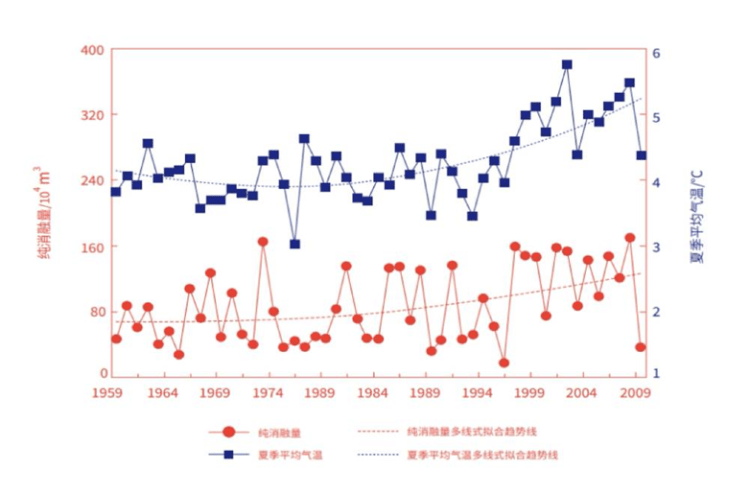
Global warming is the primary driver of glacier retreat. In addition, mining activities and air pollution in the region also contribute to glacier loss. Heavy machinery used in mining operations releases substantial amounts of black carbon aerosols. Black carbon is a stronger light-absorbing substance than dust; once deposited on snow and ice surfaces, it strongly absorbs solar radiation, raising temperatures and accelerating melt.
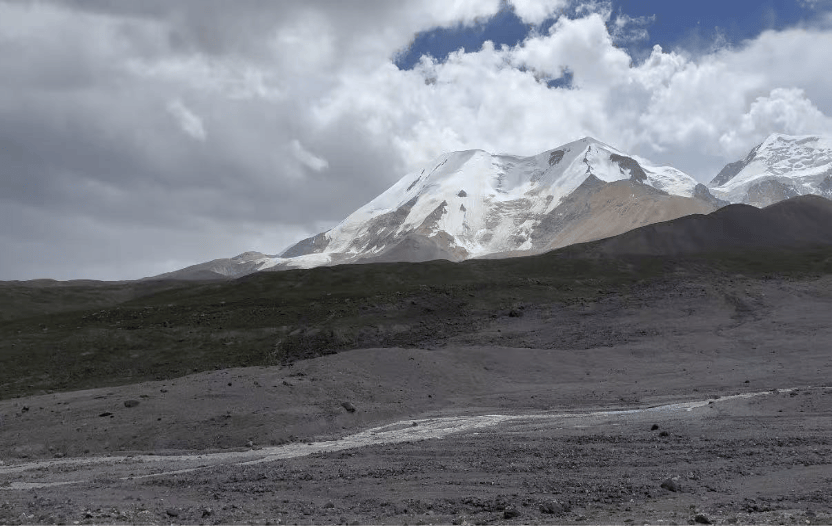
Ecologist Mr. Suonan pointed out that during the 1990s, the Anemaqen region had distinct wet and dry seasons, and glacier melt followed a certain pattern: meltwater was released in the dry season (mainly summer) and ice was replenished in the wet season. However, in recent years, the peak melt period has shifted earlier, leading to increased spring runoff and reduced summer water availability when it is most needed. At the same time, winter ice storage capacity has declined, leaving less ice to sustain the following summer’s melt. Projections suggest that by the end of this century, summer glacial meltwater in some areas could decrease by as much as 55%. If this seasonal regulation is lost, river hydrology could become more extreme—spring floods arriving earlier and summer flows sharply reduced. For a semi-arid region like the Three-River-Source area, this implies a significantly heightened risk of dry-season water shortages.
In summary, moderate and regular glacial melting can benefit upstream grassland expansion and water conservation. However, rapid melting increases flood risk in the short term, while long-term melting leads to water scarcity. In the short term, accelerated melting releases large volumes of water, increasing downstream river discharge. Over the long term, once glaciers pass a critical “tipping point,” meltwater volumes will decline sharply, eventually leading to river desiccation. This is particularly concerning for the Yellow River Basin, where disruptions in the seasonal glacial melt cycle would directly threaten water supply security in the middle and lower reaches.
Impacts of Climate Change on Grasslands
Extreme weather events can inflict direct and severe damage on grasslands. In recent years, Qinghai Province has experienced highly unstable climatic conditions. Uneven rainfall distribution is one prominent manifestation: prolonged consecutive-day precipitation can bring persistent wet-weather conditions similar to the Meiyu season in southern China, while in other periods, no rainfall occurs for two to three months on end. Among these hazards, drought exerts the most substantial impacts on grasslands. According to Mr. Chen from the Qinghai Provincial Improved Forage Breeding Farm, seedling germination phases in recent years have seen roughly 15-day drought spells. Constrained by local infrastructure conditions, irrigation measures cannot be implemented, and consequently numerous seedlings perish under drought stress. As noted by Mr. Guo Qing, rising temperatures have triggered widespread advanced phenology among grassland plants. Worse still, grasslands subjected to extreme drought and intense solar radiation may have their vegetation scorched by direct sunlight, which can even ignite small-scale wildfires.
Extreme-weather-driven glacier melt indirectly affects grasslands and reinforces extreme climatic conditions, forming a vicious feedback loop. As explained by a guide at the Qinghai Plateau Museum of Natural History, moderate glacial melt benefits upstream grassland expansion and water conservation in the short run. We are currently in a short-term high-water phase fueled by excessive glacial depletion, and glacial meltwater supplies water for upland grasslands. Nevertheless, rapid glacier shrinkage will persist over the long term. Within decades, stable summer meltwater discharge will experience a precipitous drop. Hillside pastures and inland grasslands far from rivers and lakes will suffer chronic drought. Water shortages during the forage growing season will lead to large‑scale declines in forage productivity.
Measures for the Restoration of High-Altitude Rangeland in Qinghai
The restoration of high-altitude rangeland in Qinghai first relies on institutional constraints on livestock activities that allow degraded pastures to rest and recover. Measures implemented by the central government and Qinghai Province—including the Grain for Green Program (returning farmland to forest and grassland), seasonal rest grazing, and rotational grazing by area—are currently the core means of grassland self-restoration. According to the Qinghai Provincial Territorial Spatial Ecological Restoration Plan (2021–2035) and the Administrative Measures for Grassland Grazing Bans and Forage–Livestock Balance in Qinghai Province, long-term grazing bans are implemented in severely degraded areas, while rest grazing during the green-up period and rotational grazing during the growing season are promoted in moderately and mildly degraded areas. By reducing grazing pressure and trampling disturbance, these measures facilitate the natural recovery of dominant forage grasses. The continued implementation of the Grain for Green Program has converted part of the steep-slope farmland and desertified land back into grassland or shrubland, reducing soil and water loss at the source. Together with grassland ecological protection subsidies and incentive funds, these policies have formed an incentive-and-constraint mechanism of “reward for protection, penalty for overgrazing,” elevating rangeland self-restoration from individual initiative to institutional constraint.
In areas where the natural recovery cycle is long and degradation is severe, artificial reseeding is often the main means of accelerating vegetation recovery. The Forage Seed Breeding Farm in Qinghai Province undertakes most of the grass seed supply for the first, second, and current third phases of the Sanjiangyuan (Three-River-Source) National Park project. According to Mr. Chen, an expert at the breeding base, the trial station has screened 12 forage grass species suitable for planting at high altitudes. The most widely applied combination is a three-tier “tall–medium–short” mix: the tall tier, short-haired Elymus (Elymus breviaristatus), reaches 1.2–3 m in height and has the highest seed yield, up to 150 kg per mu; the middle tier, Qinghai Chinese fescue (Festuca sinensis), is about 1 m tall; and the low tier, Qinghai crymophila bluegrass (Poa crymophila cv. Qinghai), is about 0.5 m tall. The seeds are sown in a 2:1:1 ratio, namely 2 kg of short-haired Elymus, 1 kg of Qinghai Chinese fescue, and 1 kg of Qinghai crymophila bluegrass per mu, with a total seeding rate of about 4 kg per mu. The tall short-haired Elymus emerges first, providing shade and wind protection for the slower-growing grasses; after its life cycle ends, the Chinese fescue and crymophila bluegrass take over in succession, achieving alternating vegetation cover and making the restored grassland more stable. In addition, the cost of these grass species is controllable: the seeds sell for 20–30 yuan per kilogram, cheaper than varieties introduced from other regions, such as the Zhongke Leymus chinensis from Inner Mongolia. After being uniformly bred at the farm, the seeds are sold to private enterprises and herders.
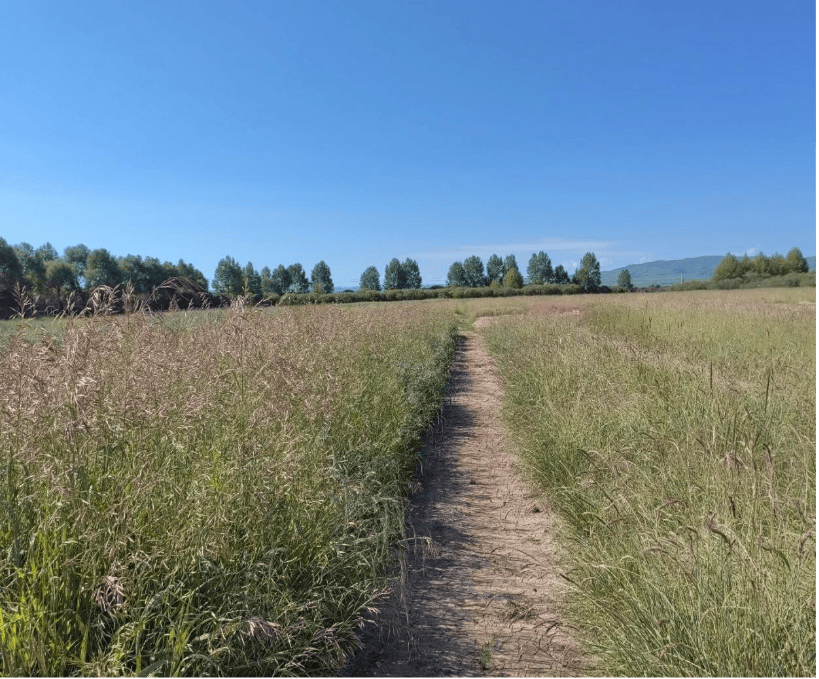
The ecological safety bottom line of rangeland is that livestock carrying capacity and human activities must not exceed its carrying capacity. In recent years, with the rapid growth of plateau tourism, tourists have entered rangelands at will to trample and take photos, aggravating vegetation degradation in some areas. In response, the relevant departments of Qinghai Province have promoted fence-based management on key rangelands. In the past, tourists could freely enter and exit the rangeland; now many rangelands are enclosed by fences. At first, some tourists mistakenly thought this was an indirect way to charge fees. In fact, it confines human activities to a controllable area: while safeguarding the tourist experience, it limits the disturbed range of the grassland and prevents damage caused by vehicles and trampling. As a docent at the Qinghai Museum put it, “Charging a few dozen yuan lets tourists go in for photo check-ins. To make the photos look better, the government even built viewing platforms.” This approach integrates ecological protection into tourism services and has become an effective tool for carrying-capacity management. The combination of fences and viewing platforms essentially curbs tourist damage while supporting rangeland conservation projects, striking a balance between open use and closed recuperation for high-altitude rangeland.
The proliferation of plateau pikas (Ochotona curzoniae) aggravates rangeland degradation by burrowing and turning over soil, so controlling their population density is one of the key measures for rangeland restoration. In current management, the most efficient and widely used means remains the application of rodenticides. According to field practitioners, “rodent control first, grass seeding second” is the standard sequence in the workflow of restoring rangeland through artificial seeding. Before reseeding, rodenticides targeting plateau pikas are mixed into oat seeds and scattered at the entrances of pika burrows, so as to control the rodent population and reduce the damage they cause to newly sown grasses. In addition to chemical rodent control, biological control is also a way to regulate pika numbers. By installing eagle perches and conserving fox dens, the population is regulated through natural predators. These methods are more consistent with herders’ ecological ethics and are more readily accepted at the community level. The government has also incorporated rodent pest management into the duties of grassland ecological rangers, encouraging herders to participate in setting up eagle perches and maintaining predator habitats.
Challenges in Restoring Qinghai’s High-Altitude Grasslands
I. Economic Challenges
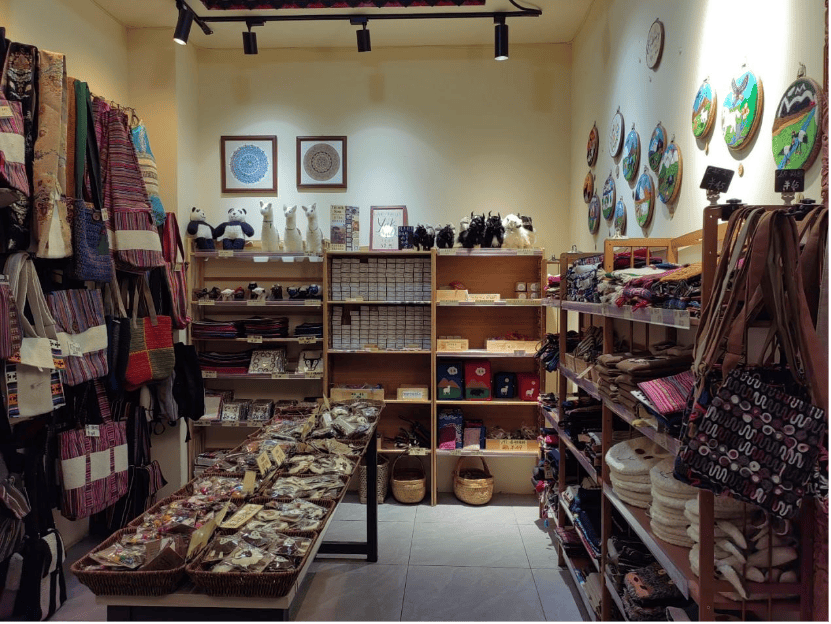
The restoration of degraded grasslands has a significant economic impact on local herders. According to a guide at the Qinghai Plateau Natural Museum, herders started moving away from the core protected zone after the Sanjiangyuan Nature Reserve was established, which naturally squeezed their income from raising cattle and sheep. Of course, it seems that the lives of some of the affected farmers are becoming better. Some families have begun looking for alternative ways to make a living. Much of this shift comes down to the “One Position for Each Household” policy, which hires one family member as an ecological conservation officer with a steady monthly income of around RMB 1,800. Coupled with government subsidies, local herders are gradually finding new jobs—working as regional tourist guides or opening small guesthouses.
Local cooperatives and private manufacturers are also trying to help the herders transfer as well. Take Amdocraft, a business started by Dutch entrepreneur AnPeng, as an example. By teaming up with local cooperatives, the company buys and sells traditional handicrafts made by herders. By crafting items during their off-hours, participating herders can pull in an extra RMB 800 to 1,600 each month.
However, progress has been slow in practice. As Dancuo, a representative from a local cooperative, said: “In our town, barely 1% of families have successfully made the switch—the other 99% still rely almost entirely on grazing.” Alternative income streams still account for just 2% to 3% of total household earnings, and few people have the artisan skills needed for handwork.
When grasslands are severely degraded, herders are unable to fix the land on their own, making government support essential. However, while these efforts have succeeded in targeted areas, their broader reach remains limited. Without wider coverage, policy interventions risk treating symptoms rather than the root cause. Extending true protection across every corner of Sanjiangyuan—and across the wider Qinghai-Tibet Plateau—is not an easy task and needs much more effort.
II. The Slow Pace of Recovery
At the Qinghai Plateau Natural Museum, a guide noted that the common rule of “prioritizing natural recovery with artificial support” runs into hard practical limits. Grassland degradation damages soil structure, microbial communities, and the delicate ecological balance that keeps the land healthy. Because of this, natural recovery takes a remarkably long time. At the same time, artificial restoration has its own headaches—mostly around low plant diversity. Based on the guide’s experience, only a few grass seed varieties are readily available on the market. Most restoration projects favor seeds that germinate quickly and withstand cold, drought, and trampling, since those varieties produce high-yield artificial pastures. But soil ecosystems aren’t built that easily. A pasture might look green from a distance, but that doesn’t mean the original ecosystem is back.
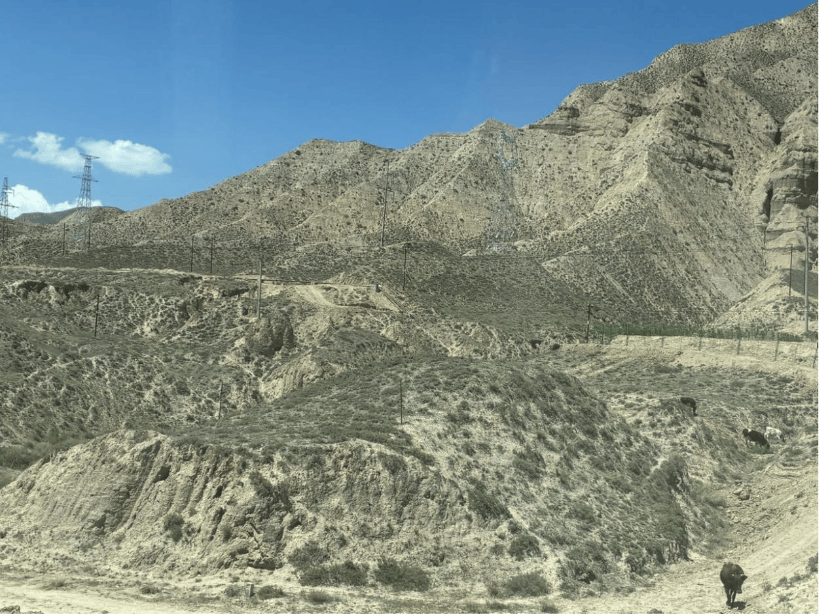
Teacher Sonam, who works directly on conservation in the Sanjiangyuan Reserve, offered a different perspective: well-managed grazing can actually contribute to land recovery. Livestock push seeds deeper into the soil as they walk, helping grass take root, while their manure serves as a natural fertilizer. Livestock push seeds deeper into the soil as they walk, helping grass take root, while their manure serves as a natural fertilizer. Yet current rules tend to block human and animal activity entirely. While those restrictions make sense in the early stages, long-term conservation would work much better if the government brought in more experts to run scientific assessments and tailor policies to specific pasture conditions.
III. Adapting Restoration to Local Conditions
Grasslands vary dramatically across the region. Shifts in rainfall, temperature, soil types, and terrain shape each pasture in distinct ways, meaning restoration plans must adapt accordingly. Teacher Chen from the Qinghai Provincial Improved Forage Seed Breeding Farm emphasized that different areas need completely different grass species. However, research pinpointing which species work best for specific locations is still lacking. What studies show is that in cold, dry areas, natural recovery using fencing and light fertilization works best. In cold, wet zones, reseeding and turf-splitting tend to get better results.
Fortunately, some practical models are already working. Ecological expert Sonam noted that restoration projects in Sichuan and other parts of the Qinghai–Tibet Plateau carefully assess local soil conditions before planting a mixed variety of native grasses. Where this patient, location-specific strategy has been tested, the land is showing strong signs of recovery—proving that with proper expertise, degraded grasslands can gradually bounce back.
IV. Other Challenges
Terrain poses another hurdle. Many grasslands sit on steep slopes where machines can‘t operate, forcing local herders to do the heavy work by hand—just as rural villages face an aging population and labor shortages.
Tourism may also harm the environment. Visitors vary wildly in how they treat the environment: some leave heaps of trash, while others even drive off-road right through fences into protected areas, causing severe damage to delicate ecosystems.
Clean energy projects will also cause damage. While wind turbines and solar farms push the region toward clean energy, constructing them requires digging up land and disrupting the surface soil, which can spark desertification if poorly managed.
Mining remains a persistent issue. From the late 20th century into the early 2000s, mining for jade and other minerals damaged large stretches of grassland, making some ancestral lands unlivable for Tibetan communities. Although most mines are now shut down, illegal and covert digging still pops up occasionally.
Pest and rodent control also involve difficult trade-offs. Poisoned bait intended for harmful animals may accidentally kill other wildlife, while chemical pesticides used against insect infestations can leave toxic residues in the environment. Beyond all these visible threats lie two more challenges: the continuing effects of climate change and the shortage of trained professionals in relevant fields. Together, they place the future of Sanjiangyuan‘s grasslands under growing pressure.
Conclusion
The participation of the people is the cornerstone of grassland restoration. In the Three-River-Source region, herders in many villages have voluntarily formed ecological volunteer teams, picking up litter on the grasslands every morning and evening to prevent pollution from harming the soil and livestock. These volunteer efforts were started by just a few herders at first, but were gradually incorporated into the “One position for each household” policy of Sanjiangyuan National Park. This policy has given grassland management and protection a more stable structure and financial support.
The public‘s own initiative has not only broadened the scope of institutional restoration, but also deepened herders’ sense of responsibility toward the grasslands. In addition, in dry, water-scarce high-altitude pastoral areas, herders plant trees and protect grass on their own initiative, hauling water by three-wheeled cart to manually irrigate degraded grassland. Although restoration on this scale is limited, it sustains environmental awareness among herders and, through practical action, helps restore patches of grassland that natural recovery cannot reach.
Furthermore, public enthusiasm for participation can be raised through the Tibetan cultural idea of “harmony between humans and nature.” Harmonious coexistence between humans and nature is one of the core teachings of Tibetan Buddhism. Tibetan Buddhism holds that the universe is composed of the “five great elements”—earth, water, fire, wind, and space — and that the outer physical world and the inner world are inseparable; the unity of the two lays the basis for the belief that “humans and nature are mutually dependent and mutually constraining.” Among ordinary people, this teaching has turned into awe and fear toward the natural environment. For example, the ideas that digging into a sacred mountain will bring punishment from the mountain god, or that polluting a holy lake will anger the water god, have gradually become part of local understanding. Drawing on the appeal of monasteries and religious figures, blending environmental messages into religious rituals and festivals, turning traditional taboos into village rules and community pacts, telling environmental stories in Tibetan and through folk art, and cultivating local environmental leaders are all suitable measures for environmental outreach in Tibetan communities. In short, the restoration of Qinghai‘s high-altitude grasslands depends on policy support, economic assistance, technological improvement, and the participation of the people.
References:
1.青藏高原地区不同海拔气温的变化特征:www.gysdqxyj.cn
2.中国气象数据网:data.cma.cn
3.西藏气候变化检测公报:xz.cma.cn
4.青海省气象局qh.cma.go
5.三江源地区雪冰动态变化及其对流域水文过程的影响》cnkimirror.clcn.net.cn
6.中国环保协会znb.org.cn
7.气候变化影响下中国冰川研究https://xueshu.baidu.com/usercenter/paper/show?paperid=1e2j0je0xa6e06c0ps640v30n6199985&site=xueshu_se
8.环境工程学报http://www.cjee.ac.cn/eekw-data/hjhx/2025/2/
9.中国科学院青藏高原研究所https://itpcas.cas.cn/new_kycg/new_kyjz/202607/t20260716_8250361.html
10.光明论坛 守护好三江源这个“中华水塔”https://share.gmw.cn/news/2025-05/26/content_38046749.htm
11.中国环保协会http://acef.org.cn/a/news/gndt/2013/0423/7048.html
12.财政部,农业农村部,国家林业和草原局。2021.第三轮草原生态保护补助奖励政策实施指导意见(财农〔2021〕82号)[EB/OL].https://faolex.fao.org/docs/pdf/chn239818.pdf.%5B2026-08-08%5D.
13.国家林业和草原局。2018.沙鼠防治技术规程(LY/T 3073-2018)[S/OL].https://www.forestry.gov.cn/html/lykj/lykj_1716/20181212154111226968027/file/20181212165950682735644.pdf.%5B2026-08-08%5D.
14.青海湖景区保护利用管理局.2023.青海湖景区生态环境保护与旅游管控工作通报[EB/OL].https://app.xinhuanet.com/news/article.html?articleId=c4264421-f257-42bd-95e2-5485cbb934f8.%5B2026-08-08%5D.
15.青海省林业和草原局。2026.林药共生产业兴 延链强链补短板 青海中藏药产业开出“致富药方”[N/OL].http://www.qinghai.gov.cn/zwgk/system/2026/07/24/030104811.shtml.%5B2026-08-08%5D.
16.青海省林业和草原局.2023.青海省自然教育体系建设工作进展[EB/OL].https://lcj.qinghai.gov.cn/html/1387/2026-08-05/content-28825.html.%5B2026-08-08%5D.
17.青海省药品监督管理局,青海省农业农村厅,青海省林业和草原局,等.2026.关于贯彻落实《中药材生产质量管理规范》的若干措施[EB/OL].http://www.qinghai.gov.cn/msfw/system/2026/03/15/030094741.shtml.%5B2026-08-08%5D.
18.青海省人民政府.2016.三江源地区鼠害治理成效通报[EB/OL].http://www.qinghai.gov.cn/zwgk/system/2016/02/25/010204489.shtml.%5B2026-08-08%5D.
19.青海省人民政府.2021a.青海省草原禁牧和草畜平衡管理办法(青海省人民政府令第152号)[EB/OL].http://sft.qinghai.gov.cn/zwdt/ywxx/fzgz1/hzlf2/content_97665.%5B2026-08-08%5D.
20.青海省人民政府办公厅。2021b.青海省第三轮草原生态保护补助奖励政策实施方案(2021—2025年)(青政办〔2021〕123号)[EB/OL].http://www.qinghai.gov.cn/xxgk/xxgk/xzgfxwj/202201/t20220113_188910.html.%5B2026-08-08%5D.
21.青海省自然资源厅,青海省发展和改革委员会,青海省生态环境厅,等.2021.青海省国土空间生态修复规划(2021—2035年)[EB/OL].https://zrzyt.qinghai.gov.cn/upload/main/contentmanage/article/file/2025/11/05/%E9%9D%92%E6%B5%B7%E7%9C%81%E5%9B%BD%E5%9C%9F%E7%A9%BA%E9%97%B4%E7%94%9F%E6%80%81%E4%BF%AE%E5%A4%8D%E8%A7%84%E5%88%92%EF%BC%882021-2035%EF%BC%89%EF%BC%88%E5%85%AC%E5%BC%80%E7%89%88%EF%BC%89.pdf.%5B2026-08-08%5D.
22.青海省林业和草原局.2026.青海草原鼠害危害面积下降[EB/OL].http://www.qinghai.gov.cn/zwgk/system/2026/07/25/030104845.shtml.%5B2026-08-08%5D.
23.三江源国家公园管理局.2022.三江源国家公园生态管护员队伍建设情况[EB/OL].https://sjy.qinghai.gov.cn/jyta/750355112714309.html.%5B2026-08-08%5D.
24.林晨,程卓,龙春林.2023.青海热贡唐卡的生物文化初探[EB/OL].中国科学院科技论文预发布平台.https://chinaxiv.org/user/download.htm?filetype=pdf&uuid=68737c8210e442a89563a1b73ae1e3f9.%5B2026-08-08%5D.
25.青海省人民政府, 西藏自治区人民政府. 三江源国家公园总体规划(2023—2030年)[R/OL]. 2023[2026-08-04]. https://www.forestry.gov.cn/u/cms/www/202404/121759143wjc.pdf.
26.YU J, WAN L, LIU G, et al. A meta-analysis on degraded alpine grassland mediated by climate factors: Enlightenment for ecological restoration[J]. Frontiers in Plant Science, 2022, 12: 821954. DOI: 10.3389/fpls.2021.821954.
27.WANG N, WAN J, DING M, et al. More management is needed to improve the effectiveness of artificial grassland in vegetation and soil restoration on the three-river headwaters region of China[J]. Frontiers in Plant Science, 2023, 14: 1152405. DOI: 10.3389/fpls.2023.1152405.
28.杜爽,韩锋,马蕊. 世界遗产视角下的国外自然圣境保护实践进展与代表性方法研究[J]. 风景园林,2019,26(12): 85-90.
29.宗晓萌. 阿里地区的神山圣湖崇拜及其寺庙建筑[J]. 山西建筑,2019,45(1):5-6.
30.张慧,林美卿. 藏传佛教的生态思想及其当代价值[J]. 云南社会主义学院学报,2018,20(4):105-110.
31.Encyclopedia Britannica — Tibet: Ethnicity, Religion, and Culture.
32.Trine Brox. Plastic Skinscapes in Tibetan Buddhism[J]. Cross-Currents: East Asian History and Culture Review, 2022, 40(1).

