Authors: Yuan Jiahao, Le Huanxin, Zhu Mingxuan (in no particular order)
For these people, even eating a meal can consume as much oxygen and energy as running does for us. This is how Dr. Liang, a physician at a rehabilitation center, described the experience of patients with pneumoconiosis.
Pneumoconiosis is an occupational lung disease caused by the inhalation of mineral dust, including free silica, coal dust, and asbestos. The higher the concentration of dust, the longer the exposure, and the weaker the personal protective measures, the greater the risk of developing the disease. Once dust enters the alveoli and causes pathological changes, the damage is irreversible and cannot be reversed or cured through medication [1]. Prevention is, therefore, the only way to stop the disease before it begins.
Protection: The First Line of Defense Against Pneumoconiosis
Dust control, ventilation, and the correct use of respirators are all important measures for preventing pneumoconiosis. According to disease-control authorities, workers in high-dust environments must use particulate respirators that meet national standards, such as KN95 or higher-grade respirators, and ensure that they are worn correctly and fit securely [2].
However, many miners either do not know these requirements or find respirators inconvenient and simply choose not to wear them. Even among those who do wear masks, many use ordinary medical masks or even gauze masks—neither of which provides adequate protection against occupational dust. There is a significant gap between knowing what should be done and actually doing it.
For personal protection, the scientifically recommended approach is clear: workers exposed to high concentrations of dust should use particulate respirators that comply with GB 2626-2019. For coal dust and silica dust, respirators rated at least KN95 should be used; for high concentrations of silica dust and asbestos dust, KN100 respirators are preferred. Before use, workers should check the respirator for expiration or damage. When putting it on, they should tighten the nose clip and head straps and perform a positive- or negative-pressure fit check before entering the work area. If the respirator becomes dirty or wet, or if breathing resistance increases noticeably, it should be replaced immediately and never washed and reused [2].
However, standards are one thing; what workers actually use is another. Anli Coal Mine, located in a mountainous area, was shut down last year. In an abandoned workers’ dormitory, we found several disposable flat masks that had been left behind. These disposable flat masks are primarily designed to block droplets and larger particles rather than protect workers from industrial dust. Their flat structure provides poor facial sealing, allowing dust to leak in around the nose and sides of the face. They offer far less protection against respirable dust and silica dust than occupational respirators.
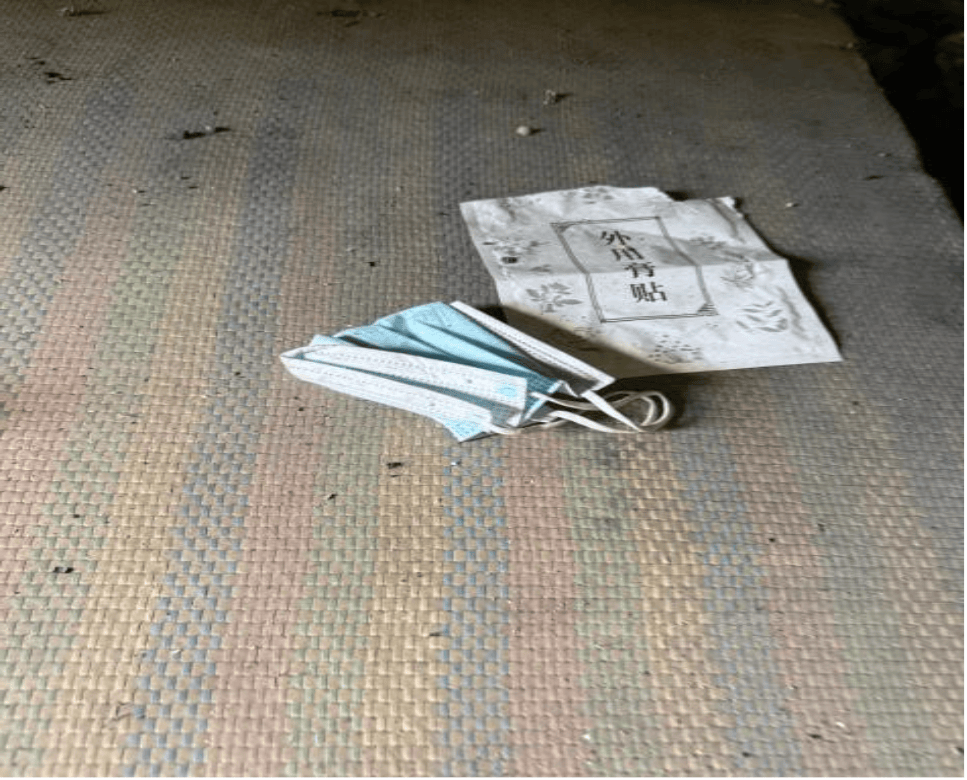
Enterprises are required to provide workers with proper training in occupational protection and strengthen miners’ awareness of protective measures. In reality, however, very few enterprises fully implement these requirements. Workers in private coal mines are among those most easily overlooked when it comes to occupational protection.
At the Liangfang Rehabilitation Center, 64-year-old Grandpa He began mining coal in 1981 and joined a township-run coal mine as a contract worker in the 1990s. Underground, the temperature was relatively comfortable—warm in winter and cool in summer. His employer did provide masks, but as Grandpa He recalled, “You couldn’t get any work done with the mask on.” So he and his fellow workers simply took them off.
At the time, he could earn nearly 1,000 yuan a month. Grandpa He recalled excitedly, “Who could resist that kind of money?”
Yet the high income did not last long. Grandpa was diagnosed with pneumoconiosis in 2004 and lung cancer in 2006. From then on, he no longer dared to go underground. “How could we have known we’d end up with this disease?”
Today, his voice is hoarse. He can walk 480 meters in six minutes, but he is out of breath by the end. He receives a minimum living allowance of 450 yuan per month, yet his medication alone costs around 2,000 yuan each month. Last year, a ruptured blood vessel in his lung led to hospitalization, and even after reimbursement, his family still had to pay 8,000 yuan. His wife is also ill. His son works in Dongguan and earns around 4,000–5,000 yuan a month, but he has two children to support as well. There is little he can contribute to his parents.
A single illness can easily push an entire family beyond its financial limits.
The Key to Comprehensive Rehabilitation
Once a family with pneumoconiosis manages to get through expensive medical treatment, another long-term struggle begins after discharge: how to help a damaged body recover as much function as possible.
Pneumoconiosis is irreversible. From the moment they are diagnosed, patients may have to live with the disease for the rest of their lives. At present, apart from lung transplantation—which is extremely expensive—there is no definitive cure.
The China Pneumoconiosis Manual points out that pulmonary rehabilitation is a comprehensive, long-term intervention, with exercise training and breathing exercises as two important components.
The words “comprehensive” and “long-term” may sound simple, but neither is easy to achieve.
The term “comprehensive” means that the assistance patients require, as well as the demands placed on the patients themselves, during pulmonary rehabilitation are no less than those during medical treatment. Rehabilitation programs generally include rehabilitation exercises, equipment-based training, medical treatment, and nutritional support.
Rehabilitation exercises are a gentle but effective way of improving lung expansion. At the rehabilitation center, each session usually lasts only a little over ten minutes. The emphasis is on slow and steady inhalation and exhalation rather than rapid breathing or deliberately holding one’s breath. Dr. Liang emphasized: “They must not hold their breath.”
Patients with pneumoconiosis may also experience a significant decline in exercise capacity. During a walking test, Grandpa Ding, another patient with pneumoconiosis, could only walk slowly and had to stop and rest after approximately 20 meters. For him, rehabilitation exercises provide a relatively gentle form of physical activity suited to his condition.
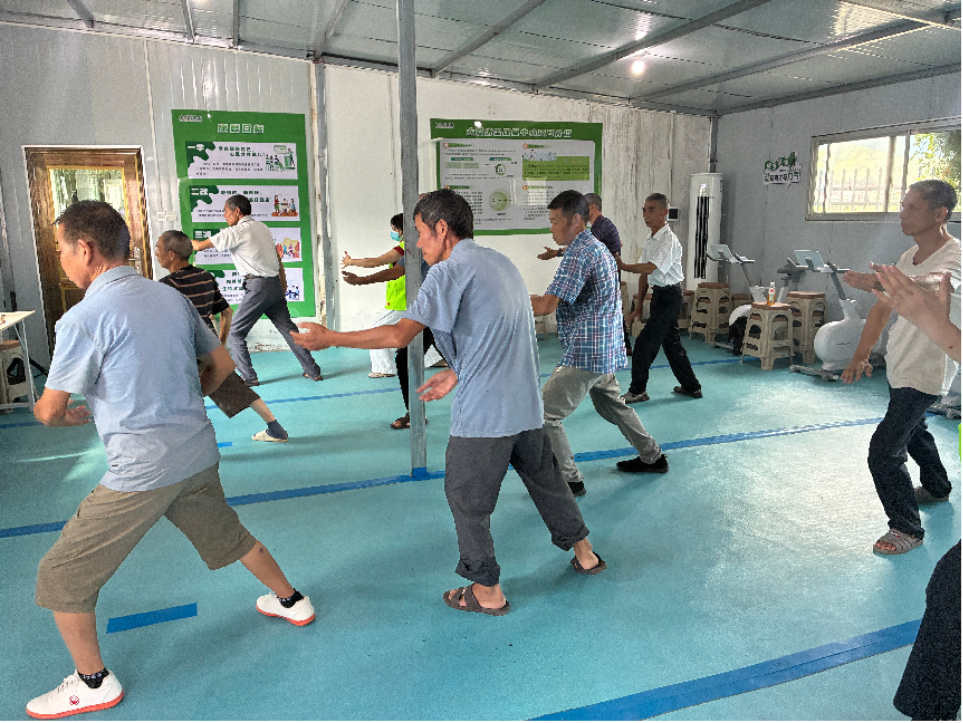
In addition to rehabilitation exercises, the center also uses medical equipment to assist patients’ rehabilitation. However, equipment is only one part of the process. Comprehensive pulmonary rehabilitation consists of multiple components, including breathing exercises, exercise training, airway-clearance training, supportive treatment, and health education.
Experiences from the development of pneumoconiosis rehabilitation stations in China have also shown that grassroots rehabilitation systems require not only appropriate facilities and equipment, but also physicians and nurses who have received professional training.
One physician at the rehabilitation center made an important point: Rehabilitation equipment is not necessarily better simply because there is more of it. What matters is whether patients can actually use it. If a piece of equipment is given to a patient who does not know how to operate it — or does not have the physical capacity to use it — the equipment may ultimately sit unused.
Charity work is not simply about purchasing more equipment or distributing more supplies. The real challenge is ensuring that these resources actually become part of patients’ everyday lives. As Dr. Liang put it, the fundamental problem in addressing social issues is not simply how much material assistance can be given to a family, but whether there is enough professional knowledge and expertise to ensure that the assistance actually works.
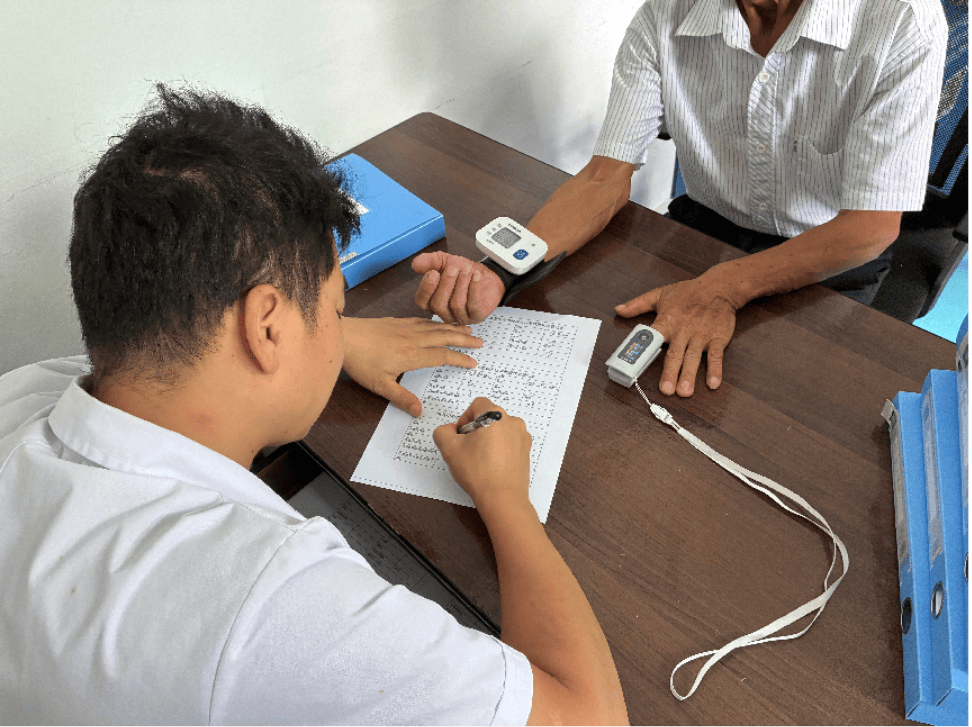
When rehabilitation equipment and exercises alone are no longer sufficient, some patients may actively request hospitalization, according to Dr. Liang. The reason is straightforward: they can feel that their breathing is becoming increasingly difficult.
Some patients feel that they “cannot catch their breath,” while others are unable to lie down comfortably and sleep at night because of breathing difficulties. These patients need to enter the medical system for further treatment.
Airway-clearance exercises are a relatively common component of pneumoconiosis rehabilitation in China and are generally combined with breathing exercises, physical exercise, and supportive treatment. Dr. Liang’s observations indicate that patients whose condition is stable may undertake appropriate rehabilitation exercises. However, when patients experience significant breathing difficulties or severe shortness of breath, they cannot simply rely on rehabilitation exercises. They may require further medical treatment, including medication or hospitalization. Rehabilitation cannot replace professional medical assessment, nor can it replace necessary medical treatment when a patient’s condition deteriorates.
In addition to these factors, there is another issue that is often overlooked: nutrition. Dr. Liang believes that what some patients truly lack is not more sophisticated equipment, but basic nutritional support. “I think what they mainly lack is nutrition.”
For economically disadvantaged patients, even basic nutritional products such as milk and eggs can become an additional financial burden. This is closely connected to the economic difficulties faced by many rural patients. Some elderly patients have an income of only a little over 100 yuan per month: “A little over 120 yuan is only enough to buy a bottle of cooking oil, or perhaps 20 jin of rice.” When even basic necessities have to be carefully budgeted, nutritional support is no longer merely a medical issue. It becomes a question of what a family can actually afford.
The Psychological Burden Faced by Pneumoconiosis Patients
Whether pneumoconiosis patients can achieve positive outcomes through long-term rehabilitation depends critically on their psychological well-being. The primary reasons why pneumoconiosis patients choose to conceal their conditions and carry the burden of psychological distress are rooted in the realities of survival and employment, compounded by the profound stigma arising from social prejudice.
President Xiao of Xingjian Charity explained that among the more than 1,100 registered individuals with pneumoconiosis in the area, only over 600 were willing to cooperate with screening, while nearly 500 deliberately avoided examinations and concealed their health conditions. Their decision to conceal their illness does not stem simply from feelings of shame. Rather, they are driven by the pressure to make a living, fearing that once diagnosed with pneumoconiosis, they will lose their opportunities to work and earn a living altogether.
Beyond this, the psychological burden carried by pneumoconiosis patients also arises from the social prejudice associated with complications. Some patients who also have tuberculosis deliberately distance themselves from others and avoid all social interactions, fearing that their neighbors will mistakenly regard them as having a contagious disease. Family members of deceased pneumoconiosis patients may even be subjected to the absurd local label of being “unlucky for their husbands.” Others reduce the death of a husband from illness to mere fate, completely overlooking the underlying causes of occupational dust exposure and harsh working conditions. Such attitudes further intensify the psychological burden carried by both patients and their families.
Grandpa Peng at Liangfang Rehabilitation Center travels back and forth to Pingxiang two or three times a year for medical treatment. As his condition gradually became known in the village, he slowly began to let go of his psychological burden and move beyond the shadow of stigma.
The psychological trauma caused by pneumoconiosis does not affect patients alone. The family environment in which they live can further amplify their psychological suffering. Grandpa Li from Dongyuan Township, Shangli County, lost both his wife and daughter, while his son works in Shanghai to repay debts, leaving him alone at home. Grandpa Li said, “When I feel bad, I cover myself with the quilt. I might as well just suffocate myself.” Thus, psychological crisis at the individual level is shaped not only by the disease itself; family fragmentation and a lack of companionship can further deepen feelings of despair.
While difficult family circumstances intensify the emotional suffering of patients, they also transfer a heavy psychological burden onto their family members, leaving caregivers themselves trapped in a state of mental and emotional exhaustion.
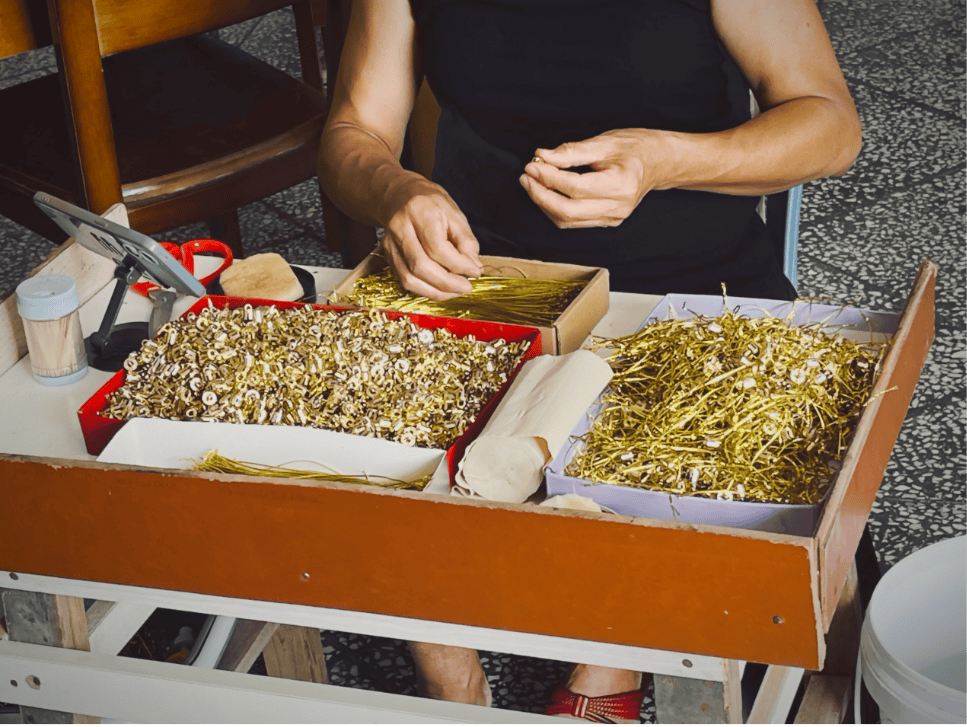
The wife of Grandpa Wu from Changping Township is one such example. She earns only a meager 60 yuan a month by processing lighting fixtures, while also struggling with hypertension and caring for her father, who is over ninety years old. Her daughter has cancer and is unable to share any of the family’s burdens; her children rarely return home and sometimes even ask the family for financial support. She expressed her despair: “No one comforts me. I have no one to rely on!” Layer upon layer of overwhelming pressure falls upon caregivers. The daily burden of constant labor gradually wears down both their bodies and minds, leaving many with no choice but to silently bury their grievances and distress deep within themselves.
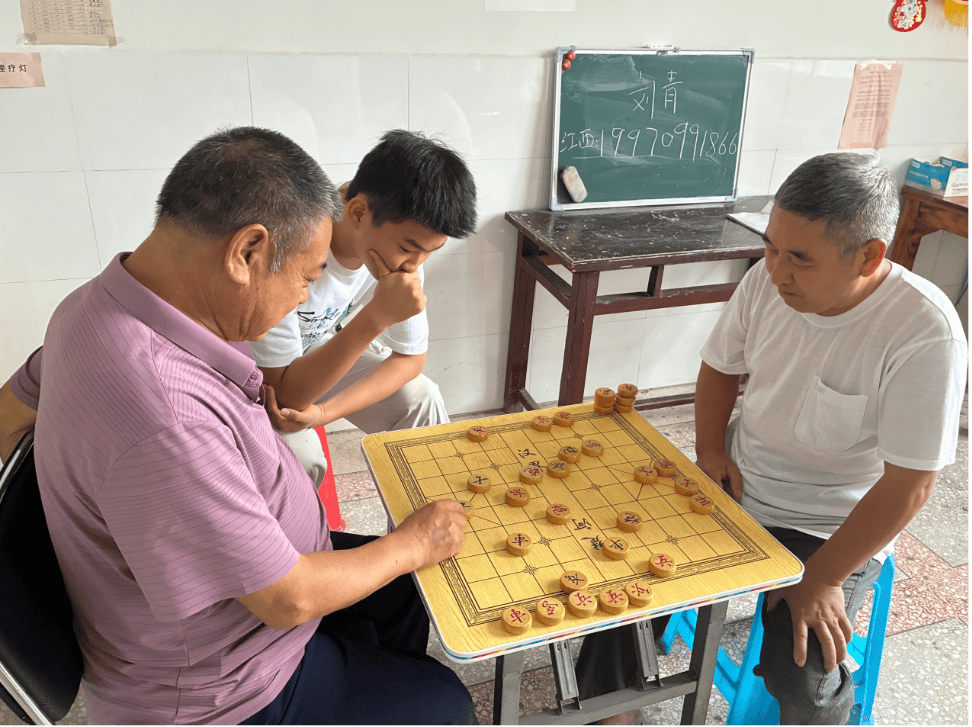
Many patients receive little emotional support from their families and are also reluctant to share their feelings at home. The group activities at rehabilitation centers, therefore, provide a space for mutual support and communication beyond the family. Rehabilitation centers organize group rehabilitation activities for pneumoconiosis patients twice a week, creating a stable platform for communication. When fellow patients gather together, they exchange practical experiences about lung care and daily medication, while also chatting about everyday matters. In these relaxed interactions, they are able to ease the emotional tension they carry.
Zhu Zhu, a Rehabilitation Specialist at Liangfang Rehabilitation Center, acknowledged, “When everyone gets together and talks, their state of mind becomes much more positive.” Empathetic communication among peers can effectively help patients regulate their emotions and ease the loneliness of facing illness on their own. Staff members at Fanglou Rehabilitation Center also noted that day-to-day emotional support relies largely on patients sharing their feelings with one another. Because they have experienced similar circumstances in life, they are able to communicate and understand each other, gradually forming a network of mutual psychological support.
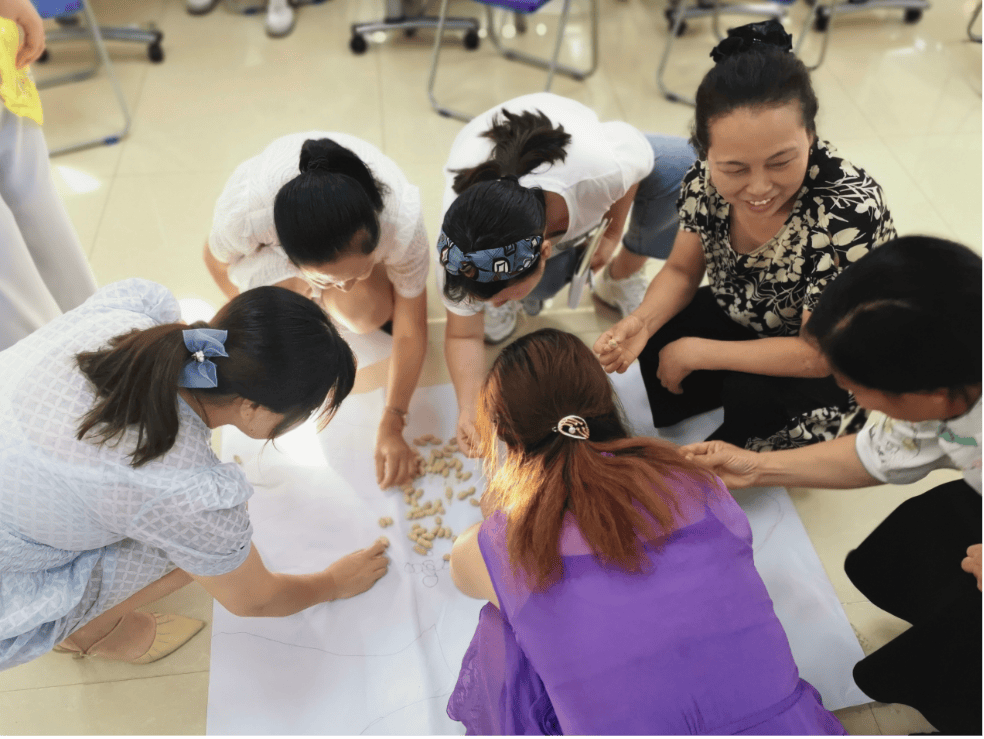
Compared with conventional rehabilitation groups for patients, the Pneumoconiosis Mothers’ support group, established specifically for female caregivers, provides them with deeper emotional comfort. In 2020, a charity organization piloted a psychological support group in the village. At its core was the goal of bringing together women from Pneumoconiosis families who were usually confined to their homes in isolation, giving them a space to open up and communicate with one another. The process of accompanying and connecting with each other was, in itself, a form of psychological healing.
The group activities continued for three months, during which the mothers gradually developed a voluntary peer-pairing system for mutual support. The bonds they formed have continued to this day. In 2023, Xingjian Charity established the Pneumoconiosis Mothers’ Cooperative in Lingshui Village, Nanling Township, bringing changes to the way caregiving responsibilities were shared. In the past, when someone in the family was hospitalized, two family members often had to take turns providing care. Now, group members can support one another: while one person goes to the hospital to provide care, another can help manage household responsibilities, substantially easing the burden of caregiving.
If the Pneumoconiosis Mothers’ group represents a source of mutual support that grows from within patients’ own families, then front-line Rehabilitation Specialists are the key support that keeps this strength going. Faced with the reality that pneumoconiosis cannot be reversed, they remain committed to the professional principle of “occasionally curing, often helping.” Rather than continuing to pursue a complete cure for the disease, they place greater emphasis on daily companionship and emotional support. Zhu Zhu said, “They may be negative, but we cannot be negative. We are not here to pity them; we are here to pass on optimism.”
Conclusion
On the difficult road that pneumoconiosis patients travel under the weight of their illness, those small yet steadfast sources of light are especially precious. The comforting conversations shared among fellow patients at rehabilitation centers, the willingness of women in the Pneumoconiosis Mothers’ group to lend one another a hand, and the repeated home visits made by rehabilitation specialists without complaint—all these acts of companionship, day after day, create a corner where lives eroded by dust can finally find room to breathe. It is precisely these simple acts of kindness and steadfast commitment that allow warmth to be found and strength to be drawn upon, even in the face of an irreversible disease.
References
[1]National Health Commission of the People’s Republic of China. Diagnosis and Treatment Guidelines for Pneumoconiosis. Beijing: People’s Medical Publishing House, 2023.
[2] National Standards of the People’s Republic of China. GB 2626-2019: Respiratory Protection — Non-powered Air-purifying Particle Respirators. Beijing: Standards Press of China, 2019.

