Author: YuZhen (Jerry) Li, YiXuan (Kiki) Qu, JiaYang (Leo) Song
It would be difficult to find another country in the world that, like Japan, is both so intimately acquainted with the horrors of nuclear power and so unwavering in its faith in its future.
In 1945, Hiroshima and Nagasaki became the only two cities in human history to suffer nuclear attacks. Nine years later, in 1954, the Japanese fishing vessel “Daigo Fukuryu Maru” was exposed to radioactive fallout from a U.S. hydrogen bomb test while operating in the Pacific; one crew member died six months later. Initially, “nuclear” was synonymous with “disaster” in Japan. As Japanese Nobel laureate in physics Hideki Yukawa put it: “Shouldn’t the goal of protecting humanity from the threat of nuclear energy take precedence over all other goals?”[1]
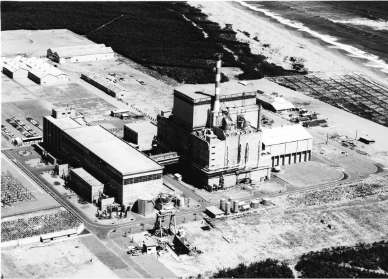
It was also in 1954 that the Japanese Diet approved its first budget for nuclear energy research.[2] In 1966, the first commercial nuclear power plant began operations.[3] Since then, nuclear energy has gradually become a major source of energy in Japan. As of 2009, Japan was the world’s third-largest consumer of nuclear power, trailing only the United States and France.[4]
Attitudes Toward Nuclear Power Have Changed Over Time
Before the Fukushima nuclear accident, the Japanese public generally supported the aggressive expansion of nuclear power.
The Honkyoji Peace Museum houses many posters on nuclear power created by elementary school students. The most prominent one reads: “Let’s promote nuclear power in our prefecture.” The docent at the time remarked with a sense of resignation, “Before the accident, those words came from the heart.”
In the 1950s, influenced by postwar economic recovery and the concept of the “peaceful use of atomic energy,” nuclear power was gradually redefined as a technology capable of bringing prosperity and development to Japan. The Japanese government also began actively promoting nuclear research and the construction of nuclear power plants.[5]
The Shizuoka Prefectural Government compiled a set of meeting materials containing responses from Japanese citizens in 1999, 2005, and 2009 to the question, “How should we approach nuclear power in the future?”
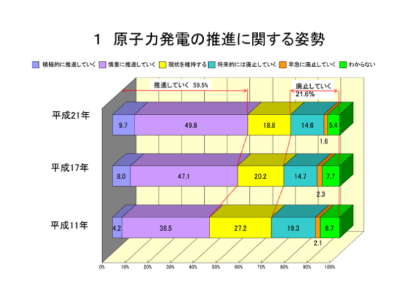
In 1999, 4.2% of the Japanese population chose “actively promote,” while 38.5% chose “cautiously promote.” Combined, those advocating for the continued development of nuclear power accounted for 42.7% of the population. By 2005, the proportion of the population advocating for continued development had increased to 8.0% for “actively promote” and 47.1% for “cautiously promote,” totaling 55.1%. Four years later, these figures stood at 9.7%, 49.8%, and a combined total of 59.5%.[6]
According to a report by the Pew Research Center, prior to the 2011 nuclear accident, 44% of people believed Japan should reduce its use of nuclear power. This figure rose dramatically to 70% one year after the earthquake. Meanwhile, the proportion of those who believed the status quo should be maintained fell from 46% to 25%, and those who believed it should be increased fell from 8% to 4%.[7] This clearly demonstrates that, following the Fukushima nuclear accident, the Japanese public generally opposed nuclear power.
The Greater Tokyo Area Anti-Nuclear Coalition is a coalition of multiple anti-nuclear civic groups. In late March 2012, the coalition began holding protests every Friday in front of the Prime Minister’s Official Residence. Initially, only about 300 people participated, but the numbers grew rapidly. On June 29, 2012, the organizers announced that attendance had reached approximately 200,000 people.[8] Reportedly, people learned about the protests through social media and came on their own initiative. Previously, demonstrations in Japan had primarily relied on mobilization by organizations such as labor unions; there had never been a situation where citizens participated independently.[9]
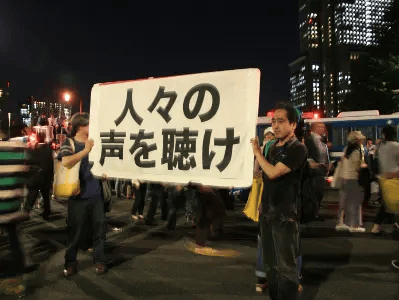
Eiji Oguma, a professor at Keio University, has participated in the protests since the first anti-nuclear march in Koenji, Tokyo, in April 2011. He said, “Before that, the social movements I had seen gave the impression that people were ‘speaking out for those in difficult circumstances, even though they themselves were not facing any hardship.’ But the anti-nuclear marches following the accident were ‘different; most of the people who came were those who felt a strong sense of fear themselves.’”[10]
However, as the accident recedes into the past, support for nuclear power in Japan is now on the rise again. In 2012, Shinzo Abe returned to power and shifted policy away from his predecessor’s post-Fukushima goal of “achieving zero nuclear power by the 2030s” toward a gradual increase in the use of nuclear power plants.[11]
The outbreak of the Russia-Ukraine conflict in 2022 caused global energy prices to skyrocket, exacerbating Japan’s energy crisis once again.[12]
In 2023, the government convened more than a dozen experts and industry representatives to establish a council called “Green Transformation.” Its objective is to achieve a stable energy supply while reducing carbon emissions.[13]
Nuclear power happens to meet both criteria: it emits no carbon dioxide during electricity generation, provides a stable power supply unaffected by weather conditions, and can operate for several years with a single fuel loading without relying on continuous imports. This has become the primary reason the Japanese government is promoting nuclear energy.
According to a survey report by the Japan Atomic Energy Cultural Foundation, the percentages of the Japanese public who believe “nuclear power is dangerous” and who “feel uneasy about nuclear power” declined from 68.3% and 55.9% in 2011, respectively, to 52.5% and 42.6% in 2025—the lowest levels in 15 years.[14]
Reasons for Support
Since Japan began officially allocating funds for nuclear energy development in 1954, the reasons for supporting nuclear power have varied across different sectors, but they can be summarized into three main categories.
First, economic benefits are a key reason why some Japanese people support nuclear power.
The construction of a nuclear power plant can create many employment opportunities. Mr. Keiichi Yamamoto, a docent at the Fukushima Nuclear Disaster Memorial Museum, said: “The Futaba area of Fukushima isn’t a big town. Fishing and agriculture are the main industries. In the winter, we had to go to the Tokyo area to find work. We worked hard, hoping to lead a more prosperous life. Later, the city government and the national government asked us if we would be willing to work at the Fukushima Daiichi Nuclear Power Plant. So, we were able to work here.”
While the population of towns and villages across Fukushima Prefecture continued to decline, the population of Okuma Town—the site of the nuclear power plant—began to rise sharply after construction of the plant began. Using the 1960 population as a baseline of 100, Okuma Town’s population index rose from 94 in 1970 to 113 in 1980. At the same time, however, the overall population index for the five towns in Futaba District fell from 86 in 1970 to 83 in 1980.[15]
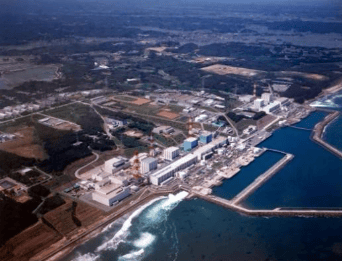
The Fukushima Daiichi Nuclear Power Plant also significantly altered the local economic structure. According to data from the Japan Atomic Energy Commission, Ōkuma Town’s ranking in per capita disposable income jumped from 75th in the prefecture in fiscal year 1965 to 1st in fiscal year 1970;[16] at the same time, the proportion of tax revenue from nuclear power generation in the town’s total tax revenue rose from 5.2% in fiscal year 1966 to 78.2% in fiscal year 1972.[17]
Furthermore, energy security is one of the key reasons why some Japanese people support nuclear power, and it is inextricably linked to economic benefits.
In 1960, Japan’s energy supply structure underwent a major shift, transitioning from domestic coal to imported oil. The country’s overall dependence on energy imports stood at approximately 42%.[18] However, global crude oil prices at the time hovered steadily at a benchmark level of about $1.50 to $1.90 per barrel;[19] these low prices led the Japanese government to rely heavily on oil imports.
When the first oil crisis struck in 1973, 75.5% of Japan’s energy supply came from oil, and oil prices at the time rose to $12 per barrel. Affected by the oil crisis, Japan’s GDP contracted by 0.5% in 1974. This marked the first instance of negative economic growth in Japan since 1955.[20] At the same time, due to oil shortages, total manufacturing and industrial output plummeted by 20%.[21]
This also made the Japanese government realize the importance of energy security, prompting it to pursue the development of nuclear power. By 2010, Japan’s dependence on oil had fallen from 75.5% to 40.3%.[22] Prior to the Fukushima disaster, nuclear power accounted for 30.8% of the nation’s total electricity generation.[23] Following the 2011 Fukushima disaster, a large number of nuclear power plants in Japan were shut down.
To replace nuclear power generation, the Japanese government turned to fossil fuels. Following the suspension of nuclear power operations, oil’s share of Japan’s energy mix rose again to 44.5% in fiscal year 2012.[24] At the same time, electricity rates in Japan rose significantly. The Agency for Natural Resources and Energy noted that, compared to fiscal year 2010, the average unit price of residential electricity in fiscal year 2023 rose by approximately 35%, while the average unit price of industrial electricity rose by approximately 74%.[25]
Finally, the pursuit of low-carbon emissions has also become a reason for some Japanese people to support nuclear power. In 2010, Japan emitted 1.25 billion metric tons of carbon dioxide.[26] In 2013, however, due to the Fukushima nuclear accident, which led to the widespread shutdown of Japan’s nuclear power plants, the electricity demand that had previously been met by nuclear power shifted to a greater reliance on fossil fuel-based generation. This drove up carbon dioxide emissions in the energy sector, causing Japan’s greenhouse gas emissions for that year to reach approximately 1.408 billion metric tons.[27]
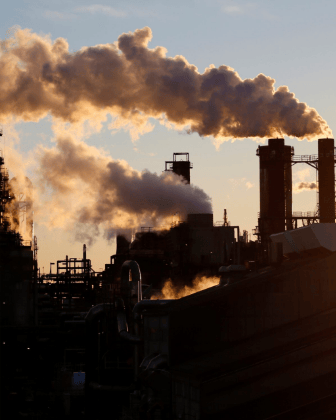
The IEA, an international energy research and policy organization, explicitly classifies nuclear power as a low-carbon electricity source and notes that over the past 50-plus years, nuclear power has cumulatively prevented approximately 72 billion metric tons of CO₂ emissions by reducing electricity generation from coal, natural gas, and oil.[28]
As Professor Kanako Tanaka, a Japanese energy expert who formerly worked at the International Energy Agency, stated: “In recent years, Japan has placed climate change and decarbonization at the forefront of its energy policy. Because nuclear power produces virtually no direct CO₂ during electricity generation and can replace fossil fuels, thereby reducing the use of coal and natural gas, these factors have become key reasons why Japan views it as a ‘decarbonization technology.’”
Reasons for Opposition
For opponents, the health impacts of nuclear energy are the primary reason for their opposition.
Taeko Ushizaki, now in her 80s, is the founder of the “Radiation Measurement Laboratory.” After the 2011 nuclear accident, she began focusing on the long-term effects the accident had on the lives of local residents.
Before establishing the Radiation Measurement Laboratory, Ms. Ushizaki met the mother of a 16-year-old boy who had been exposed to radiation. She said, “It is illegal to employ anyone under the age of 16 at a nuclear power plant. The younger a person is, the more vulnerable they are to radiation. Because the working environment was so hot, he took off his protective suit, which led to his exposure to radiation.”
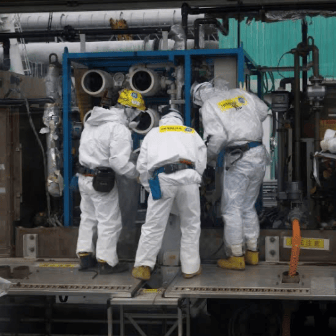
After the Fukushima nuclear accident, the health impacts of nuclear energy have been magnified exponentially.
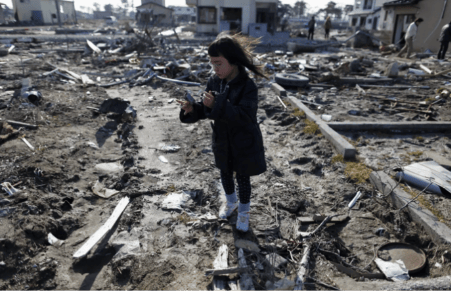
The Citizens’ Radiation Measurement Center is a non-profit organization established by local residents in Iwaki City, Fukushima Prefecture, dedicated to long-term monitoring of the nuclear accident’s impact on the health of local children.
Mr. Fujita, a researcher at the organization, noted: “To date, more than 400 people have been diagnosed with thyroid cancer.” The incidence rate of thyroid cancer was originally 0.01 percent—in other words, one in every 10,000 people. However, following the nuclear accident, more than 400 cases were detected in Iwaki City alone, which has a population of 310,000, bringing the incidence rate to 0.1 percent.[29]
Similarly, the issue of nuclear waste disposal has become a reason for people to oppose nuclear power.
Grandma Ushizaki, mentioned earlier, said, “A nuclear power plant is like a well-built apartment building without a bathroom.” The radioactive elements in nuclear waste cannot be eliminated. These elements require tens of millions or even hundreds of millions of years for a single half-life to elapse.[30] Therefore, the only viable solution is to bury the waste and wait for it to decay on its own.
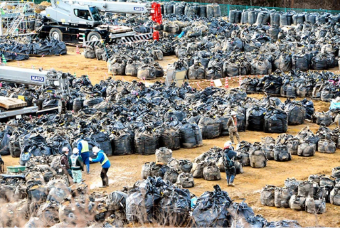
Regarding the option of burial, Ms. Murakami, leader of the Citizens’ Committee on Nuclear Energy, expressed her objection: “Why should we use an energy source that continuously produces poison? Stopping the use of nuclear energy is not just for our sake, but also for the sake of future generations.”
Her grandmother died in the fires that followed the atomic bombing, and her mother’s older brother suffered from radiation-induced cancer throughout his life. Members of her family were victims of the atomic bombings, and as a second-generation survivor, she has inherited this fear. She said, “After the Fukushima nuclear accident, I met some young women who said they didn’t want to have children because they didn’t know what the consequences might be.”
However, for a country like Japan—which is prone to earthquakes and faces a high risk of natural disasters[31]—“burial” itself does not mean the problem is solved. Japan lies on a seismic belt and is threatened by typhoons, so even if waste is buried underground, it could be affected by other disasters, leading to leaks.
Beyond Support and Opposition
In reality, many Japanese people’s attitudes do not fall neatly into the categories of “for” or “against,” but rather exist in a gray area.
When asked about their views on nuclear power, 40% of respondents said they were “undecided.” Among them, 48% of those aged 20–30 were unwilling to express an opinion.[32]
Ms. Murakami offered an explanation in the interview: “I don’t think they lack interest. They’re just tired of the conversation about nuclear power.”
However, Ms. Shiraishi, founder of OurPlanet TV, offered another perspective. She said, “Today, major television networks are increasingly focused on what viewers want to watch, and unfortunately, serious social issues aren’t what the general public wants to see. In Fukushima today, many children know nothing about the nuclear accident.”
This silence did not begin with Fukushima. Ms. Shiraishi also pointed out, “In Japan, the very status of being a nuclear victim carries risks: in the wake of Hiroshima and Nagasaki, being recognized as a victim means that future generations may face discrimination.”
Consequently, media coverage of the issue has dwindled, and the public has chosen to numb itself with entertainment. More and more people have stopped paying attention to it. Although the debate between supporters and opponents continues, those engaged in it remain a small minority. For most Japanese people, nuclear power has receded into a term that occasionally flashes by in short videos—an issue on which they need not, and cannot, take a stance.
[1] https://www.jstage.jst.go.jp/article/butsuri/72/3/72_178/_pdf
[2] https://www.aec.go.jp/kettei/hakusho/1956/ss1010301.html
[3] https://www.enecho.meti.go.jp/about/special/tokushu/nuclear/nihonnonuclear.html
[4] https://www.eia.gov/todayinenergy/detail.php?id=550&
[5] https://www.aec.go.jp/kettei/hakusho/1985/sb1010201.html
[6]https://www.pref.shizuoka.jp/_res/projects/default_project/_page_/001/030/315/siryou3.pdf
[7] https://www.pewresearch.org/global/2012/06/05/japanese-wary-of-nuclear-energy/
[8] https://www.alterna.co.jp/9383/
[9] https://www.tokyo-np.co.jp/article/152190
[10] https://www.magazine9.jp/article/konohito/22887/
[11] https://www.enecho.meti.go.jp/about/whitepaper/2023/html/1-2-2.html
[12] https://www.enecho.meti.go.jp/about/whitepaper/2022/html/1-3-2.html
[13] https://www.cas.go.jp/jp/seisaku/gx_jikkou_kaigi/kihon.html
[14] https://www.jaero.or.jp/_files/poll/results_2025.pdf
[15] https://www.pref.fukushima.lg.jp/uploaded/attachment/14618.pdf
[16] https://www.aec.go.jp/kettei/ugoki/geppou/V19/N04/197408V19N04.html
[17] https://www.jichiro.gr.jp/jichiken_kako/report/rep_hyogo34/10/1011_jre/index.htm
[18] https://www.enecho.meti.go.jp/about/energytrends/202506/html/s-1-1.html
[19]https://www.cnpc.com.cn/syzs/ypysc/201503/39d11990f7334b53ba3efa8ca77aa161.shtml
[20] https://www.mlit.go.jp/english/white-paper/unyu-whitepaper/1975/1975010102.html
[21] https://www5.cao.go.jp/keizai3/keizaiwp/wp-je77/wp-je77-02501.html
[22] https://www.enecho.meti.go.jp/about/energytrends/202506/html/s-1-1.html
[23] https://www.enecho.meti.go.jp/about/whitepaper/2018html/2-1-3.html
[24] https://www.enecho.meti.go.jp/about/whitepaper/2019html/2-1-1.html
[25]https://www.enecho.meti.go.jp/about/special/johoteikyo/energyissue2024_1.html
[26] https://www.env.go.jp/en/headline/1763.html
[27] https://www.env.go.jp/press/19016.html
[28] https://www.iea.org/reports/the-path-to-a-new-era-for-nuclear-energy/status-of-nuclear-energy
[29] https://ganjoho.jp/reg_stat/statistics/stat/cancer/24_thyroid.html
[30] https://www.nrc.gov/reading-rm/doc-collections/fact-sheets/radwaste
[31] https://www.mofa.go.jp/policy/disaster/21st/2.html
[32] https://asianews.network/many-japanese-undecided-on-nuclear-plants-survey-says/

