Authors: Duo Ye, Shengzhe Ni, Jiacheng Zhang, Benjamin Lou, Jingxing Xu (in no particular order)
Qingbang Island lies in the Dongji waters of the Zhoushan Archipelago. It is an offshore island where the movement of people and supplies depends entirely on ship transport. As a small inhabited island combining fishery and coastal tourism functions, Qingbang Island is confronted with several waste-handling challenges. Waste must be shipped off-island at high transport costs, waste disposal facilities on the island are limited, and the island’s ecological space faces tight carrying-capacity constraints. Meanwhile, the island experiences striking population disparities between peak and off‑peak seasons. In peak tourist seasons, large numbers of tourists flood in. Kitchen waste, single-use plastic products, and discarded fishing gear pile up together, further intensifying the pressure on waste management.
Against this real-world background, the concept of the “zero-waste island” has emerged as a cutting-edge trend in global island ecological governance. Qingbang Marine Conservation Center, a local non-profit group, attempts to move beyond the conventional model of shipping all waste off-island for incineration and explore on-site resource-utilization and recycling solutions. The organization has carried out projects such as coastal cleanup activities, community recycling, kitchen-waste composting, reusable-cup promotion, and fishing-waste recovery, gradually establishing a waste recycling system for the island.
The Current Situation of Economic Costs and Benefits in Waste Management
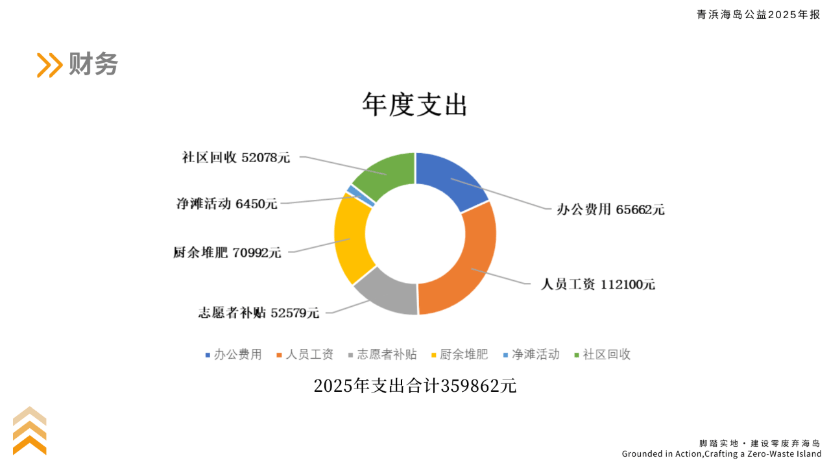
In Qingbang Marine Conservation Center’s annual expenditures, personnel salaries, office expenses, and volunteer subsidies accounted for 64% of total spending, representing the organization’s main outlays.
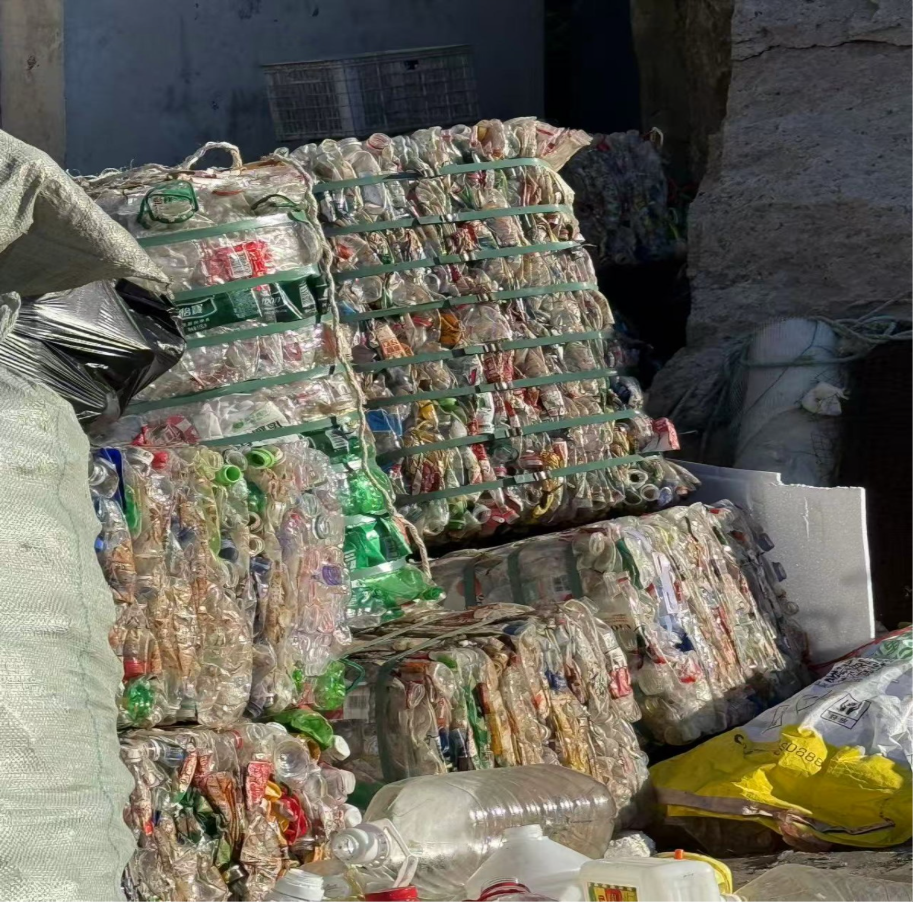
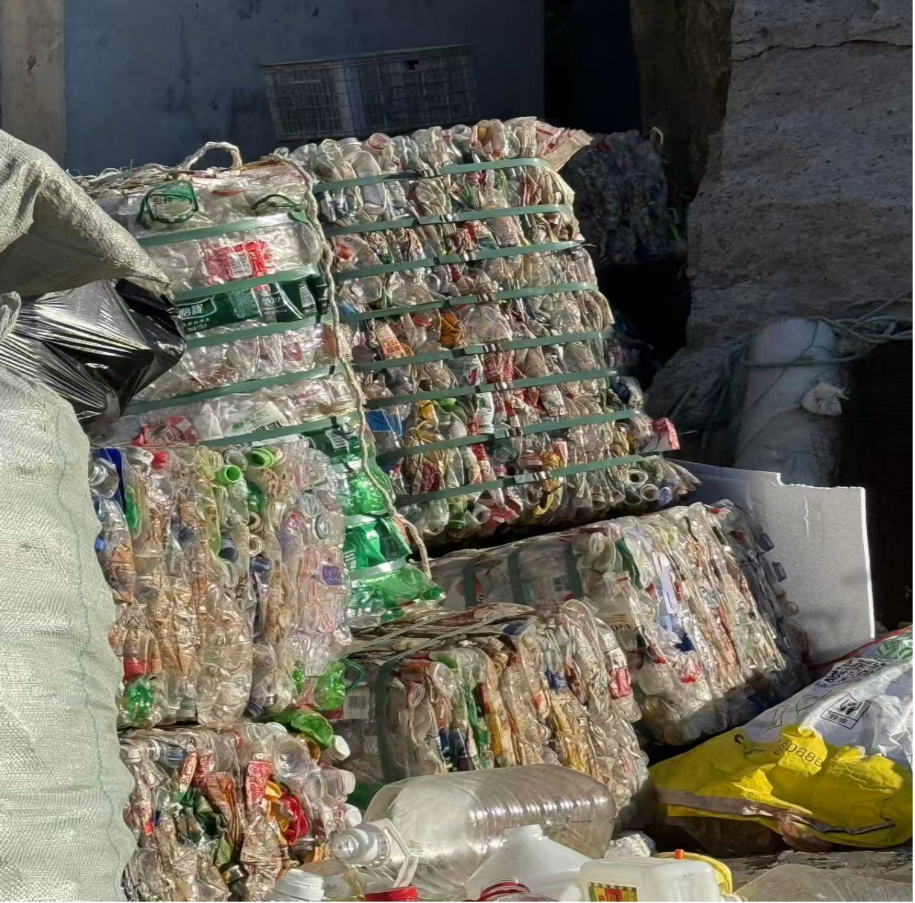
Hai Shu noted that in the waste management process, costs related to compacting and transporting waste are relatively high. Maritime transportation of garbage involves significant expenses; however, since the organization can ride free on government waste transport vessels, some costs are saved. Nevertheless, the organization still bears the crane loading and unloading fees. The village head mentioned that the government organizes collective maritime waste disposal approximately every twenty days, with each trip costing around 50,000 to 60,000 yuan. However, after unloading, the costs associated with selling recyclables and transporting residual waste must be covered by the Qingbang Marine Conservation Center itself. Compacting waste is a time-consuming and labor-intensive task on the island, where only one compressor is available for processing recyclables, resulting in relatively low efficiency.
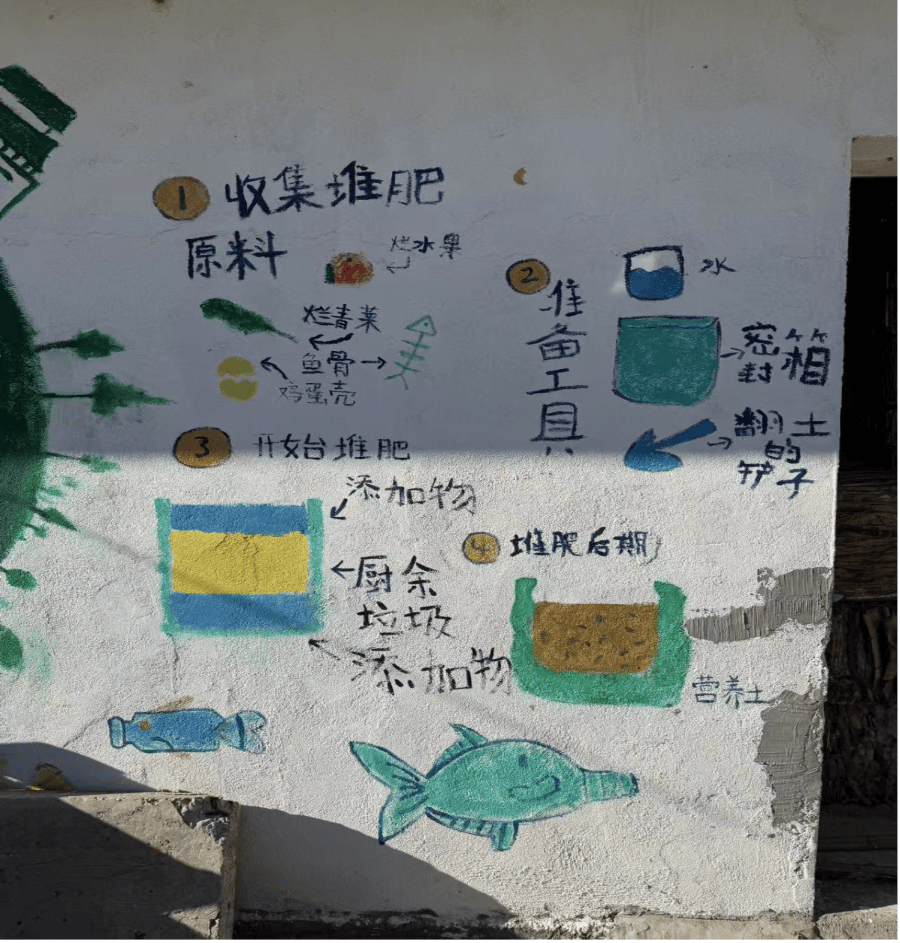
Qingbang Marine Conservation Center staff collect food waste from local restaurants and guesthouses, then compost it using homemade methods and distribute the compost free of charge to villagers. However, composting incurs substantial costs—composting expenses alone reached 70,992 yuan in Qingbang Marine Conservation Center’s 2025 annual budget.
Qingbang Marine Conservation Center’s waste management efforts have also brought considerable benefits to the local government. The village head explained that because waste needs to be transported off-island for disposal, the organization’s composting of food waste significantly reduces additional transportation costs. Moreover, he emphasized that maintaining ecological balance is crucial on Qingbang Island, a small island primarily dependent on tourism. Without the joint efforts of public welfare organizations and local authorities in managing marine debris, future ecological restoration costs would be extremely high.
The paid recycling program for recyclable materials conducted by Qingbang Marine Conservation Center has increased villagers’ incomes. Zhou, a part-time recycler, said, “Previously, elders would casually throw away cardboard boxes, but now they save them and wait for us to come pick them up. Even three jiao per 500 grams adds up.”
The Challenges of Zero-waste Community Development in the Aspect of Economics
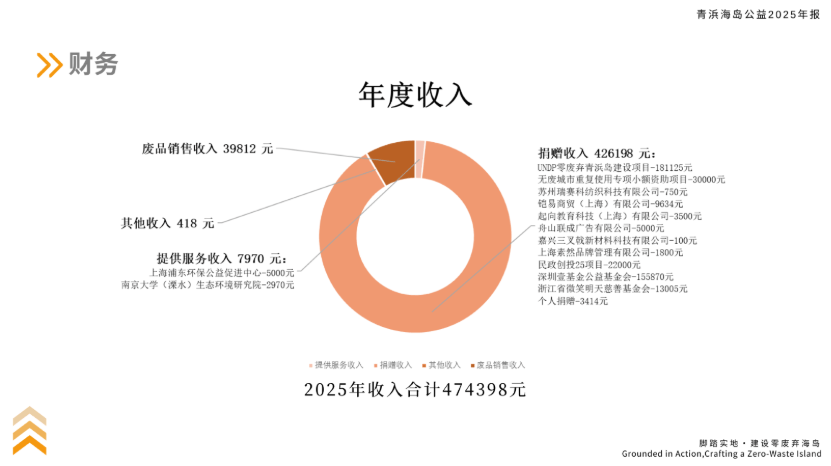
One of the challenges in implementing the “zero-waste” concept on Qingbang Island is the extremely high cost of waste management. Ms. Sheng, a staff member at Qingbang Marine Conservation Center , explained that the greater the amount of recyclables collected by the island community, the higher the financial loss. The organization’s income mainly comes from foundation project grants, with only a small portion derived from government public welfare investments, corporate donations, and individual contributions—making funding sources highly uncertain. Whether we can continue our collaboration next time remains entirely unknown, she said. Regarding this issue, Ms. Xu from Haizhiqu believes adjustments can be made based on budget considerations, taking a comprehensive approach.
Meanwhile, most tourists visiting Qingbang Island stay for short periods, making it difficult to change or cultivate their environmental awareness quickly. Hai Shu, head of the Qingbang Marine Conservation Center, noted that the brief stays limit the effectiveness of environmental education: “Tourists just come and go—they’re here briefly and leave.” Fortunately, Ms. Zhou, owner of Qingbang Department Store, shared that “some tourists have already purchased several pieces of clothing made from recycled nylon (PET polyester).” The general store is a collaborative space jointly established by Qingbang Marine Conservation Center, Jiaxing Sanchaji Company, and Shanghai ZUCZUG Company. It transforms plastic into garments, hats, bags, refrigerator magnets, and other items displayed within the shop. As visitors browse and purchase, they are subtly encouraged to develop an eco-conscious mindset.
As tourism on Qingbang Island grows, so does the use of disposable products and food waste. The development of tourism must therefore be balanced with the construction of a zero-waste community. During peak tourist seasons, garbage volume surges, placing significant pressure on existing staff. Waste generation during peak season far exceeds that of off-seasons, with restaurants producing the highest proportion of food waste—accounting for 57%—followed by guesthouses. Most merchants, overwhelmed by workload, cannot sort waste in advance, resulting in mixed waste containing plastic bags and other contaminants, which require staff to perform secondary sorting.
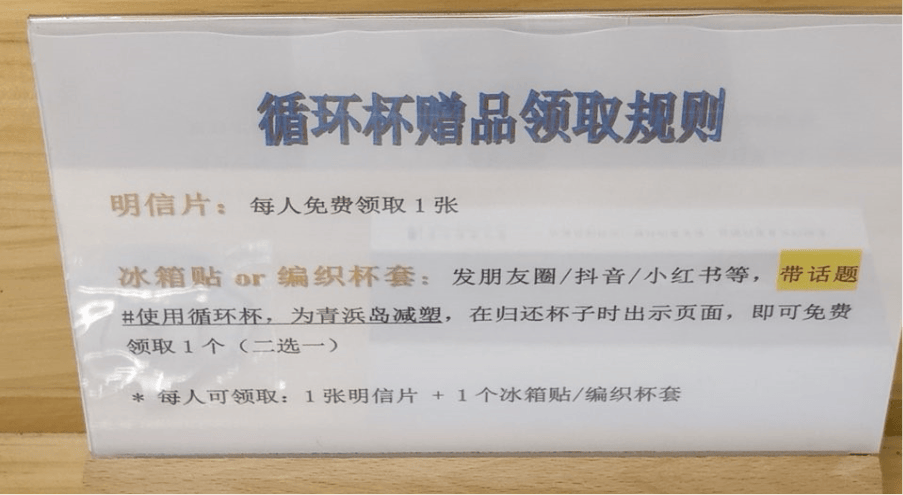
Qingbang Marine Conservation Center launched the “Hi-Yi Cup” reusable cup initiative, collaborating with 26 guesthouses, three beverage shops, and Qingbang Ferry Station on the island to promote plastic reduction at the source. Made of polypropylene (PP) synthetic plastic, the cups are designed for up to 100 reuses. Customers who use the reusable cups at partner beverage stores receive a free postcard, fridge magnet, or knitted cup sleeve. From August 1 to August 31, 2026, using a reusable cup grants a 5-yuan discount, effectively encouraging tourists toward more sustainable lifestyles.
In 2025, Qingbang Marine Conservation Center loaned out 78 reusable cups, achieving a 96% return rate, with 26 local guesthouses serving as designated return points. Most users were tourists, who typically returned the cups the same day or the following day. Ms. Sheng emphasized, “We should first reduce plastic usage—rather than aiming to eliminate it entirely from the start.”
Developing a Sustainable Community Economic Development Model
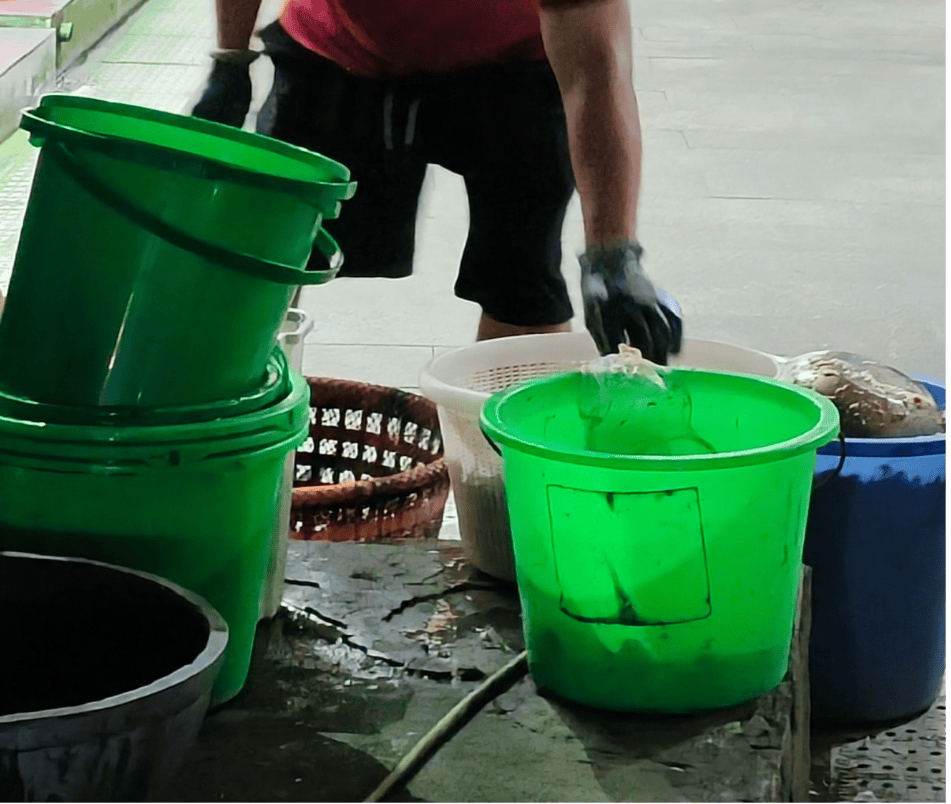
Most of the waste on Qingbang Island comes from tourist businesses such as guesthouses and restaurants. During peak season, the volume of garbage grows dramatically, placing a heavy financial burden on the village due to high disposal costs. However, because of Qingbang’s remote geographical location, waste must be transported by boat, making it extremely expensive. Through community recycling programs and composting initiatives, Qingbang Marine Conservation Center has managed to reduce the amount of waste requiring off-island transportation by approximately 50 tons annually. Today, the island no longer relies entirely on external waste removal; instead, most organic waste is processed locally, while recyclables are collected centrally. To minimize disruption to residents, food waste is treated via aerobic composting near the village landfill site, and the resulting fertilizer is used for growing vegetables in local households. Plastic, paper, and other recyclable materials are also systematically collected and repurposed. Fishing-related waste—such as fishing hooks, small buoys, and floating debris—is one of the main types of trash. Qingbang Marine Conservation Center sorts out buoys and sends them to manufacturers for reuse, significantly reducing transportation expenses.
In 2025, Qingbang Island welcomed nearly 160,000 visitors, with tourism concentrated during the summer months. In the off-season, the permanent population drops to just three or four hundred people. According to Hai Shu, current island tourism mainly consists of short-term sightseeing trips, with few family-oriented experiential activities. High summer temperatures discourage outdoor excursions, leading to a significant income gap between peak and off-peak seasons. Wu Boss, a guesthouse operator, mentioned that he invested 12 million yuan to build a mountain-top guesthouse, but the return on investment takes a long time.
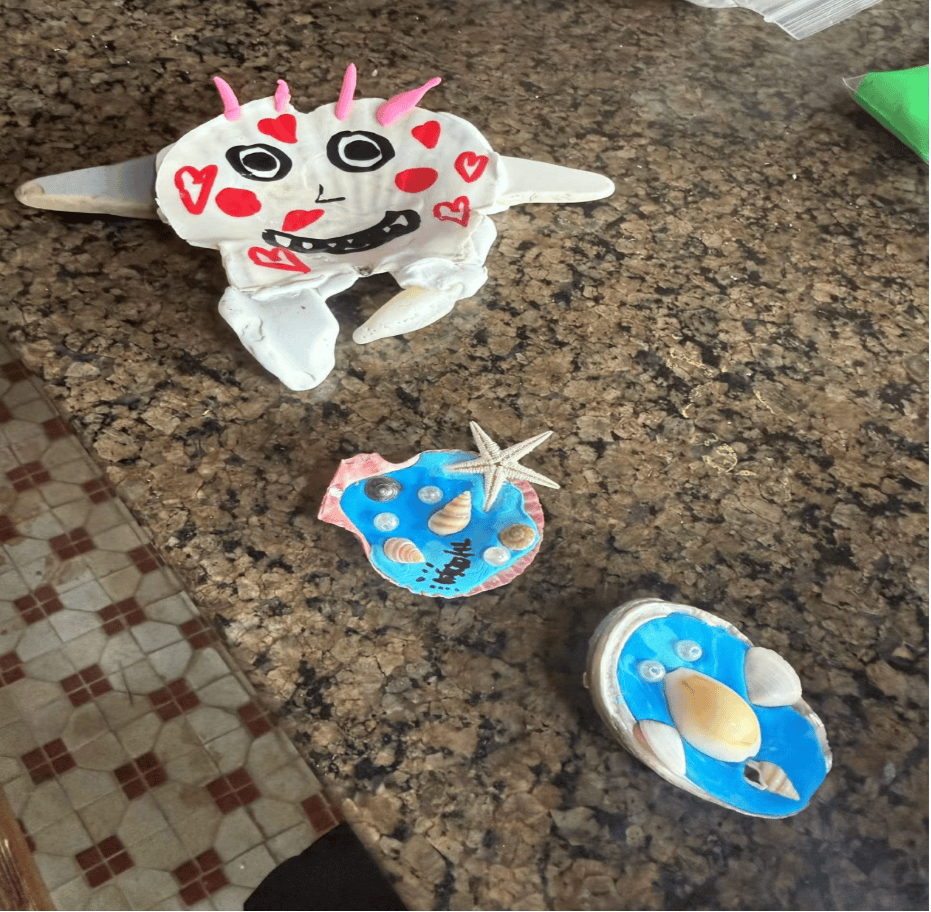
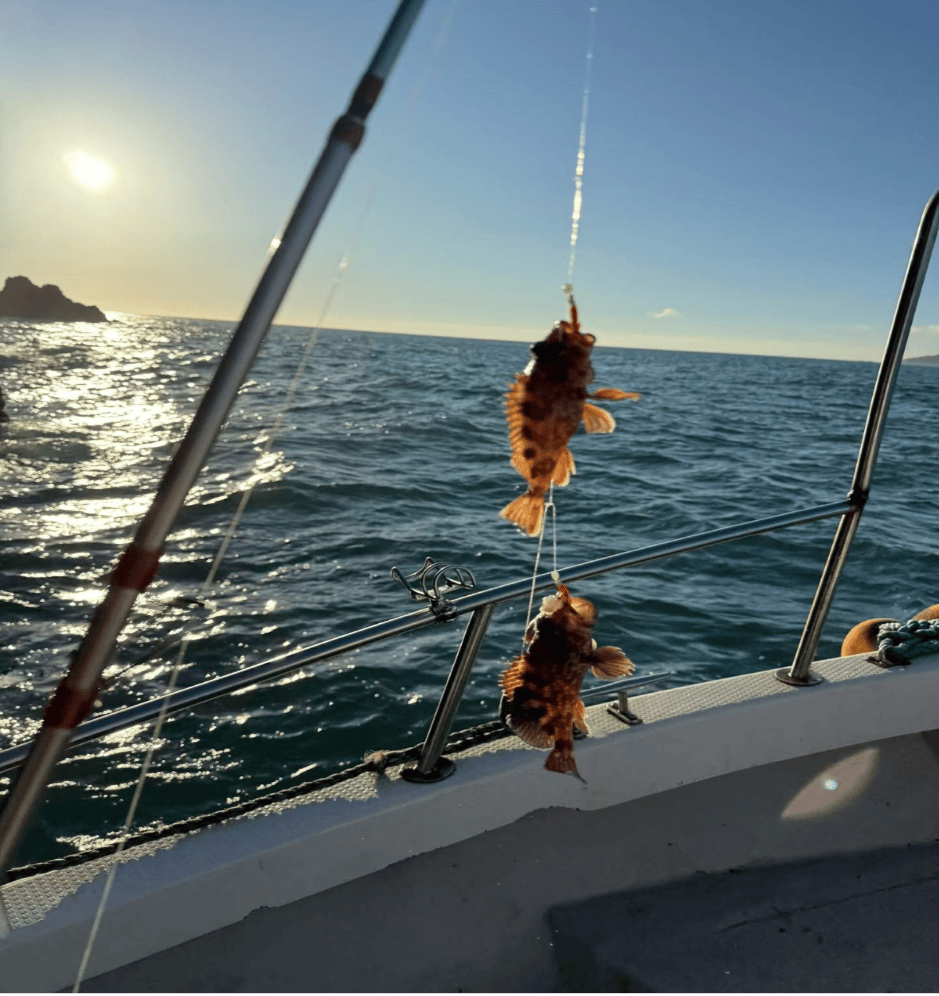
Qingbang Island is now exploring ways to turn environmental protection into a cultural tourism highlight, offering educational experiences such as coastal cleanups, waste sorting, and composting workshops. Ms. Zhou, owner of Qingbang Department Store, explained that local shops have partnered with public welfare organizations to create offline Eco-experience spaces. They are also experimenting with crafting cultural and creative bags from discarded fishing nets, although these products still face challenges and will require time before becoming profitable. Meanwhile, the island is actively promoting recreational fishing. Tourist Xiao Xu paid 25 yuan to rent a fishing rod and 70 yuan to repair his gear, often losing fish due to poor fishing spot conditions. Yet, despite the hot weather, he still enjoys the experience.
Another visitor, Lan, noted that cliffside fishing requires climbing, involves many mosquitoes, and poses safety risks—but remains highly appealing. Going forward, the island plans to designate safe fishing spots, standardize recreational fishing activities, and integrate ecological education, eco-friendly crafts, and sea fishing into a cohesive tourism package. This approach aims to enrich travel offerings, balance visitor flow across seasons, and transform island resources into sustainable revenue.
When it comes to the waste management model on the island, Hai Shu pointed out that tourists have high mobility, so the island’s governance needs to rely more on the support of local merchants and residents. Currently, Qingbang Marine Conservation Center is responsible for the main execution of the projects; local residents are important participants in waste sorting and recycling; catering and accommodation merchants undertake the key tasks of reducing kitchen waste and controlling the use of disposable items; the village committee and the government’s sanitation department undertake the basic waste disposal tasks; environmental protection enterprises and foundations provide the main economic support.
The village head said, “We have five sanitation workers and three coastal cleaners.” The village committee not only undertakes the daily environmental maintenance work on the island but also provides support for the Qingbang Marine Conservation Center. “Hai Shu has been here for over a decade and is no different from the local island residents. Storage sites are given priority for their use.”
During the long-term cooperation process, the government and Qingbang Marine Conservation Center have established long-term trust. Overall, with the joint support of government, charity donations, residents’ participation, and merchants’ cooperation, Qingbang Island has accumulated a series of practical experiences in areas such as coastal cleanup, waste sorting, kitchen waste composting, and resource recycling.
Island waste management is not the responsibility of a single party alone. Only through collective cooperation can we increase local economic income and improve the environment. In the long term, continuously improving the waste recycling system and establishing Qingbang Island’s unique zero-waste island brand can not only protect marine ecosystems but also boost residents’ incomes, promoting sustainable development that integrates ecological conservation, industry growth, and improved livelihoods on the island.

