Authors: Wu Kanzhen, Jiang Moyan, Zhang Zhicheng, Hu Chenshan (in no particular order)
“I’ve finally gone from being an amateur garbage collector to becoming a professional trash picker,” said Uncle Hai, the pioneer in charge of the Qingbang Marine Conservation Center.
Since the beginning of the industrial era, the ocean has long served as the silent “terminal” of urban society—the final destination for waste. This problem is particularly prominent on small islands with limited capacity. Qingbang Island is one such small, inhabited island in Zhejiang, East China Sea. As an end point combining tourism and fishing, the island faces the same challenges: high costs of transporting garbage off the island, insufficient waste-processing capacity, and limited space. It was against this background that Qingbang Island began its exploration and practice of becoming a “Zero-Waste Island Community.”
Current Status of Waste-Sorting and Disposal — Reducing Off-site Waste Transportation at the Source
Kitchen-waste disposal constitutes a vital component for building a zero-waste community. Kitchen waste collected from local restaurants undergoes simple on-site treatment before being transported to composting sites, where natural fermentation turns it into usable fertilizer. This eases the pressure of transporting kitchen waste off-island and transforms what was once regarded as trash into reusable resources.
In practice, staff and volunteers from Qingbang Marine Conservation Center collect kitchen waste door-to-door every day. After draining liquids and grease, the waste is delivered to composting sites. During composting, workers regularly monitor temperature and turn the piles as needed to maintain stable fermentation. After roughly two months of processing, kitchen waste is converted into fertilizer, which residents can collect for home gardening.
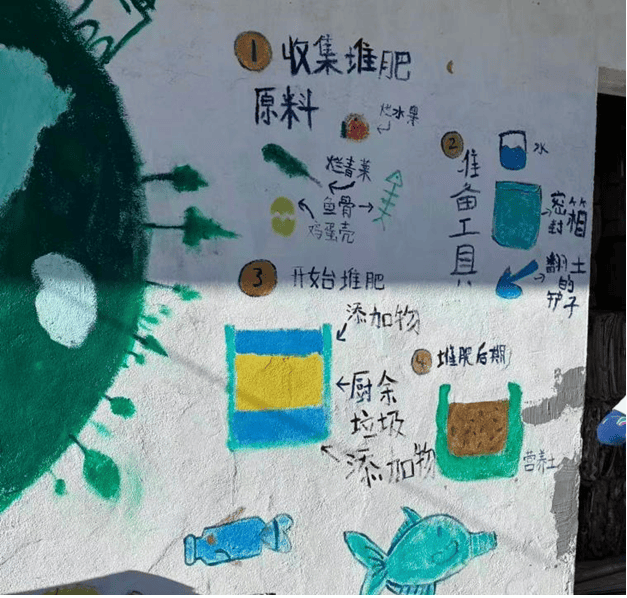
Nevertheless, establishing mature kitchen-waste composting has come with numerous challenges. In the project’s early exploratory phase, issues such as liquid leakage and unpleasant odors constantly troubled the team, and treatment methods had to be revised repeatedly. Mr. Xiong, a core staff member for kitchen-waste management, gradually mastered relevant techniques through hands-on practice. He noted that kitchen-waste handling demands massive time and energy investment. For instance, draining alone takes considerable time in one full processing cycle, and ongoing supervision is required throughout the subsequent composting phase. Moreover, contaminants mixed into kitchen waste—such as plastic fragments and shells—compromise the quality of the final fertilizer.
Through repeated trials and adjustments, Qingbang Island has gradually developed a relatively stable workflow for kitchen-waste treatment. Mr. Xiong’s experience illustrates that zero-waste goals are far more than simply “getting rid of garbage.” They require long-term practice, continuous technical refinement, and united community participation. When local residents see crops growing stronger, nourished by this home-made fertilizer, they gain a deeper understanding that waste can hold valuable resources.
Beyond kitchen-waste management, Qingbang Marine Conservation Center has set up a waste-recycling system that motivates residents to sort waste via paid collection. Residents save qualified recyclables, and staff make regular door‑to‑door pick‑ups. Residents receive cash or vouchers based on weight. The vouchers can be spent at designated island supermarkets or redeemed for cash.
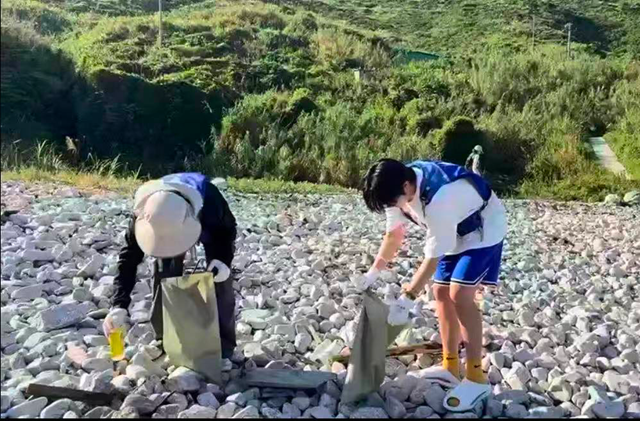
Qingbang Marine Conservation Center also organizes regular beach-clean-up events. Volunteers, staff, and residents gather to collect and sort beach litter for unified disposal. However, marine waste keeps washing ashore; one-off clean-ups cannot solve the problem. Tides, waves, and weather continuously bring new rubbish onto the coast. Yuan, a volunteer participating in beach clean-ups, commented: “Fresh waves often deposit new trash on the beach almost right after we finish cleaning.”
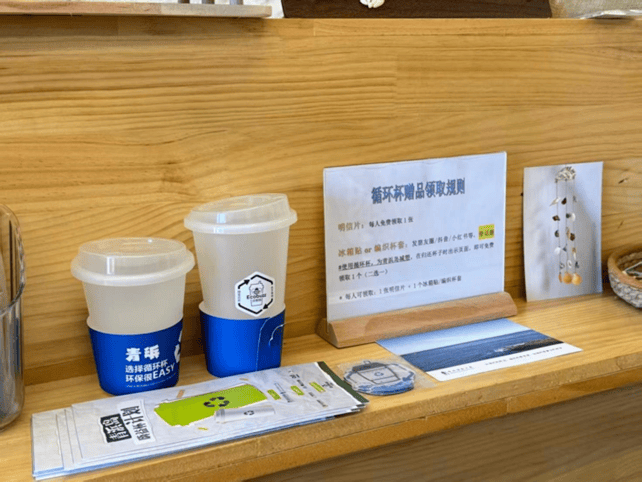
Besides clean-up work, the organization explores source-reduction solutions to cut waste generation. The reusable-cup project is one key initiative targeting single-use plastic reduction for tourists. Tourists borrow cups from partner beverage shops with no deposit and return them at designated drop‑off points. Staff clean and disinfect returned cups for repeated use. Made of PP material, each cup can be reused nearly one hundred times. In 2025, 78 cups were lent out under this project, achieving a high return rate of 96%. The program has partnered with 26 local homestays across the island to set up return stations for tourist convenience.
Public Education and Community Practice — Bringing the Zero-Waste Concept into Daily Life
A zero-waste community does not rely only on waste management technologies. More importantly, it requires public understanding and participation. According to the Qingbang Marine Conservation Center, only when residents and visitors truly understand the waste problem and recognize how their own actions affect the environment can environmental protection become a long-term practice.
In terms of public education, Qingbang Marine Conservation Center uses both online and offline methods to spread environmental awareness. Online, they use platforms such as WeChat official accounts, Rednotes, and video channels to share information about waste sorting, beach-cleaning activities, and the progress of the project. These platforms allow more people to understand the challenges of waste management on islands. Offline, they use wall paintings, environmental campaigns, and community notices to help residents and visitors directly engage with the idea of zero waste. Among these efforts, Uncle Hai plays an important role in environmental communication. Through videos, livestreams, and public space exhibitions, he allows more people to see the environmental practices taking place on Qingbang Island. At the same time, he emphasizes that environmental protection is not simply about asking people to “produce no waste,” but about finding realistic ways to “gradually reduce waste.”
However, spreading ideas alone is not enough. Qingbang Marine Conservation Center has increasingly focused on encouraging residents and visitors to take real action and turn environmental protection from a slogan into part of daily life. In community practice, projects such as waste collection and food waste composting allow residents to become important participants in building a zero-waste community. Besides involving local residents, Qingbang Marine Conservation Center also explores interactive projects that encourage tourists to move from being observers of environmental protection to active participants.
The reusable cup project is one of the important attempts. Compared with simply promoting environmental awareness, this project allows visitors to reduce the use of disposable products through direct experience during their trips. Over time, many visitors have developed the habit of returning the cups voluntarily. This shows that when environmental actions are designed in a clear and convenient way, people are more willing to participate. The development of the reusable cup project also reflects how environmental awareness can gradually change. The high return rate of cups suggests that visitors have already accepted this new behavior. As Ms. Sheng, a staff member of Qingbang Marine Conservation Center, said, “We should reduce plastic use first; we cannot completely eliminate plastic from the beginning.” This idea represents Qingbang Marine Conservation Center’s understanding of zero waste: environmental protection should not force people to immediately change their entire lifestyle. Instead, by reducing waste and promoting recycling within realistic conditions, environmental actions can slowly become everyday habits.
Beach-cleaning activities also serve an important role in public education. Compared with simply reading environmental information, personally participating in Coastal Cleanup allows people to better understand the difficulty of managing marine waste. Mr. Ma, a volunteer who joined beach-cleaning activities on Qingbang Island, realized after his experience that the types and amount of waste on the beach were much more complicated than he had expected. The island experiences two high tides every day, and waves continuously bring new waste back to the shore. After one typhoon, he saw a large amount of garbage blown onto the beach. Through these experiences, he gained a deeper understanding of the challenges of island waste management and developed stronger environmental awareness and motivation to take action.
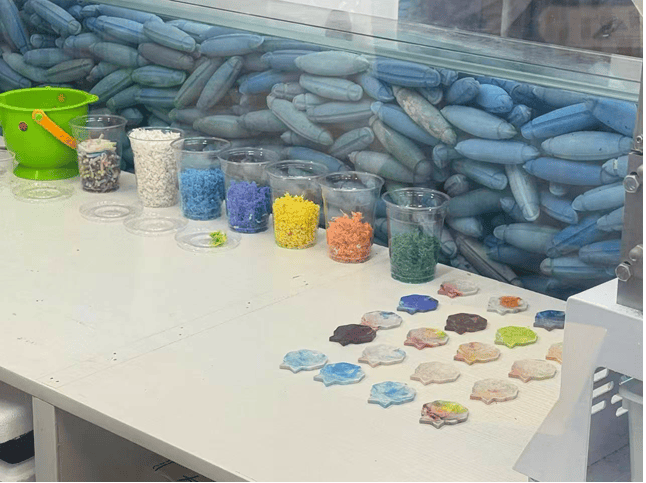
Qingbang Department Store spreads the concept of zero waste from the perspective of environmentally friendly product design. The store cooperates with some environmental brands to transform waste plastic into products with local characteristics, such as clothing, cushions, and badges. The person in charge of the store, Da Hai, collects plastic bottle caps from the beach, then crushes and heats the waste plastic until it becomes liquid before putting it into molds to create colorful badges. This process allows visitors to directly see how waste can gain new value through design and reuse, further strengthening their understanding of resource recycling.
Through public education and community participation, Qingbang Island demonstrates that zero waste is not only a method of waste treatment, but also a process of changing people’s attitudes and behaviors. By allowing residents and visitors to participate in practical actions, environmental protection gradually becomes a natural part of everyday life.
Challenges in the Construction of a Zero-Waste Community on Qingbang Island
Although several zero-waste practices have been implemented on Qingbang Island, many difficulties remain in their promotion. Ms. Xu from Haizhiqu pointed out that the core contradiction of zero-waste work on islands is, “It is a problem of coping with inputs from an open system within a closed or semi-closed geographical unit characterized by limited space, constrained resources, and fragile ecology.” This highlights the uniqueness of island environmental governance: the island’s resources are limited, but external waste and environmental pressures are constantly increasing.
For Qingbang Marine Conservation Center, the cost of waste transportation has long been a persistent problem. Although the government provides support for transportation—for example, recyclables can be transported out via government vessels—the costs of sorting, labor, and management before and after treatment still need to be borne by the organization. According to Uncle Hai, the overall waste recycling of Qingbang Marine Conservation Center is still in a deficit. The recycling price paid to residents is relatively low, and the revenue from selling waste is also limited, which can hardly cover transportation and labor costs. Therefore, recycling is not only an environmental protection initiative, but also an operational work requiring continuous investment. The cost of volunteers and staff is also one of the pressures faced by the organization. Although volunteers participating in cleaning receive a small daily subsidy, the cost remains considerable for long-term environmental protection work.
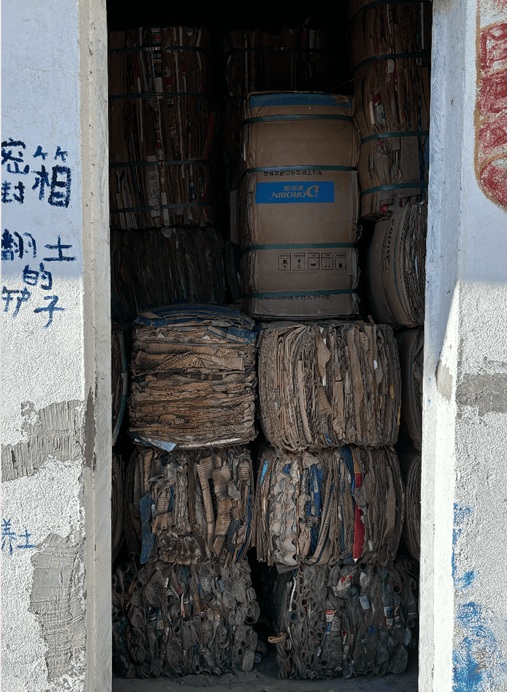
From the government’s perspective, waste disposal requires substantial financial support as well. According to the village head, Qingbang Island needs regular waste cleaning, which incurs expensive costs each time. In addition, since the island does not charge any entrance fees, local villagers have limited sources of income, and the benefits brought by tourism are mainly concentrated among commercial operators on the island, which leaves the government under great pressure for environmental governance.
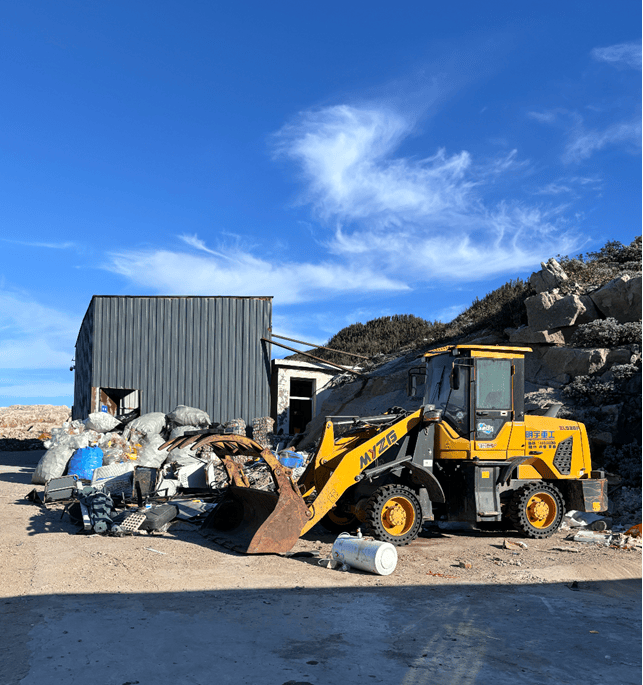
Tourism has brought economic opportunities to Qingbang Island, but it has also substantially increased the pressure of waste disposal. During the summer tourist peak season, the number of tourists on the island surges, leading to a corresponding increase in waste generation. The problems brought by tourists are not only the increase in waste volume, but also the difficulty of establishing environmental awareness due to their short stay. Many tourists stay on the island for one or two days, so they cannot gain an in-depth understanding of local waste disposal methods and environmental protection measures, and have little motivation to participate in long-term protection actions.
During cleaning work, staff often find waste such as plastic bottles and food packaging on the beach. Some non-recyclable waste can only be stored temporarily for unified treatment later. Waste left by tourists and brought by the ocean can even be found in places like the uninhabited village. Ms. Xu believes that the behaviors of tourists and residents cannot be changed simply through mandatory management; instead, long-term education and incentive mechanisms are required to gradually cultivate environmental awareness. Only when the public truly understands the significance of environmental protection actions can waste management achieve more stable long-term effects.
The zero-waste concept cannot be established in a short period, but is formed through continuous participation and experience. When volunteer Mr. Yuan brought his child to participate in volunteer services, the child’s initial impression was that “there is still a lot of waste every day, and the results are not very visible.” However, with constant participation in cleaning, they gradually realized that the value of waste disposal is not only to immediately improve the environment, but also to cultivate more people with environmental awareness for the future.
Mr. Yuan also mentioned that the current problem is not only about treatment methods, but is also related to the materials themselves. In the past, much waste could return to the natural environment, but the large-scale application of plastics has greatly increased ecological pressure. Thus, he hopes to “sow the seeds first” among children, so that more people will develop relevant awareness, and “change the use of materials to replace plastics in the future.” This illustrates the long-term significance of Qingbang Island’s zero-waste practice: zero-waste does not mean solving all waste problems in a short time, but gradually changing public perception through repeated practices, leaving room for deeper changes in the future.
For Qingbang Island, where space and resources are limited, the island has been exploring a model for building a zero-waste island community through waste sorting, resource recycling, public education, and community participation. However, it still faces challenges such as insufficient funding, difficulties in waste transportation, the pressure of tourist-generated waste, and the long time required to develop environmental awareness.
Looking ahead, Qingbang Marine Conservation Center will build on its existing environmental initiatives and continue promoting local environmental actions to create a zero-waste island. In the future, the organization hopes to strengthen environmental education, raise residents’ environmental awareness, promote sustainable tourism among visitors, and encourage greater public participation in island ecological conservation. At the same time, Qingbang Island needs to further improve its waste sorting, recycling, and treatment facilities, such as optimizing plastic compression equipment and improving the transportation efficiency of recyclable materials.
Through the joint efforts of the government, residents, tourists, and social organizations, Qingbang Island could become a model zero-waste island that combines ecological protection with sustainable development, providing a useful reference for environmental management on other islands.

