制作人员:王子歌、陆佳欣、翁裕清、安兆涵
在贵州省黔西南的板万村,苍翠群山之间,一声声吟唱穿越晨雾与炊烟,那是布依族摩经在丧葬法事中的低回。摩经,是布依人用古语写就的生命密码,它记载着族群对死亡的敬畏、对祖先的追怀,也安顿着每一个生者的心灵。
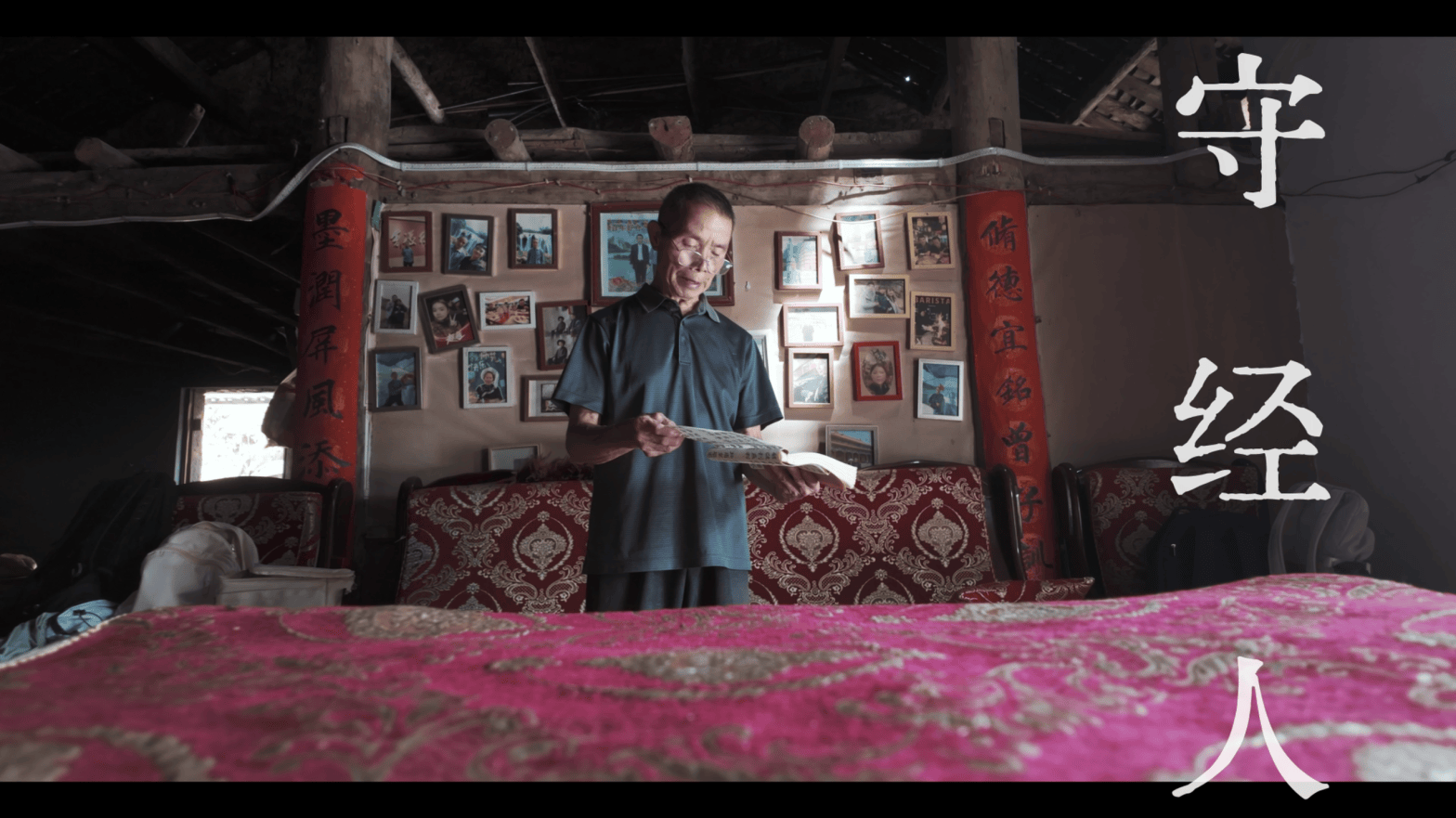
今年夏天,我们走进板万村,跟随着板万村最后一代摩公——黄老,一起翻开了那本泛黄的经书。
在黄老看来,摩公不是一件谋生的手艺,而是一种交换——你帮我,我才帮你。他与亡者对话,也替生者祈福;家家户户门楣上的符字,村里人敬畏的那句“很灵”,都是摩经渗入日常的证明。他的妻子在灶台边说起丈夫,说起死亡,神色平静,仿佛那只是庄稼的一次收割。
这部纪录片,不为猎奇,只为记录。记录摩经的回响,记录一个老人与死亡共处的日常,也记录在板万的山雾中,一种古老文明最后的心跳。
In Banwan Village, in Qianxinan, Guizhou Province, chants drift through the morning mist and rising cooking smoke among the lush green mountains. They are the low, solemn recitations of the Buyi Mo scriptures, performed during funeral rites. Written in an ancient form of the Buyi language, the Mo scriptures are a kind of code through which the community understands life itself. They preserve the Buyi people’s reverence for death and remembrance of their ancestors, while also offering comfort to those who remain.
This summer, we traveled to Banwan Village and, together with Huang, the village’s last remaining Mo priest, opened an old, yellowed book of scriptures.
To Huang, being a Mo priest is not a trade for making a living, but a form of reciprocity: you help me, and I help you. He speaks to the dead and prays for the living. The sacred symbols written above household doorways, and the villagers’ respectful refrain that “it really works,” are signs of how deeply the Mo tradition is woven into everyday life. Sitting by the stove, his wife speaks of her husband and of death with quiet composure, as though death were simply another harvest in the cycle of the fields.
This documentary is not made in search of the exotic. It is made simply to bear witness—to preserve the echoes of the Mo scriptures, to record an old man’s everyday life alongside death, and, amid the mountain mist of Banwan, to capture the final heartbeat of an ancient tradition.

