Huijun Wang, Zhi Xie(alphabetical order)
“That time, I felt the whole world incidents come to me.” We were sitting in Samina’s living room, talking about her life and challenges in Thailand. She laughed as she recalled what she had experienced, but behind that laughter were ten years of uncertainty and hardship.
Refugees are people who are forced to flee their home country and seek safety elsewhere. However, their legal and procedural statuses can differ. Some have been recognized by the UNHCR, while others are still seeking recognition or have not yet entered the formal process. In Thailand, these different forms of status can have significant consequences for people’s ability to work, access services, and live without fear of arrest or detention. According to the UNHCR, there are more than 86,000 refugees in Thailand currently because of war, religious persecution, or facing other threats to their security. The number of people seeking recognition is even higher.
Thailand is not a party to the 1951 Refugee Convention and does not have a national refugee status determination system equivalent to that established under the Convention. Although Thailand has adopted the principle of non-refoulement, people seeking protection may still face significant uncertainty over their legal status and right to remain in the country. This creates a legal dilemma where refugees wouldn’t be sent back to where they came from, but are illegal to stay in Thailand. Without any legal identification, those refugees struggled to survive.
Refugees are often portrayed as passive and vulnerable people who depend on governments, international organizations, or humanitarian agencies for survival. Yet our fieldwork with more than ten refugee families in Thailand revealed a more complicated picture. Despite prolonged legal uncertainty and limited resources, the people we interviewed were not simply waiting for assistance. They were finding ways to support their families, learning new skills, seeking income, building community networks, and helping others around them. At the same time, these forms of individual and collective agency remain constrained by the structural conditions in which they live. This research therefore examines not only the pain and insecurity produced by legal exclusion, but also how refugees actively navigate these constraints and attempt to rebuild their lives despite them.
Caught in a dilemma—Not staying, not leaving
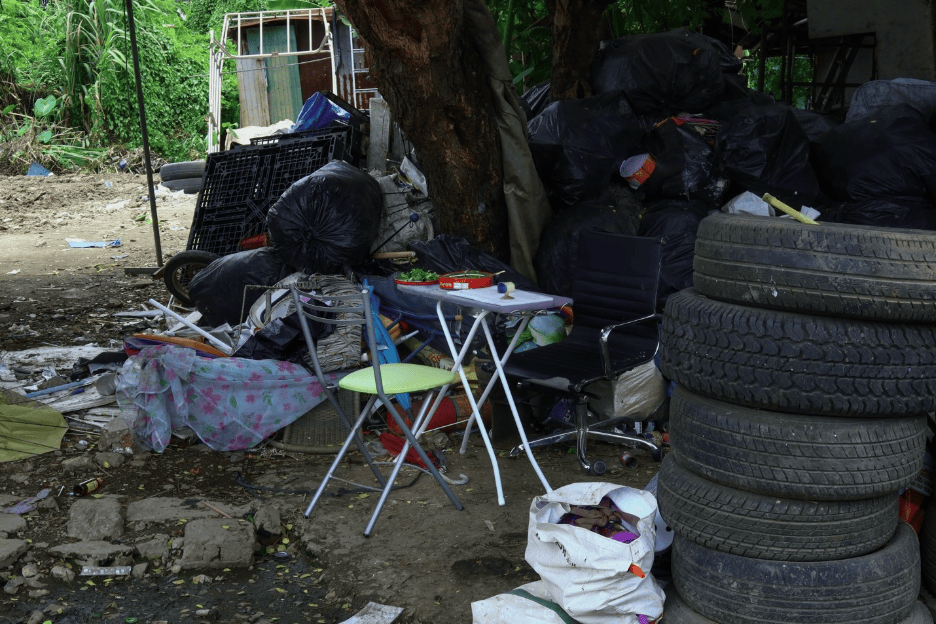
“Do you go outside to buy food, or…” Farhin shook her head helplessly. “No, if I go outside on the streets and the police see me, they will catch me.” Farhin is from Somalia and came to Thailand because of family problems. By the time we met her, she had been living in Thailand for thirteen years. For her, the fear of arrest was not an occasional concern. It shaped even the most ordinary decisions of daily life, including whether she could leave her home to buy food.
This pervasive fear is systematically engineered by a national legal framework that effectively criminalizes the search for asylum. As mentioned, Thailand is not a party to the 1951 Refugee Convention, and people without secure immigration status may face enforcement under Thailand’s immigration law B.E. 2522 (1979). If the police catch such people without secure immigration status, they will be sent to the detention center, where people are locked in small rooms, treated inhumanely, and bail money is unaffordable. If a person is caught and later released on bail, they may still have ongoing reporting requirements.
Consequently, the threat of detention acts as an invisible prison wall that dictates every aspect of a refugee’s existence. For people living with uncertain or irregular immigration status, therefore, the possibility of arrest is not simply a legal issue. It can restrict their mobility and shape how they work, seek services, and interact with the outside world.
The burden of this systemic vulnerability falls most heavily on fractured families, threatening to punish the very children whose parents fled to protect them. “In Somalia, I didn’t have work. My husband didn’t have work, either. He is lazy and abuses me…We have no income…” Tears were flowing out of Farhin’s eyes when talking about why coming to Thailand. Farhin came to Thailand with her one-year-old son and gave birth to her daughter in Thailand. Her son now attends a private school, and her daughter will be going to school soon. By the time we were talking with Farhin, her daughter sat next to her and watched us the whole time. She doesn’t speak English, nor does she know anything about legal status, resettlement, or police–she is way too young for this. Farhin’s fear of arrest therefore affects not only her own mobility, but also the stability of the family that depends on her.
Stripped of basic rights, refugees are not only defenseless against state authorities but are also rendered acutely vulnerable to interpersonal exploitation, forcing them to rely on evasion to survive. “I don’t blame the police, I don’t hate them–it is their job, their duty.” Jana came to Thailand with her little sister 12 years ago. She shared her story of numerous close calls with the police. Jana’s elder sister and brother-in-law settled in the US. When her sister went to Thailand to visit Jana, her brother-in-law had a conflict with her and reported to the Thai police that she stole their money while staying in their house. “He took the police to my house, pushed them to check my passport,” Jana recalled, “I told them I left my passport at my sister’s house. If you want to check, come with me so I can show you.” The police left eventually. Jana knew her brother-in-law was framing her and had no proof. Fearing the police would come again, Jana moved to a new apartment. She lied to survive.
Farhin and Jana’s stories illustrate how legal insecurity can shape refugees’ everyday decisions. Refugees are placed in a difficult position when they cannot safely return to their countries of origin while also lacking secure legal status in Thailand. Without a legal identity or recognition, the refugees live under the risk of being sent to the detention center and live in constant fear every day. Sometimes, they have to bribe the police to survive. They are trapped in the dilemma, between the danger in their home country and the unrecognition in Thailand—they can’t leave, they can’t stay.
Capernaum—Economic Insecurity and Fragile Survival
“The manager said: take whatever money you get; if you don’t want it, give it back.” In a Pakistan community, C sighed, telling this to us. C, her husband, and her son came to Thailand in April 2025. They live in a remote Pakistan community near the border of Bangkok. C’s husband was a construction worker back in Pakistan; years of hard work gave him chronic diseases, and an accident left him unable to perform any labour work. “He has serious back pain; he can’t work anymore.” C tried to reach out to NGOs, but all she was told was to wait. According to the staff in AAT (Asylum Access Thailand), the US fund accounted for around 50% of NGOs in Thailand. After the funding was cut, almost every NGO in Thailand was low on budget.
The endless wait–wait for a job, wait for food, wait for legal recognition–creates another layer of uncertainty for refugees’ families. “I want the UNHCR card the most,” said C. A card means recognition, recognition means possible resettlement, possible resettlement means hope. C doesn’t speak Thai or English. It’s hard to imagine how they made it to now. C said because of the language barrier and scarce work opportunities, she can hardly find work around. “I once found a job,” C said, “but my neighbor stole it; she said she can do better.”
The lack of legal access to formal employment leaves families like C’s with very limited options. Every single family we saw either worked informally for an extremely low salary or had no work. They are not protected by labor law and lack access to stable income. This further affects refugees’ ability to secure basic needs such as food, medical care, and housing. Economic insecurity therefore extends beyond income: when families have little or unstable income, even basic needs become difficult to secure.
“Sometimes we wake up with an empty stomach and sleep in hunger.” C said. Sometimes they ask for neighbors’ leftovers, sometimes they ask for money. C was taken into the detention center 2 times. She asked her friend to bail her out, and now she owes 40,000 baht to her friend and has to pay a monthly 2,000 baht rent for their house. To be honest, she would never be able to pay her friend back.
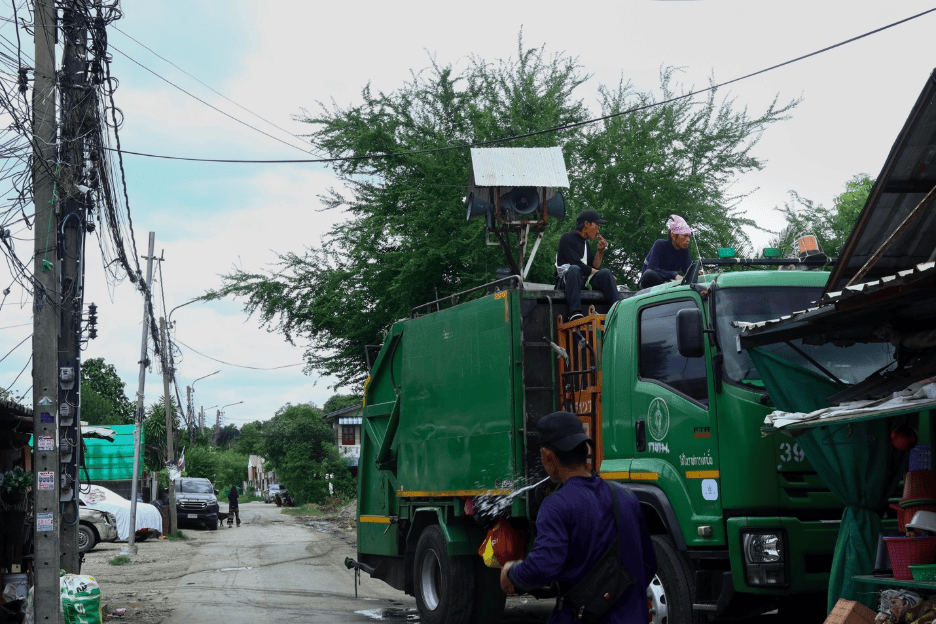
“One day I received a call. My husband was caught and sent to the detention center,” Samina recalled the time when her husband was caught by the police. “Organizations (NGOs) knew my situation. They gave me more orders to earn more money.” Samina works under a program organized by the AAT called Click Aroi, she cooks meals for them. “I can’t remember how many orders I made that time, too many.” After the intense work for 2 months, Samina raised enough money to bail her husband out—20,000 Baht. When her husband arrived at home, he was thin and weak, had long hair over his shoulders, extremely long nails, and dirt everywhere. Samina’s experience shows how a single incident such as detention can create a heavy financial and practical burden for a family. The family had to work intensively for two months simply to raise the money needed for her husband’s release.
Legal exclusion does not simply deprive refugees of employment; it pushes them toward forms of livelihood that remain unstable and insufficient to secure long-term family well-being. Even if families did manage to reach a stable economic condition, all it needs to disrupt the stability is an accident. The refugees have to work extremely hard just enough to pay for their rent, food, and medicine. Their problem is therefore not only a lack of income, but the fragility of any stability they manage to build.
Tears in the dark
Displacement strips refugees not only of income, but of the identity built around previous competence and contribution. A., once a science teacher in Pakistan with a master’s degree in physical education, described her life now as a reversal: “I used to help others, and now I beg for others’ help.” This shift echoed across other interviews — refugees skilled in trades from nail art to generative AI, unable to convert any of it into income or standing without a work permit. From provider to dependent, from someone whose competence had value to someone whose competence cannot be exercised. This shows that the consequences of legal exclusion extend beyond material hardship to how people understand their own roles and abilities.
Yet this loss of identity does not stand alone; it compounds with a second condition that refugees cannot escape by effort alone: endless waiting.
Where identity loss stems from what refugees cannot do, the endless waiting for resettlement stems from what refugees cannot know. To qualify for resettlement, refugees must first obtain an asylum-seeker card, then a UNHCR refugee card, before joining a waiting list that lengthens each year with no fixed timeline and no guaranteed outcome. B. described this less as a pause than as a loss in itself: years spent, by her and her children, suspended in procedural paperwork with nothing to show for the wait. “I feel I have wasted my family’s time,” B. says. The distinction of time being waited and wasted reframes years of survival and endurance as failure rather than effort. This suggests that indefinite waiting retroactively empties the present of meaning, since none of the effort invested during the wait can be redeemed until resettlement itself arrives.
Unable to secure their own futures, refugees invest what hope remains in their children and find that hope blocked by the same legal exclusion. Refugee children face discrimination tied to skin color and religion in Thai schools; free education ends at sixteen, and anything beyond requires tuition at a private college few families can afford, since public college is not open to non-Thai people. A. put it plainly: “I cannot give my children what they want.” Other parents described the same blocked opportunities. When even the hope displaced onto the next generation runs into the same wall, refugees are left with nothing left to defer hope onto.
Rebuilding lives—-finding and reclaiming agency
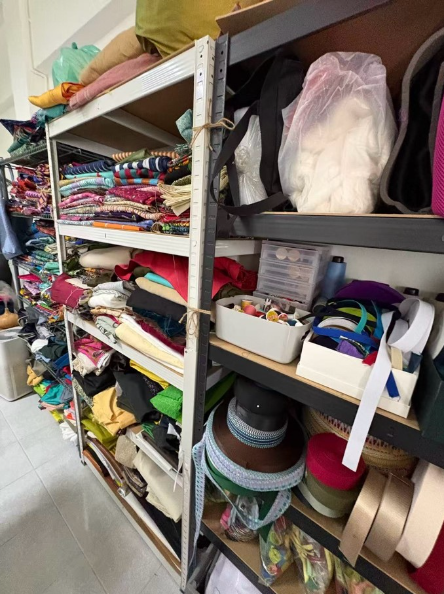
Even where NGO resources exist, refugees do not simply passively receive them. NGOs provide resources and opportunities that refugees can then use in different ways. Hope Bangkok teaches refugees sewing as a livelihood skill, but it is refugees who decide what to make of it, such as turning stitches into artistic products, building a small trade the NGO helps sell but does not create. The same logic holds for language acquisition. Refugees self-teach Thai and English, or they reach the NGOs for language courses. A Sri Lankan refugee told us that she learned Thai “entirely on YouTube”. What NGOs supply is opportunity; what turns that opportunity into protection or income is the initiative refugees bring to it. These examples show that refugees are not simply recipients of support: they actively decide how to use the limited opportunities available to them.
This same initiative extends beyond anything an NGO provides at all.
Where institutional support is thin, refugees construct their own systems of mutual aid, independent of outside intervention. In the Pakistani community we visited, members hold shared prayers, lend each other money, donate food, and support one another’s children’s education, including one girl who teaches English to the community’s children herself, with no NGO involved. Similar patterns also appeared in other communities we visited, suggesting that mutual aid was not limited to a single group. This matters more as institutional support itself weakens. After recent cuts to international aid funding, several Bangkok NGOs have closed or scaled back, leaving refugees’ own networks to absorb what aid agencies can no longer cover.
If community-building shows refugees sustaining each other, the clearest evidence of agency is refugees who go further still: becoming, themselves, a source of the help they once depended on.
Some refugees have moved beyond seeking assistance to actively providing it. A. told us plainly, “I want to help others.” Two sisters from Sri Lanka expressed the same will: the younger works as an NGO administrator helping other refugees sell what they make, and plans to apply to UNICEF; the elder is studying law, aiming to become a human rights lawyer at the UN, explaining she wants to understand firsthand “how the UN handles refugee cases”, explaining that her own experience as a refugee lets her engage with the issue more authentically than someone without it. A. says the same almost word for word: “I know how hard it is to be a refugee, so I will help the refugees when I can.” In choosing to become the support they once needed, these refugees are not just working around their circumstances. They are positioning themselves to reshape the system for those who come after them.
Across all three forms of agency, including repurposing NGO resources, building independent networks, and turning hardship into future advocacy, refugees are actively making use of any opportunity they can catch, and their agency even extends beyond themselves to benefit others around and after them. At the same time, these forms of agency do not remove the structural constraints described in the earlier sections. Rather, they show how refugees attempt to create stability and meaning within those constraints.
Conclusion
The experiences documented in this research show that many of the difficulties refugees face are shaped not simply by individual circumstances, but by structural and legal constraints that affect their ability to work, move freely, access services, and plan for the future.
Yet within these constraints, refugees are not passive victims waiting to be saved. They actively seek work, learn new skills, support their families and communities, and find ways to rebuild their lives. They are dignified individuals with distinct identities and aspirations, not a monolithic category defined by hardship. Their agency, however, should not be mistaken for an ability to overcome these structural constraints on their own. The strategies they develop allow them to survive and rebuild parts of their lives, but they remain vulnerable to the legal and economic conditions surrounding them. What they need most is not endless charity, but the structural change that charity alone cannot provide: an equal opportunity to work, to plan, and to live —the same opportunity anyone else would expect.

