Author: Kaier Liu
According to data from the African Development Bank and the World Bank, Nairobi’s Kibera slum is one of Africa’s largest urban slums. Spanning less than 1% of the city’s area, it is home to an estimated 600,000 to 1.2 million people, accounting for roughly a quarter of Nairobi’s population. The unemployment rate here exceeds 50%.
Women in this area face numerous challenges in their day-to-day survival and development. The average weekly income for women is only 300 Kenyan shillings (approximately $2.50 USD), significantly lower than the 830 shillings (approximately $6.80 USD) earned by men. Many women are forced to take on three or more informal jobs, relying on strenuous physical labor or even sex work to support their families.
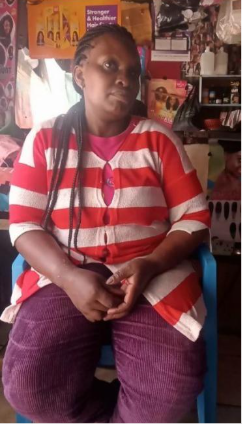
“My house was burned down two weeks ago, and now it’s almost empty,” says Millicent, a single mother living in Kibera. She barely gets by running a small hair salon while raising four children on her own. The challenges aren’t just about making a living; frequent nightly robberies and gender-based violence make daily life precarious, and medical resources are scarce. Her experience reflects the common struggles faced by women in Kibera.
Survival Challenges: The Daily Grind of Economic Poverty and Safety Threats
The average weekly income for women in the slum is very low, and they must work long hours just to survive. Most wake up early to find various odd jobs, which might include household services like cleaning and doing laundry, or running small businesses selling food and handicrafts. After work, they still have to cook and care for their children alone, with many continuing to run their small businesses late into the night.
“The only real rest many women get is when they go to church. They have no leisure; they’re constantly in a state of survival,” says Terry, summarizing the daily life of women in the slum.
Millicent’s experience reinforces this reality. As a single mother raising four children, she relies on her hair salon for income during the day, but the number of customers is extremely limited—only one or two per day. To supplement her income, she also takes on odd jobs like laundry. “During the day, I wait for customers at my shop, and in between, I help others with their laundry. When I get home, I still have to cook for the children and take care of them. I usually start working at nine in the morning and don’t stop until eight or nine at night,” she says. This cycle of grueling labor only allows her and her children to get by, buying that day’s food and the next day’s rent.
A lack of capital and business skills makes it difficult for women to accumulate wealth, trapping them in a cycle of poverty. As Terry, the head of a Kibera non-profit organization, points out, “Women in the slum lack funds; they can’t distinguish between business money and household expenses. Most women lack information or ideas and just imitate others. Their education levels are low, and some women are illiterate, so they lack confidence”. They are always stuck in a “survival mode” with little hope of escaping poverty.
Pervasive Safety Threats
Safety threats are another major daily challenge for women in the slums. Gender-based violence is widespread here, from the streets to the home, and community support is a vital resource for women seeking protection.
“Sexual violence is very common in the slums. In the past, it mostly happened on the streets, but now it occurs more often within families and among acquaintances,” says Terry.
The Kenya Population and Health Survey shows that the rate of violence against adult women and girls in Kenya is much higher than in other parts of the world. More than 40% of Kenyan women have experienced gender-based violence in their lifetime, and one-third of Kenyan women have experienced sexual violence before the age of 18.
A 2023 study in the Kibera slum revealed the severe reality of gender-based violence against local women. The study indicated that emotional and physical violence are rampant, with perpetrators mostly being the victims’ intimate partners. The vast majority of victims choose to remain silent and do not seek any form of help or support.
Victims not only endure physical injuries and long-term reproductive health issues, but also suffer from prolonged psychological trauma, including mental anguish, post-traumatic stress disorder, and even suicidal thoughts.
Millicent recounts that alcoholic men are often the perpetrators. “Some men get drunk and beat women, even kicking them out of their homes. We can only flee and return the next day,” she says resignedly. Fleeing is not an act of resistance but simply a way to escape immediate danger, and the “return” the next day means the cycle of violence will begin anew.
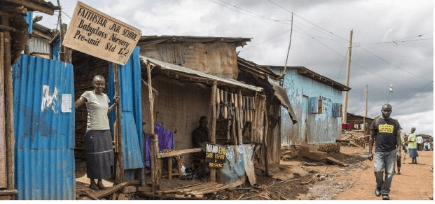
However, when violence occurs, women often cannot rely on institutional protection. The corruption of the police and judicial system makes the system virtually useless. “If you go to the police, the perpetrator can often be released quickly by paying a bribe and will return to the community”. In this institutional vacuum, mutual aid among neighbors becomes the only immediate rescue method. “Neighbors are more reliable than the police; they’ll come out and drive the abuser away”.
Health and sanitation are also major challenges for women living in the slum, with HIV/AIDS posing a significant threat to their well-being. According to data from the Kenya National AIDS Control Council, the HIV infection rate among Kenyan women is 5.8%—almost double the 3.1% rate among men.
Research indicates that poverty is one of the core reasons behind the significantly higher infection rate in women. Under conditions of extreme economic deprivation, women are more likely to be forced into unsafe sexual relationships due to a lack of alternatives. One woman from the slum explained that when she is unemployed and without income, she cannot even afford 10 shillings for food. In such situations, women may engage in transactional sex in exchange for money or basic necessities—sometimes as the only means to feed themselves or their children.
The scarcity of medical resources further worsens the situation.
“It’s difficult to get treatment in the slum because of the lack of specialists. Many public hospitals are public in name only; there are no doctors, no medicines, and the waiting times are long,” Terry noted.
Development Challenges: Long-Term Barriers to Education and Social Inclusion
Beyond the challenges of survival, women in the slums face multiple constraints on their development.
The development and future of girls are greatly hindered by early pregnancy. In 2012, a study by the African Population and Health Research Center (APHRC) revealed a shocking statistic: for example, in the urban slums of Nairobi, 116 in every 1,000 girls aged 15 to 19 had already given birth. The key drivers of adolescent pregnancy are poverty, poor access to comprehensive sexual and reproductive health information, and challenges accessing reproductive health services.
Early pregnancy and dropping out of school rob young girls of future opportunities, a problem exacerbated by school closures during the pandemic.
While early marriage is not universal, it profoundly affects women’s poverty, education, and social inclusion. Although the legal marriage age in Kenya is 18, according to the 2014 Kenya Demographic and Health Survey, more than a quarter of girls marry before they turn 18, and 8% even marry before the age of 15.
Early marriage can cause girls to drop out of school because they have to take on significant household chores. Sixteen-year-old Winfred, who lives in the Kibera slum, was forced by her parents to marry a man three times her age in exchange for a dowry. This dowry was seen as a way to solve the family’s financial difficulties. After marriage, Winfred was forced to drop out of school to take on household duties and care for her husband, which prevented her from continuing her education.
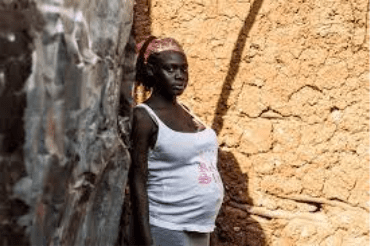
Early pregnancy is even more common than early marriage, with some girls becoming pregnant from transactional sex to acquire basic necessities. Early pregnancy not only leads to greater economic hardship but also exposes girls to social discrimination and forces them to drop out of school.
“You’re already poor, and then you have another child; you need to provide them with food and care, which makes the family even poorer,” says Millicent. “Pregnant girls usually don’t go back to school, not because the school doesn’t allow it, but because it’s a ‘shameful thing'”.
The COVID-19 pandemic worsened this situation. “During the pandemic, schools closed, and many girls had nothing to do; some might have been lured into having sex,” explains Terry.
In addition to the impact of early marriage and pregnancy, women in the slums also face the challenge of high dropout rates and low literacy levels. The average literacy rate for Kenyan men is 85%, while for women it is only 80.3%. When discussing education, Terry said, “It’s not that many girls don’t want to get an education; it’s that they can’t afford it”. This education gap further limits women’s development opportunities, making it difficult for them to escape the cycle of poverty.
Cultural Challenges: Patriarchal Norms Sustain and Deepen the Plight of Women
Patriarchal norms restrict women’s economic independence.
The deep-rooted influence of patriarchal society in Kenya permeates nearly every family and social layer.
It is especially important to note that the reality of the slums is that many women are single mothers, and they are the breadwinner of their families. Here, patriarchy takes different shapes. In many cases, women are simply left to be responsible for it all when the man has exerted power while she is pregnant, and then immediately leave to avoid responsibility. These women are left to care for their families entirely without support. This vulnerability intensifies poverty, violence, and mental health problems for the woman and children.
As Terry points out, “Due to the acceptance of patriarchy, men abandoning their families is normalized, care work is feminized, and the role of a father is reduced to a mere biological contribution.”
Although women are often responsible for providing care, men mostly continue to control family finances and assets. Women’s potential for exploring opportunities and their roles in the family structure continue to be limited. This cultural norm creates the family structure’s gendered norms, and also affects profoundly the resources, opportunities and rights to women’s lives beyond the family context.
In some remote areas, especially in families with strong traditional values, women have almost no chance to participate in economic activities and cannot even freely choose a job. This control over women’s labor and income directly leads to their lower economic status both inside and outside the home, further exacerbating their predicament in poverty.
Furthermore, land ownership is a significant form of oppression under the patriarchal system. In Kenya, only 1.3% of women own their own land. Land is a symbol of wealth and resources, as well as a critical factor of production in economic activities like agriculture. Without land, it is difficult for women to achieve economic independence, engage in agricultural production, or accumulate wealth through land. For women without land, they not only lack decision-making power within the family but are also marginalized in socio-economic activities. The lack of land prevents many women from obtaining necessary loans or other financial support, further restricting their economic autonomy.
NGO Action
The Women Youth & Children Development Organization Kenya (WYCDO), an NGO established in 1998 and based in Nairobi, is dedicated to empowering women and girls in Kibera and the surrounding areas. It provides financial support to women in the slums to help improve their standard of living and offers educational opportunities and tutoring for children.
One of WYCDO’s core focus areas is the economic empowerment of women and girls. In collaboration with a Chinese social enterprise, the organization launched a Table Banking model to offer loan support for entrepreneurial women in the slums. It also promotes women’s development through Self-Help Groups, which provide capacity-building programs in areas such as business skills, entrepreneurship, and financial literacy.
Under the Table Banking model, group members can apply for loans of up to 80% of their accumulated savings. The loan period is four weeks, with a 10% interest rate—lower than the average rate offered by local banks. This loan mechanism provides crucial seed capital for women to respond to emergencies or pursue business opportunities.
Sarah, a woman living in poverty in Kibera, found that her meager earnings were often taken by her husband to buy alcohol, trapping her in a cycle of helplessness. By joining a Table Banking group, her mandatory weekly savings created, for the first time, a personal fund that was protected from outside access. Following the group’s guidelines, she borrowed 80% of her savings as startup capital and bravely opened a small grocery store.
Today, her business not only provides a stable and growing income—greatly improving her children’s lives—but has also restored her sense of confidence and dignity. No longer a woman living in fear, she has become a respected member of her community and actively supports other group members in planning how to use their funds. Table Banking has completely transformed Sarah’s life, enabling her to look ahead and plan for the future with hope.
In addition to financial support, the Women Youth & Children Development Organization Kenya (WYCDO) also provides legal aid to women.
“We work with lawyers to help women seek justice in cases involving land rights—for example, when property is seized after a husband’s death—sexual violence, and economic abuse,” explains Terry. “There are also shelters available for women who are in danger or recovering from trauma.”
WYCDO also invests significant effort in the empowerment of girls. The organization provides education on menstrual health, puberty, gender rights, and healthy relationships. To support girls’ dignity and well-being, they distribute sanitary pads, helping them grow up with greater confidence and safety. In addition, WYCDO offers counseling and educational support for children, including subsidies for vulnerable boys and girls.
These interventions are having a tangible, positive impact.
“Women with HIV/AIDS are no longer like they were before; they’ve become happier and feel less shame,” Terry says with hope.
“When a mother finds hope, the whole family stops merely struggling to survive and begins thinking about the future.”
“And the partners and allies we’ve met along the way—the people who believe in our work—continue to support us as we move forward.”
Reference:
- WYCDO:https://wycdo.co.ke/
 Youth For SDG