
Authors: Ruby Du, Larry He
At the Pneumoconiosis Rehabilitation Center in Pingxiang, 60-year-old Yi Quanxiu and her husband, Zeng HuiDuan, sit silently on a sunlit bench. Her smile is faint, almost forced, as she hands him a cup of water. Their life together feels like a battle they never asked for yet must endure.
As a miner for 37 years, Zeng Huiduan, with life of tribulations etched upon his face. From the moment he descended into the mines in 1976 to the diagnosis of stage-three pneumoconiosis in 2013, his life has been rewritten by coal. “This disease is an inevitable consequence of my work,” he says. Now, his days are defined by his limitations—taking just a few steps leaves him gasping for air, his body no longer capable of the labor it once endured.
Yi QuanXiu’s own body, however, bears its own burdens. Eleven years ago, a stroke left her partially paralyzed, marking the beginning of her relentless battle with illness. “I take medication 11 times a day—before meals, after meals, morning, afternoon, even before bed—every day, without fail,” she says. Hypertension, type-two diabetes, and the aftermath of the stroke shadow her constantly. Any break from her regimen brings searing headaches. “I can’t stop; these pills are my lifeline,” she admits.

In their household, daily life is a delicate balance of mutual dependence. “My husband can’t work anymore. Just moving around triggers pneumonia, so labor is impossible,” she explains. Though she is equally frail, she bears the weight of their shared existence. “This is how we live—you care for me, I care for you, and we take it one day at a time.”
Pneumoconiosis, a chronic occupational disease caused by years of inhaling dust, casts a long shadow over cities reliant on dust-heavy industries. Despite its devastating toll, the disease often goes unacknowledged. It is an irreversible and incurable disease that not only erodes the patient’s lung function but drags entire families into unrelenting hardship. The men who once stood as the backbone of their homes, sweat-streaked and resolute in the mines, are reduced to patients in need of care.
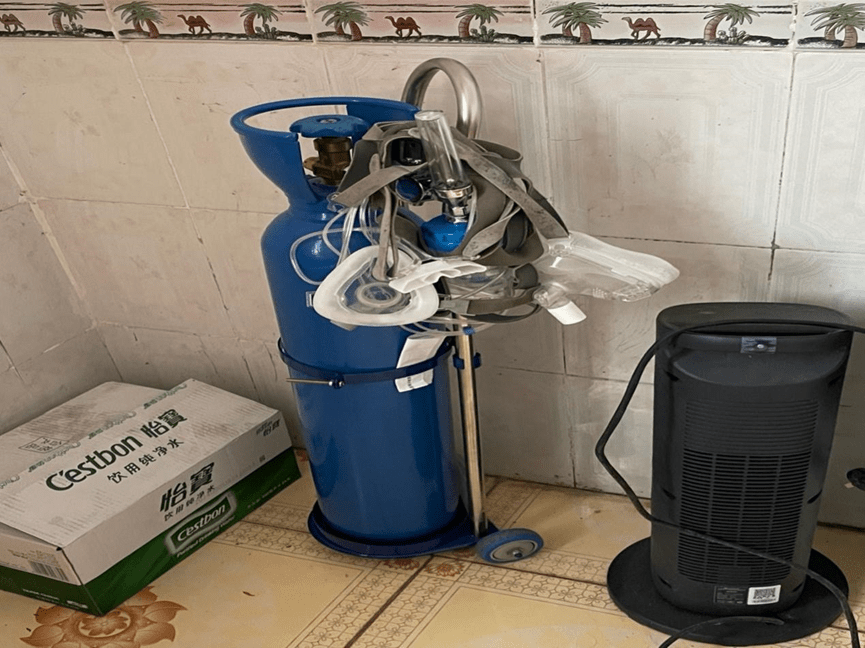
And in their place, the women in these families must take on the weight of survival. They become caregivers and breadwinners all at once, their lives consumed by the relentless demands of medical expenses, physical exhaustion, and psychological strain. Each day, these women endure the crushing weight of it all—paying for medicines they can scarcely afford, working past the limits of their bodies, and weathering the silent toll of mental anguish. Yet, even as they shoulder these burdens, they cannot escape the shadow of the disease that has engulfed their families.
In this quiet struggle, these women stand as unyielding pillars of resilience, their sacrifices often unseen and unacknowledged. Theirs is a strength forged in adversity, a testament to human endurance, and a reminder of the silent heroes who fight battles far from the public eye.
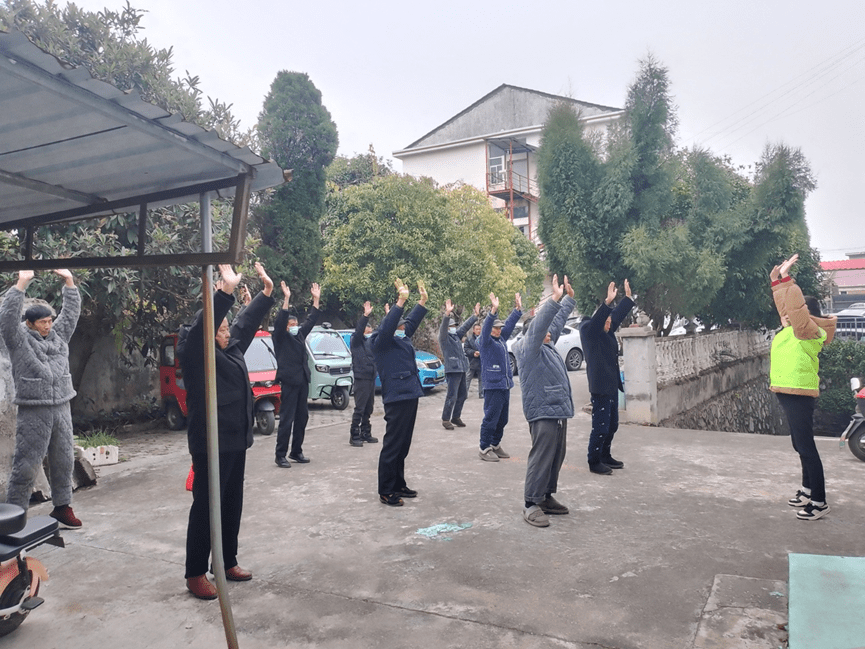
The Silent Struggle: Daily Life with Pneumoconiosis
At the center of the pneumoconiosis dilemma is the factor of it being irreversible. Once contracted, it will worsen, despite meticulous care. Bodily fluids will continuously coat the lung until the inhaled dust develops into a rigid cake of casing, decreasing the elasticity of the lung until it is past remedy. Patients suffer physical obstacles such as breathing difficulties and physical ineptness, as well as increased risk of other respiratory diseases arisen from immunological weakness in the lung area.
A patient in the NanLing village, Yin MinNan, who was still capable of movement, claims: “Now, I cannot even take a set of blankets upstairs … I cannot move … I cannot earn any money.” Other patients’ conditions, such as Huang XingWei, a 67-year-old pneumoconiosis patient’s, have worsened, such that they are often confined abed. “Eating is an ordeal”, he says. “I cannot swallow, and my nose excretes mucus, so I must take off my oxygen tube to wipe it.”
Another patient, Mr. Li, whose condition demands he resides in the hospital seconds this: “I am tired even by speaking.” As the disease progresses, patients deteriorate; in its gestation, the disease solicits a difficulty in breathing, which progresses to inability to participate in physical labor, and final total debilitation.
This is not helped by the patients’ penurious state. As many of them contracted the disease from working in mines or professing other forms of manual labor, the care they can get, provided by kin, is often limited by their economic status. As many of the patients cannot move, or at the very least cannot participate in physical labor, this takes away the family’s most prominent source of income; what remains can barely cover the exorbitant medical expense, even with insurance (which itself is a large burden). Yin MinNan claims that he has been hospitalized for multiple times in the past year, but, due to poverty, has not been able to go again since March.
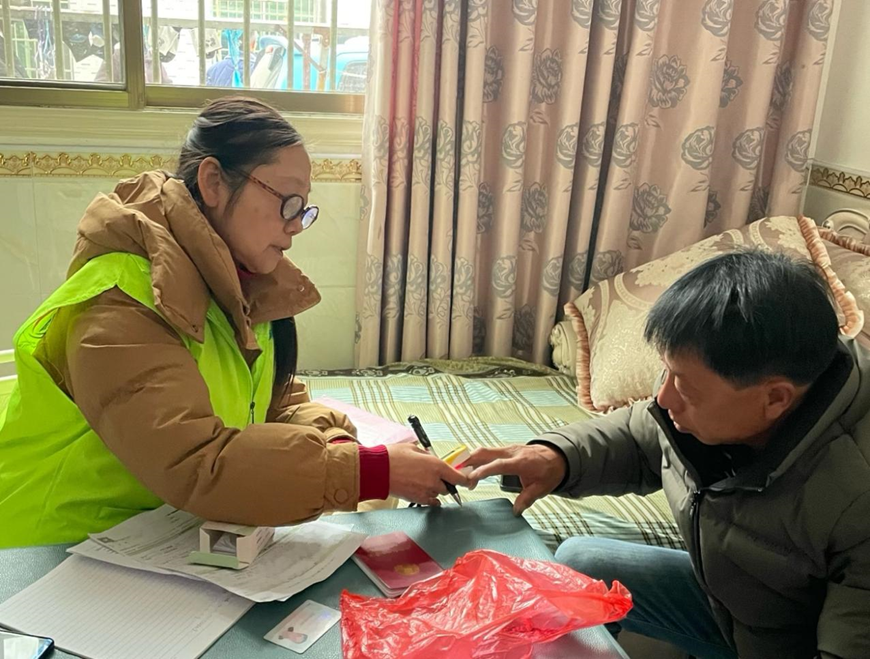
This poverty not only affects their physical condition negatively but also impinges upon patients’ mental state. Formerly the core breadwinners of their family, the burdensome reality of being reduced to corporeal waste and inactivity extends its damage beyond its physical essence to that of patients’ mentality. Support from family members is thus critical, for such a fragile mentality must be carefully nurtured.
Zeng HuiDuan calmly answers, when questioned about his mental state: “There is no way around reality, so we can only accept.” It is often observed that patients are tacit and depressed; often they dwell in a state of resignation. It is common to see or hear that they understand the mortality rate of their disease and recognize what might happen in the future.
For patients who are not well understood by family members, or whose economic status is insufficient to warrant family members to provide care by their side (it is common for their children and their spouse to work in other provinces to provide for the medicinal fees), their mental state often crumbles, leading to dire results.
Resilience Amidst Ruin: Women’s Strength in the Face of Pneumoconiosis
Amongst the struggle against pneumoconiosis, women are often the unsung heroes. Their role is critical, for they are consummate caregivers in all aspects of life, as well as being mentally supportive. Women often shoulder the bulk of agricultural work after their husbands are incapable of movement; in addition to that, they must also tend to the myriads of domestic issues complicated by their husbands’ disease.
Huang Hai, a patient who contracted the disease at a relatively young age after working at an irregulated factory, says that his wife is now their family’s main source of income. After the birth of their daughter, she has been working at another province with the hope that the higher wages that occupation provides might better support her family. In 2022, when her husband fell sick with pneumothorax (a complication of pneumoconiosis that demanded surgery) and her mother-in-law also had medical complications that required hospitalization, it was she who shouldered the duties of nursing her family and tending to the ducks that were the family’s largest hope of income.
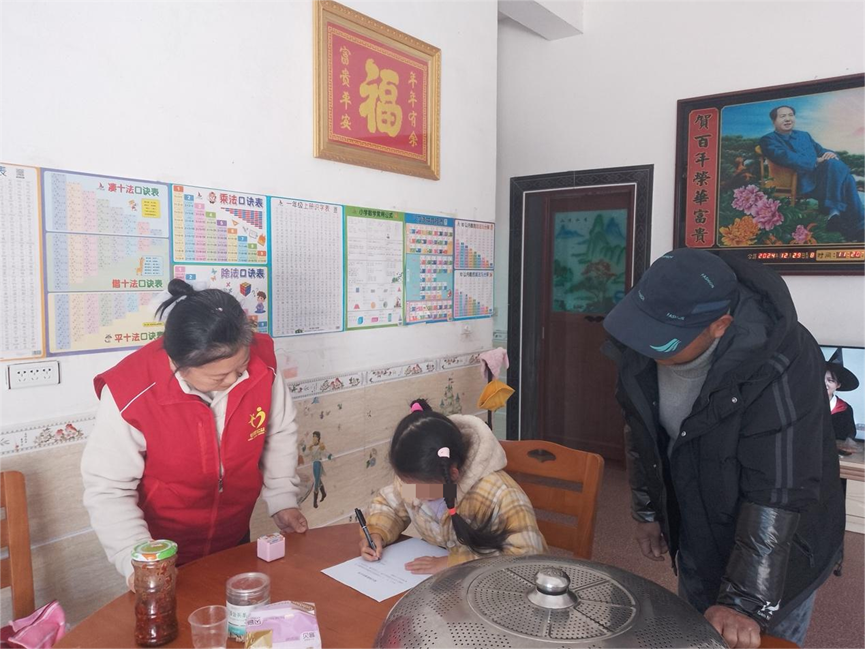
For another patient, Zhu ShengJi, whose wife died of cancer shortly after it was discovered that he had contracted pneumoconiosis and had no caretaker, it was his granddaughter who came home from school every day during noon to tend to him and make him lunch.
These women, who shoulder just as much strain as their husbands, fathers, and grandfathers in life, who are also looked upon as mental therapists, face adversity with unfailing optimism, answering to life with optimism instead of acceptance. They are a beacon of hope in those difficult times, providing solace to their loved ones.
For example, Yin MinNan’s wife is particularly depressed, states that she is often obligated to lend a hand of mental support to her husband, whose mental state had fallen to such deplorable depths she feared for his mentality. Yin, who did seem particularly irritated and despaired during our short session with him, was often soothed by a gentle touch from his wife when he interviewed him. It must be said that such unfailing accompaniment truly plucked at heartstrings.
Feminine Challenges: They Who are not Seen
The female family members of pneumoconiosis face numerous challenges, presenting themselves both physically and mentally.
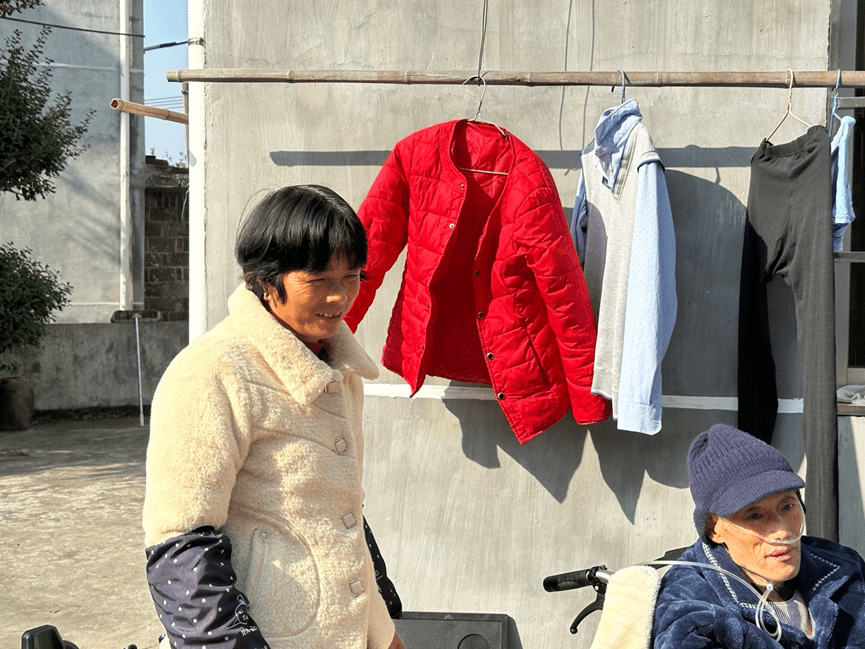
Many of them have led a life of labor, giving birth to multiple children and still exercising considerable strength in the household and in completing agricultural tasks. Thus, in their elderly state, there are few who are not troubled by diseases that also implement obstacles on their physical activity.
For example, Yin MinNan’s wife has rheumatism, which swelled the joints of her hands and feet to such an extent that it is sometimes a torment to dress and move about. This is echoed by another patient’s wife, Yuan DingXiang, whose hands are now deformed because of rheumatism. Limited by their economic situation (and aggravated by their husbands’ disease), they cannot receive sufficient medical treatment (Ms.Ying, for example, says that she cannot afford the surgery recommended by the doctor); moreover, due to the harmful nature of some of the drugs they could take to ease their pain, they often instead choose to simply suffer the pains of the disease.
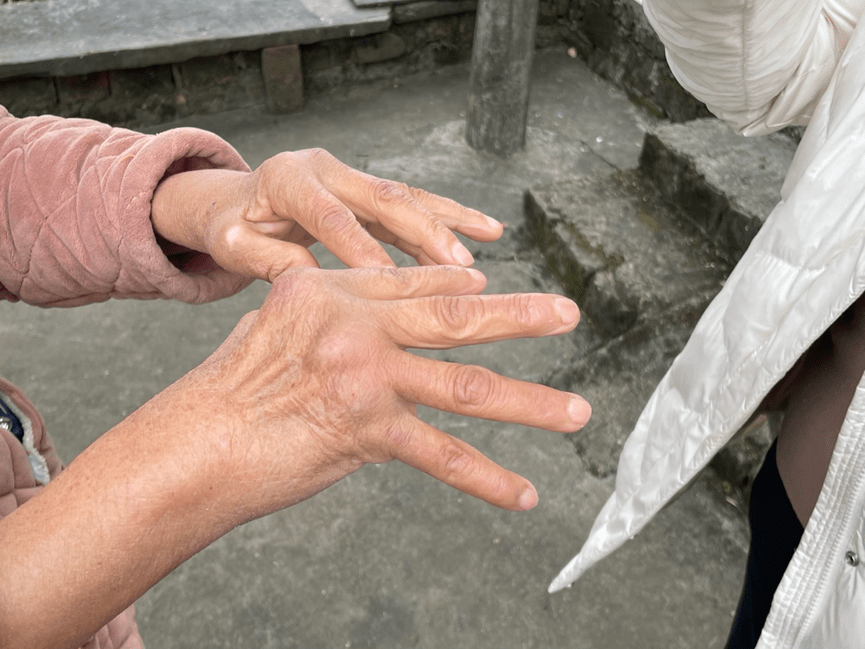
These women suffer severe physical conditions, such that would certainly warrant bed rest and meticulous medical care in other conditions, and yet still shoulder their responsibility for their husbands.
In addition, under the background of sexual inequality (as it is more prominently existent in rural communities), they lack the ability to express their individuality, or to demonstrate their self-value outside traditional domestic categories; their lack of a sustaining job as well as their endless myriads of tasks traps them inside the household. The method that women choose to attain the family income comes via tending to the fields and soil already in the family — they can neither express their individuality, or better their position by education.
Moreover, facing the difficulties of the life they must lead, they also face a moral dilemma — some females in similar situations choose to forge their own path, leaving their husbands and families altogether; however, such a decision goes against their sentiment, as all ties, including those to their offspring, must be severed. In truth, only 3.11% of all wives of pneumoconiosis patients choose to prioritize themselves and divorce they husbands, according to the 2023 report on Chinese migrant pneumoconiosis workers, by the charity Daaiqingchen.
For the women, choosing to leave is often an act of self-preservation, allowing them to seek a better life unburdened by the demands of endless caregiving. However, society rarely considers their perspective. As a result, they must grapple with the moral repercussions of such a decision—bearing feelings of guilt for “betraying” their loved ones and facing widespread disapproval from their community.
We visited a girl whose mother left her father, after being unable to cope with the poverty of such a life. Her mother often attempts to contact her, intending to mend the sentimental bonds with her daughter, but are often rebuffed because of her “betrayal”.
In such situations, we cannot fault these women for deciding to prioritize themselves — though the women who do stay or are obligated to stay behind are surely better appreciated (and even that appreciation is in little evidence). As such, this moral dilemma entraps them as surely as their economic situation does, ensuring that they stay in their current position more out of necessity than choice.

The fight against pneumoconiosis is a complex one. Its solution requires a multifaceted approach, solicited by many aspects of society — such a solution is quite difficult to attain.
However, the few things than can be improved upon with less difficulty is appreciation and recognition, not only of the disease itself, but also the people who continuously extend their efforts towards its absolution.
It is critical that we recognize the efforts of the women who toil in order to keep their loved ones alive; it is imperative that we do our best to understand their difficulties, and to praise their efforts as stalwart soldiers battling against the adversities of life.
If our efforts are not so advanced as to be unable to provide a systematic solution, then we can do our part by being aware, and increasing awareness, of pneumoconiosis and the women who are the unsung heroes.
Citation
[1] Daaigingchen. (2023). Survey Report on Chinese Pneumoconiosis Migrant Workers (2023) Available at: http://www.daaiqingchen.org/report2023
 Youth For SDG