Author: Runzi Zhang
Left-behind children, defined as those who remain in their hometowns or are cared for by their relatives while one or both parents work away, face unique challenges in China. This phenomenon is particularly prevalent in rural areas, where children live separate from their parents for extended periods. According to statistics, there are approximately 150,000 left-behind children in Shandong Province, with a notable concentration in cities such as Dezou, Heze, Jining, Linyi, and Liaocheng. The distribution reveals a pattern of higher numbers in the western regions compared to the central and eastern parts of Shandong.
In recent years, the plight of left-behind children has garnered significant attention. Many of these children confront various challenges, including inadequate educational resources, mental health issues, and bullying in schools. In response, both government and non-profit organizations are actively working to empower these vulnerable groups. Their efforts aim to bridge the gap in support and resources, ensuring that left-behind children can lead healthier and more fulfilling lives despite their circumstances.
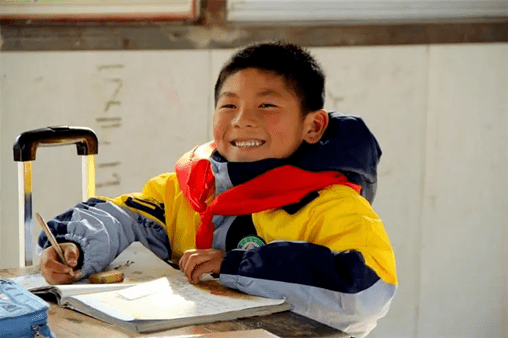
Challenges faced by left-behind children
Left-behind children in Shandong are facing significant challenges, particularly in the areas of unequal distribution of educational resources, mental health issues, and school bullying.

Firstly, the phenomenon of “left-behind children,” particularly in rural areas of China, presents significant challenges in family education due to the absence of their parents, who often migrate to urban areas for work. Family education plays a crucial role in the emotional and intellectual development of young individuals. However, many left-behind children lack the necessary support, leading to adverse effects on their growth and well-being.
Recently, there was news of a six-year-old child in Shandong, who ended up working as a street cleaner after being denied school admission due to the lack of parental guardianship. This child, along with their grandparents, exemplifies the harsh reality faced by many left-behind children: the absence of parental care forces them into labor instead of education, depriving them of their childhood and opportunities for academic development.
Another concerning example is the story of a minor named Xiao Cheng, who beat his friend to the point of minor injury because of a conflict with him. Xiao Cheng was about five years old when his parents divorced. His father worked outside all year round, and Xiao Cheng was raised by his grandparents, a typical left-behind child. In the critical period of growth, he could not enjoy the emotional care and attention of his parents, resulting in psychological and personality problems, which became an essential factor in his embarking on the road of delinquency.
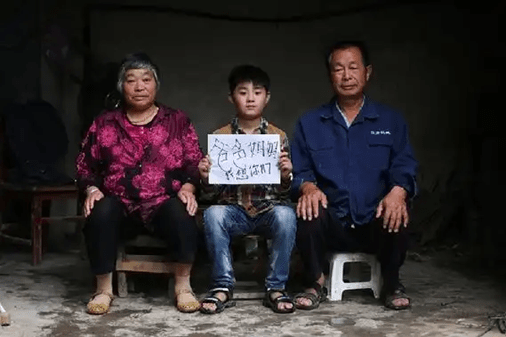
Secondly, the lack of proper family support for those left-behind children also affects their mental health and social behavior. Mental health, which encompasses emotional, psychological, and social stability, significantly influences an individual’s thoughts, feelings, and actions. Unfortunately, many left-behind children experience emotional and behavioral problems due to insufficient support and nurturing.
Comparative research on the mental health of left-behind children and their counterparts who are not left behind reveals alarming statistics. A study conducted in Shandong Province showed that left-behind children have a higher prevalence of emotional and behavioral issues, with anxiety rates reaching as high as 13.4% and overall behavioral problems affecting 11.6% of these children. The emotional isolation from parental absence significantly affects their ability to cope with daily life challenges.
The experiences of individual children further illustrate these issues. For example, a 12-year-old girl, Xiaoli, became increasingly introverted and withdrawn after her parents left for work. Mocked by her peers for her appearance and lifestyle, she developed a fear of social interaction, leading to declining academic performance. Her story is emblematic of the emotional toll that stigma and isolation can take on left-behind children.
Similarly, Xiaoming, another rural left-behind child, bears the dual burden of managing his studies while caring for his elderly grandparents. This responsibility has led him to experience severe psychological stress, resulting in symptoms of depression. Xiaoming’s mental health deterioration raises concerns, as he has even contemplated self-harm, reflecting the profound impact of emotional neglect and overwhelming responsibilities on his young mind.
These cases highlight a broader issue within the left-behind children community. As noted by Liu Xinyu, a leader of a public welfare organization, many of these children lack “inner strength,” indicating a critical need for emotional support.
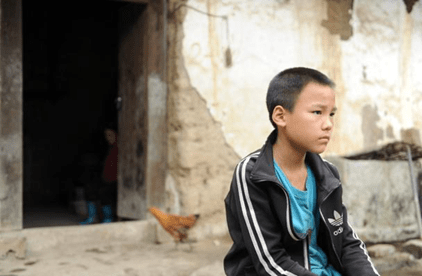
Finally, left-behind children in rural China are also at a high risk of being bullied in schools, mainly due to their emotional vulnerability caused by parental absence. A staggering 47.6% of these children have reported experiencing bullying, highlighting the prevalence of this issue within this vulnerable demographic. Research suggests that bullies more frequently target these children because they lack the emotional and familial support systems that other children have.
For example, in March 2024, a sixth-grade left-behind child named Xiaojie was brutally beaten by six classmates, enduring humiliation and physical abuse. This extreme case not only reflects the severity of the bullying but also the lack of intervention from peers and adults in these situations.
Another poignant example is the experience of a 14-year-old boy, Xiaolin, who suffered from nearly a year of physical and verbal abuse from his classmates. Diagnosed with acute stress disorder, he lived with his elderly grandparents after losing his parents.
These incidents are not isolated. Reports indicate that school bullying is a systemic issue, with 176 recorded incidents of bullying in Shandong province alone by the end of 2019.
Solutions provided by government and NGOs
The government has implemented significant policies to improve the welfare of left-behind children in Shandong. For instance, the Shandong Provincial People’s Congress revised the Shandong Provincial Minors Protection Regulations in 2024 to provide better legal protection and services for minors. Additionally, the Shandong Provincial Action Plan aims to improve care services for left-behind and at-risk children over three years, emphasizing the importance of quality care and support. These policies demonstrate the government’s strong commitment to safeguarding the rights and well-being of children in difficult situations.
Innovative initiatives like the “Three Ones” program have also been introduced. This program focuses on practical and compassionate assistance for left-behind and migrant children. It emphasizes personalized support to ensure that “no child is left isolated or uncared for.”
There are real-life stories that illustrate the positive impact of these policies. For example, Zhao Mingyue, a sixth grader, shared her excitement about returning to her newly built school in Linyi, which boasts modern facilities and provides a more conducive learning atmosphere.
“I love running exercises now because the new school is a plastic track, so I don’t have to worry about squinting in the sand when I run anymore. You can pay 5 yuan every day at noon to eat in the canteen, with fruit and milk.” Zhao Mingyue said that before moving into the new school, she ate lunch at a small shop outside the school, sometimes giving her a sour stomach. “Also, our toilets are clean and can be flushed occasionally.”
Another heartwarming story comes from Liu Jinquan, a young child eagerly anticipating returning to his kindergarten in Zibo. His mother expressed her satisfaction with the affordable tuition that allows him to attend a quality institution where he receives attentive care from teachers. “We are delighted to have our child in such a good kindergarten.”
Wang Shousong, Executive Deputy Secretary of Changqing District Education Working Committee, Secretary of the Party Group, and Director of the District Education and Sports Bureau, proposed, “Promoting students’ physical and mental health and all-round development is a major issue of concern to the Central Committee of the CPC, the concern of the people, and the concern of the society. It is necessary to care for student’s hearts and minds carefully so that every child can enjoy quality education and no left-behind child becomes an ‘island.'”
In addition to government efforts, non-profit organizations are establishing community centers that provide after-school tutoring, psychological support, and recreational activities to empower left-behind children.
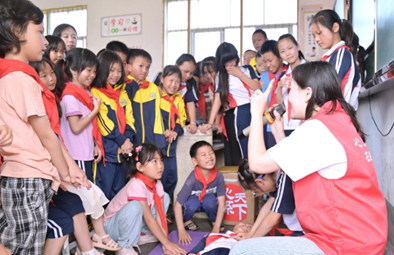
One of the prominent organizations is the Weiwei volunteer team of Shandong Vocational College of Commerce. They have carried out “three rural practices” activities in Tianhuang Town and carried out professional courses to enrich the lives of left-behind children. The classes include handicrafts, youth safety, mental health education, calligraphy, etiquette, and military-style physical training. This initiative dramatically enhances the children’s holiday experience and personal development. Besides, in terms of mental health, the Weiwei team has set up a project to provide online and offline psychological support for left-behind children.
The journey to reach the hearts of left-behind children is often challenging. Many children initially have a hard time trusting volunteers due to insecurity. However, through regular home and school visits, weekend tutoring, and volunteer activities, these dedicated staff gradually earned the children’s trust and helped them grow emotionally and academically.
As one volunteer put it: “Our goal is to provide the warmth of a family to children who have lost their parents and let them feel the love of society.”
Reference
1.https://www.mca.gov.cn/n152/n168/c1662004999979999946/content.html
2.http://sd.people.com.cn/n2/2024/0602/c166192-40865511.html
3.https://www.nwccw.gov.cn/2024/01/08/99509968.html
4.https://baijiahao.baidu.com/s?id=1691286422505182059&wfr=spider&for=pc
5.https://baijiahao.baidu.com/s?id=1691286422505182059&wfr=spider&for=pc
7. https://baijiahao.baidu.com/s?id=1772344609531143789&wfr=spider&for=pc
8.https://baijiahao.baidu.com/s?id=1772344609531143789&wfr=spider&for=pc
9.https://www.thepaper.cn/newsDetail_forward_27134738
10.https://news.youth.cn/hotnews_41880/202407/t20240722_15394693.htm
 Youth For SDG