Authors: Fu Yuan, Sun Yilu, Wang Chenyi, Zhao Yun (in no particular order)
“The awakening of women’s consciousness is the premise, and the enhancement of women’s capabilities is fundamental.”
– As said by Ms. Su from the Shenzhen Social Work Station for Xinjiang (Kashgar)
Women’s empowerment refers to the enhancement of women’s abilities and positions in various fields such as society, economy, politics, and culture through various measures. The topic of women’s empowerment has been one of the closely watched global issues. Focusing on the issue of women’s empowerment in rural areas of Kashgar, Xinjiang, the key point lies in improving women’s own capabilities.
Local organizations in Kashgar empower women through a series of measures to promote the development of rural women. These include increasing women’s income through livestock farming, diversifying employment forms to raise employment rates, and enhancing women’s gender equality awareness through educational training.
Compared to a decade ago, the status of women in rural areas of Kashgar has improved significantly. This change is inseparable from the support of multiple organizations.
Empowering Women Through Livestock Farming — Income Growth
To fundamentally improve women’s status within the family, women must earn their own income—”spend their money as they wish”—and not be financially dependent on others.
In rural Kashgar, most livestock in farming households are managed by women. Inspired by international aid cases, the Shenzhen Social Work Station for Xinjiang (Kashgar) launched the “Baby Sheep” public welfare project, empowering women economically through livestock farming. This project provides livestock, such as cows, sheep, and donkeys, to women from poor rural households over the age of 40.
In the past, influenced by traditional beliefs, many rural women never attempted to work outside and remained housewives. Moreover, due to low education levels, many rural women lacked competitiveness in the job market. Therefore, livestock farming has become one of the most effective ways to empower women.
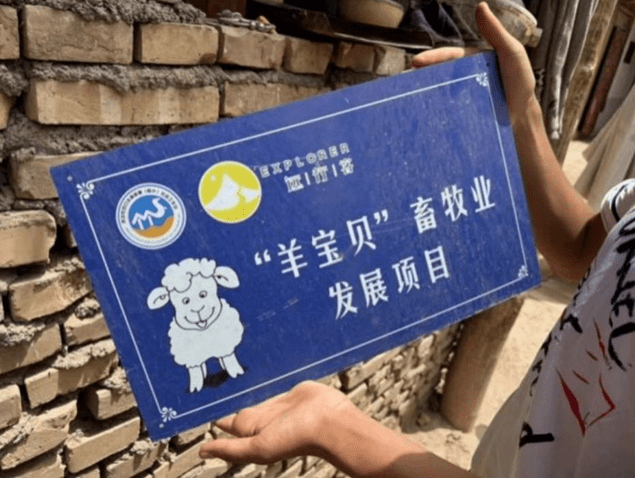
Gulimire’s mother, a housewife from the Boshkeranmu Township (abbreviated as “Bo Township”), received three ewes from the project last summer. In early July of this year, she sold two rams for 4,000 RMB. Although the income from selling sheep is not the family’s primary source of income, the “Baby Sheep” project has greatly alleviated the financial pressure on Gulimire’s family. Additionally, the local government provides subsidies for this—each time an ewe gives birth to a lamb, the government grants the household a 300-yuan subsidy.
Gulimire’s mother manages the money from selling the sheep, most of which is used to support household expenses and fund Gulimire’s university education. She mentioned that by contributing financially to the family, her status within the household has also improved.
Besides generating a steady income, the sheep’s manure is used as fertilizer in their orchard, and the leftover fruits from the orchard are used as feed, creating a self-sustaining cycle that saves on fertilizer and feed costs.
Social Organizations Empowering Women — Increased Employment Opportunities
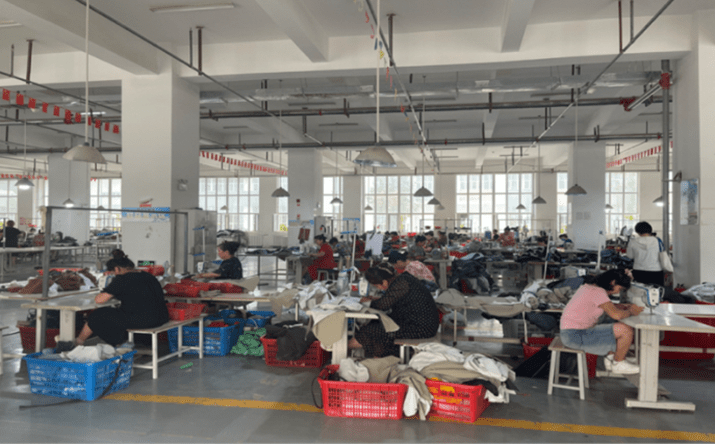
“Women can change their status only by earning their own money,” said Zhang, the director of the Xinjiang Haohui Garment Company in the Shenka Industrial Park, where all employees are women. Most of the women had been introduced to the company by the government and had not received education beyond high school. They had been largely influenced by traditional ideas, which dictated that women should devote all their time to household duties. Even if housewives wanted to work outside the home, they would not receive support from their husbands or in-laws and would even face ridicule and scolding.
However, since 2015, with the support of the government, they have gained employment at the garment factory. Through continuous hard work and learning, their status has risen along with their income, and they have gained more say within the family. This shift in women’s employment opportunities and status can be attributed to the support from the government, businesses, and factory training programs.
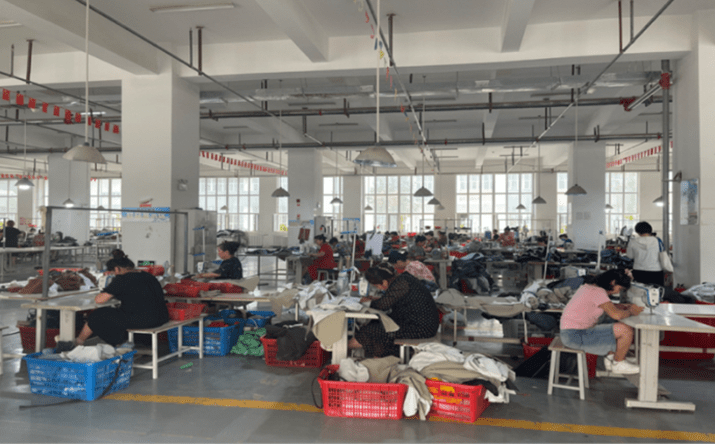
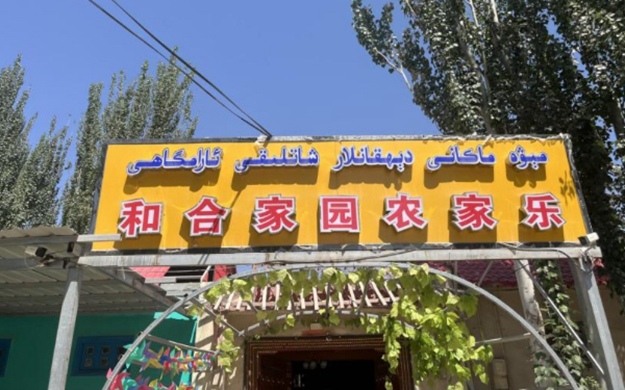
Furthermore, the village committee in Bo Township also encourages women to work at satellite factories near their homes. Aside from employment, Kashgar women are also beginning to pursue self-employment or entrepreneurship. Some women work as tailors during the winter as a side job, while others start their own businesses. Aytula, for example, has opened a guesthouse with her husband. Transitioning from housewife to business owner, Aytula now enjoys a higher income and more freedom, while feeling an increasing sense of empowerment.
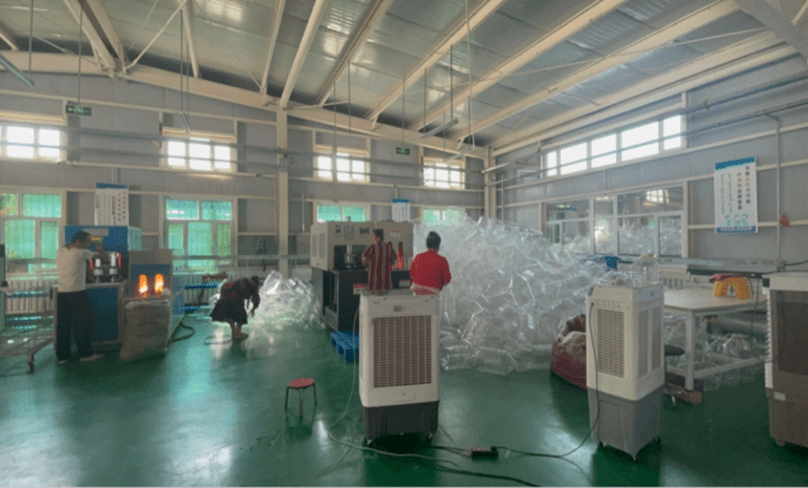
At the same time, in order to improve the working abilities of women in rural Kashgar, the Shenzhen-Kashgar Social Work Station has taken many measures to enhance women’s professional competitiveness. For example, the station provides female university students with career planning, helping them improve their soft skills; assists them with resume writing and workplace image design; and offers courses on self-awareness, team collaboration, and time management. These efforts have increased many women’s self-esteem, making them more confident in their abilities and be more willing to take on jobs.
For married women, the Shenzhen-Kashgar Social Work Station implements programs at the Shenzhen-Kashgar Industrial Park to help female workers effectively resolve conflicts between mothers-in-law and daughters-in-law, as well as between spouses, balancing work and family relationships and improving work efficiency. The station also offers childcare programs on weekends and during winter and summer vacations, helping female workers care for their children. This not only enriches children’s holiday activities but also allows women to fully focus on their work with greater peace of mind.
Educational Training Empowering Women — Consciousness Awakening
The improvement in education levels also promotes women’s economic independence. Aytula is a woman working at the Shenzhen-Kashgar Social Work Station. She was the only university student among her peers in her family at that time. Because of the educational opportunities she had, Aytula’s life has become completely different from those of her peers, for example, one of her close friend who has been married twice, has little say in her family, and does not have a stable job.
According to Secretary Wang of Bo Township, the proportion of women attending university in Bo Township is now higher than that of men, and this trend is continuing to grow. Secretary Wang said, “Girls are more likely to believe that knowledge changes destiny and are more eager to go out and see the world.”
Training programs within companies also help instill a sense of independence and empowerment in women. The garment factory director, Zhang emphasizes, “Women should be independent and self-reliant; women can hold up half the sky.” This is in stark contrast to traditional values in Kashgar, where women were expected to obey men. Today, under the leadership of female factory directors, women are more willing to strive for better wages and achieve financial independence.
Lurguli, an employee at the garment factory, expressed that the biggest change after earning her own wages is the ability to buy whatever she wants without asking her husband for money. This financial independence has earned her more respect within her family and set an example for her children. Many of the factory workers’ children are excelling academically and attending university. The factory director motivates female workers to pursue promotion through regular meetings.
Additionally, the promotion of Mandarin education has helped rural Kashgar women break down information barriers and access broader opportunities. Since 2017, Mandarin education has been widespread in the region. To graduate from language classes, workers at the Shenzhen Industrial Park must score at least 60 points in the Mandarin proficiency test. Mandarin education is also promoted through night school programs, where women can enhance their language skills in their spare time.
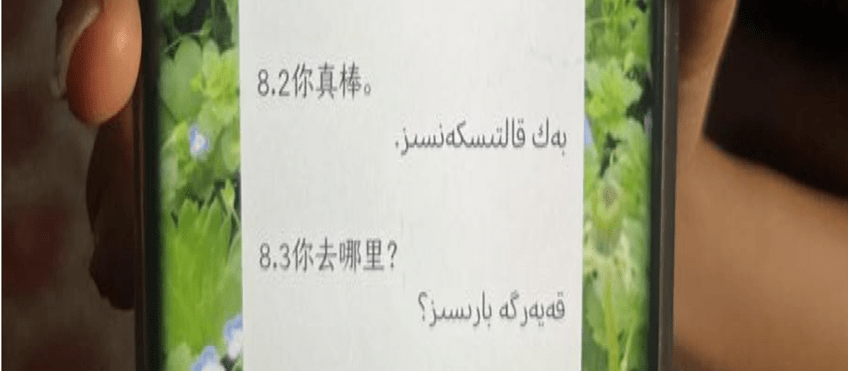
As an employee of the Shenzhen-Kashgar Industrial Park, Lurguli has a higher Mandarin proficiency compared to other workers. Because of this, she is able to find videos online to improve her skills in making clothes and even learn how to design garments independently. Today, she has become one of the most outstanding employee representatives in the factory. Factory Director Zhang also remarked, “Employees who earn higher wages all share the characteristic of having a higher level of Mandarin proficiency.”
The spread of Mandarin education can help women in rural Kashgar gain broader perspectives and more opportunities. Every year, the factory selects 15 to 20 outstanding female workers to go to Shenzhen for exchange and learning. The evaluation criteria include not only professional skills and work attitude but also the workers’ Mandarin proficiency, to ensure that they can better communicate and learn with local teachers once in Shenzhen.
Conclusion
The issue of women’s empowerment has always been a topic of global attention. In recent years, the government, businesses, and local organizations have worked together to empower minority women in rural areas of Kashgar. They have helped rural women increase their income through livestock farming, created job opportunities to support employment, and promoted awareness of women’s independence and self-reliance through continuous education and training.
With the support of various stakeholders, minority women in rural Kashgar have gradually gained better living conditions, acquired more decision-making power, and experienced more possibilities in life.
Reference
1.The definition of women empowerment: https://zh.wikipedia.org/wiki/%E8%B3%A6%E6%AC%8A
 Youth For SDG