By Xikun Wan, Xinran Wang, Qian Lian, Gening Liang, Moxuan Huang
Introduction
“We can create a new world, one that empowers everyone and leaves a livable planet for future generations. By harnessing the power of social business, we can build a ‘world of three zeros’: zero net carbon emissions, zero wealth concentration, and zero unemployment.” – Dr Muhammad Yunus (Youthforsdg, 2023)
These words were spoken by Nobel Peace Prize winner Muhammad Yunus (The Nobel Peace Prize 2006, n.d.), a visionary determined to create a better world and sustain its future positivity.With his background in economics, he conceived the groundbreaking idea of microfinance, later known as the Grameen Model (GM).
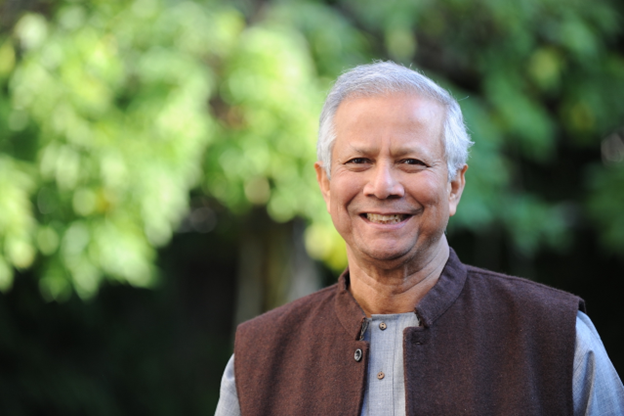
Grameen system in Bangladesh
In the 1970s, Professor Yunus, then an economics professor working at Chittagong University (The Nobel Peace Prize 2006, n.d.-b), met a craftswoman struggling under the weight of a small loan. This encounter started an experiment, lending $27 from his own pocket to women villagers and empowering them to start small businesses. This experiment later marked the birth of the Grameen Bank, a Microfinance system that provides long-term loans to financially challenged women, transforming millions of lives worldwide. GM provides small loans of up to $1000. In most countries,the requirements for loan approval are straightforward. It does not require collateral or credit checks, making it accessible to the disadvantaged.Members only need to demonstrate a business plan. After the initial six months, the members can apply for more loans.
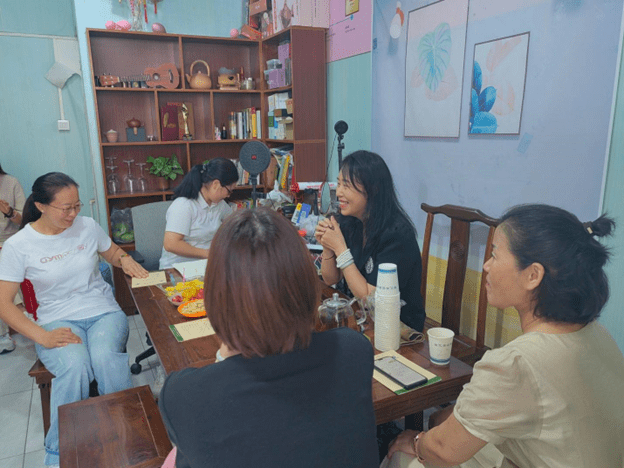
To strengthen connections, women with similar backgrounds, financial conditions, and geographic locations are recruited, facilitating communication and support. GM then operates through small groups of five to seven people who supervise each other to ensure loan repayment, with payments made weekly. Grameen members are also required to participate in central conferences regularly and adhere to weekly loan repayments. This system fosters moral obligation and mutual accountability, resulting in a repayment rate of over 99%(“穆罕默德·尤努斯,” n.d.)., and successfully lifted many Bangladeshis from poverty to a decent standard of living.
Implementation in America
In the United States, the Women’s Self-Employment Project (WSEP) was the first organization to apply the GM (Kalam, 2021). Their initial experiment with the Bangladeshi GM was not a complete success. While they aimed to support women’s self-employment as a means of poverty alleviation, the initiative shifted inevitably towards individual lending rather than group lending. Americans, living in an industrialized country, were unfamiliar with social businesses like the GM, and there was concern about forming groups where someone might default, leaving others to cover the debt (Kalam, 2021). The traditional GM, based on socializing and trust, did not fit the American context at that time.
Despite these difficulties, the experiences gained were invaluable. They led to a notable turnaround and eventual success for Grameen America. Established in 2008, Grameen America adapted the traditional Bangladeshi model,initially setting up experimental branches in New York, which expanded to seven locations. According to Mr. Gao Zhan, founder of the Chinese Grameen model, two experimental branches in New York have now expanded to seven. The branches ensure an independent currency supply directly from the Grameen system itself, preventing external intervention and ensuring complete control over the implementation.

Mirroring the successful model in Bangladesh, by February 2024, Grameen America reached a milestone of investing $4 billion in micro-loans for women entrepreneurs. And till now, it has helped more than 197,000 women entrepreneurs while sustaining an extraordinarily high loan repayment rate – over 99% (Social Business Pedia, 2024).
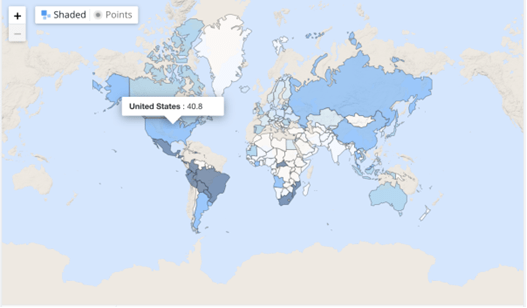
This remarkable success is partly due to the severe income inequality in America, which created a large pool of potential customers. The Gini coefficient, which measures the income distribution, was 0.408 in 2008 – a quite high figure (World Bank Open Data, n.d.), indicating a wide gap between the rich and the poor in America. Those who lack funding to start a business are likely to join the Grameen program to take the first steps of their entrepreneurship journey.
Development in China
Unlike the successful adaptation in America, Grameen China faced several challenges on its path to success. Branch Manager Ma in Shenzhen explained that the Grameen institution (GI) achieved significant success when first introduced to China in 2017. By the end of 2018, it had developed over 400 members with a 99% repayment rate, an unprecedented figure in the country.
The fairytale, unfortunately, did not last. The institution encountered several difficulties in maintaining its position in the market. According to Ma, Grameen China was responsible for its finances at the beginning, but as the number of customers expanded, their monetary supply quickly ran out, making it difficult to support the growing customer base. During this period, more people became aware of the Grameen model. Doubts about the authenticity of the system also increased, with many members expressing skepticism, stating, “it seems too good to be true.” The challenges combined to halt Grameen’s development towards the end of 2019.
Though some financial institutions recognized GM’s potential and decided to support it by offering loan products, after the initial “honeymoon” period between them and the GI, the progression of the GI quickly hit three obstacles around 2021-22. The clash between local financial institutions and the GM became apparent. These institutions looked for customers who had high credibility, while GM targeted individuals with modest backgrounds, who had neither the required credit score nor the straightforward potential to repay the loan, creating conflicts between the systems.
Another factor hindering Grameen China’s operations is the priority assigned to profit maximization among financial institutions. As Branch Manager Ma observed, there was a strong emphasis on financial performance; therefore, customers with more secure financial backgrounds are preferred over those targeted by the GM.
Caring

Although members in a micro group are not actual relatives, they form a close-knit community, always helping and supporting each other. The humanistic approach of the GM is evident not only among its members but also in the relationship between managers and the members themselves.
In conversations with Grameen members, everyone lit up and shared stories about Manager Yin whenever her name came up. They often talked about how she visited them regularly, engaged with them during the weekly meetings, and proactively assisted them during tough times. The GM also includes home visits as a process of introducing members to the system to better understand different situations of members and provide better help.“This (Grameen) is a transmission of love, get that love and pass it on”, said Ms. Zhu, a member who has been lifted out of poverty but continues to work with Grameen. After joining Grameen, she faced financial difficulties for a while, and Manager Yin stepped in with generous help and unwavering support, which deeply touched her. This support meant so much to her that even when she no longer needed the loan, she continued to participate in supporting Grameen’s ongoing development.
The mutual support within the five-member groups highlights the effectiveness of the GM in leveraging collective brainstorming and group dynamics. This supportive management approach encourages members to renew their loans willingly, ensuring a steady income to sustain the system’s operations and meet the contractual obligations with the CCBs. Despite facing numerous challenges in China, the GM’s emphasis on humanistic care provides the hope and motivation necessary to persevere and thrive.
Conclusion
The Grameen Model (GM) has demonstrated its potential to thrive and sustain itself with adaptation to local environments, as seen in successful examples from America and Bangladesh.
Even America took decades before fully adapting the system to its use. It is evident that patience and proactive efforts are crucial for the success of Grameen China, as it has proven its sustainability in previous contexts. Therefore, let’s provide the Chinese GI with the well-deserved patience and trust to allow it to reach its full potential.
Reference:
- Youthforsdg. (2023, December 21). 格莱珉落地中国的现状、挑战与未来. Youth for SDG. https://youthforsdg.org/2023/11/12/grameen-bank/
- The Nobel Peace Prize 2006. (n.d.). NobelPrize.org. https://www.nobelprize.org/prizes/peace/2006/yunus/biographical/
- Global Yunus Social Business. (n.d.). https://www.yunussb.com/team/muhammad-yunus
- The Nobel Peace Prize 2006. (n.d.-b). NobelPrize.org. Muhammad Yunus – Facts – NobelPrize.org
- 穆罕默德·尤努斯. (n.d.). 财新网.
- Kalam, Asif (2021), Institutional challenges of the Grameen, p56, p60-61, (https://eprints.bbk.ac.uk/id/eprint/46906/1/Thesis_AsifKalam.pdf)
- Washington, S. (2023, December 19). Major nonprofit to aid women entrepreneurs opens Atlanta Office. The Atlanta Voice. https://theatlantavoice.com/major-nonprofit-to-aid-women-entrepreneurs-opens-atlanta-office/
- Grameen America plans to invest $40 billion for underserved women in the USA in the next ten years. (2024, May 28). Social Business Pedia.
- World Bank Open Data. (n.d.). World Bank Open Data. https://data.worldbank.org/indicator/SI.POV.GINI?end=2023&most_recent_year_desc=false
 Youth For SDG