
Jay Jiang, Qin Yuning, Zhu Ruishi (Ordered alphabetically)
The culturally vibrant city of Kashgar stands as a testament to the booming growth of tourism in Xinjiang, attracting visitors from all over the world to explore and dive into its history for themselves. The distinct cultural heritage, beautiful historical buildings, and bustling local Bazaar all emerge as prime travel destinations for those who search for an authentic, enriching, and grounded travel experience, with people often returning home with tangible mementos such as handmade copper tea sets, a bag of freshly dried local beef jerky, as well as other good like a lute, a dagger, a brand-new carpet…
This surge in tourism has undoubtedly brought economic prosperity to local vendors, who work hard to keep up with ever-growing demand and try their best to accommodate most of the people here. However, is this growing surge of tourism really beneficial for the traditional culture that thrives with it? When vendors neglect the production of traditional clothing and instead choose to produce what is currently popular, does it mean tourism warps culture in favor of modernity?
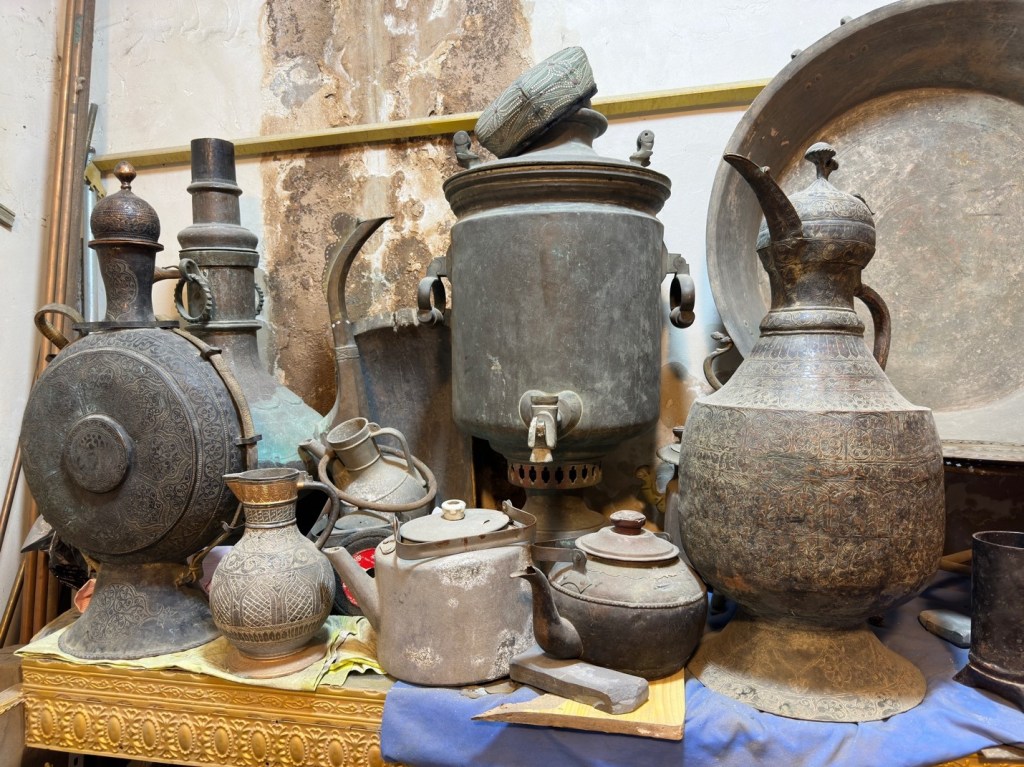
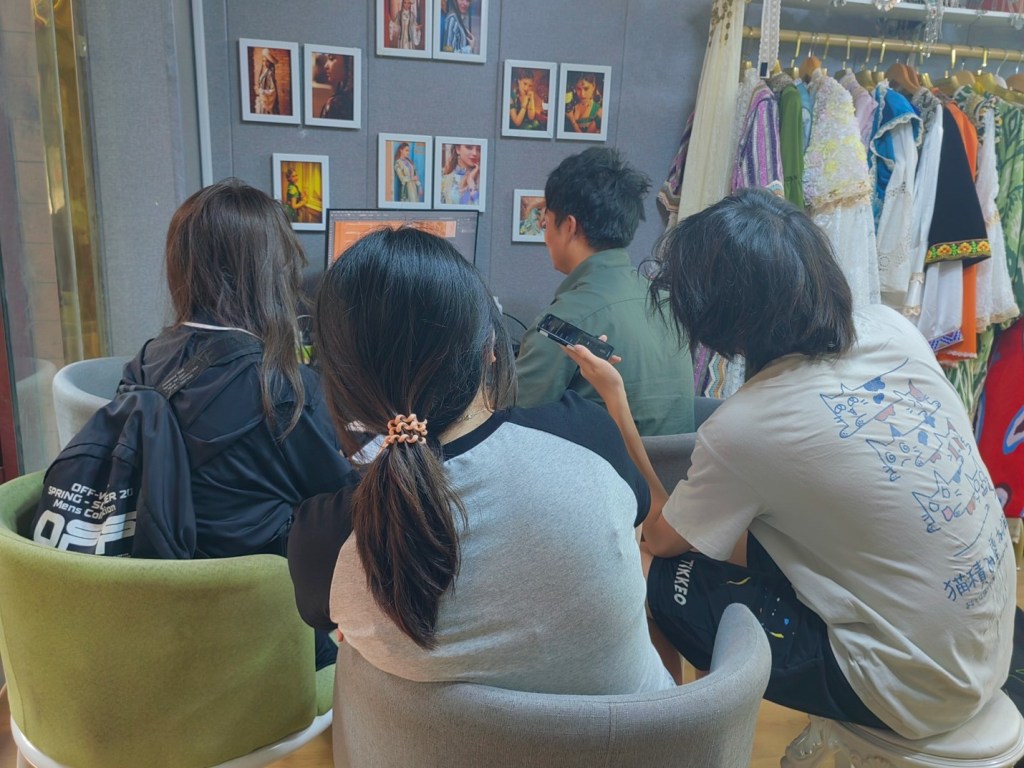
One of the emerging industries on the streets of Kashgar ancient city has evolved to transform the way tourists experience the city: the travel photo shooting industry. The symbiotic relationship between the natural beauty of the town and the wanderlust of its visitors, plus the desire to capture that fleeting, romantic moment. Notably, the rise of social media for sharing these experiences has fueled the enthusiasm of tourists to have their journeys captured in captivating and professionally curated ways, sharing the beauty of destinations with their friends and followers.
In response to this trend, businesses offering comprehensive travel photo shooting packages have seized this opportunity. These packages typically encapsulate a range of services, spanning from professional makeup and styling to a complete set of traditional garb and accessories to the actual photoshoot – all wrapped up with meticulous post-production editing. For just 499 RMB, tourists can walk away with a collection of 10 professionally edited images, accompanied by an additional thirty equally captivating photographs that vividly encapsulate their time in Kashgar.
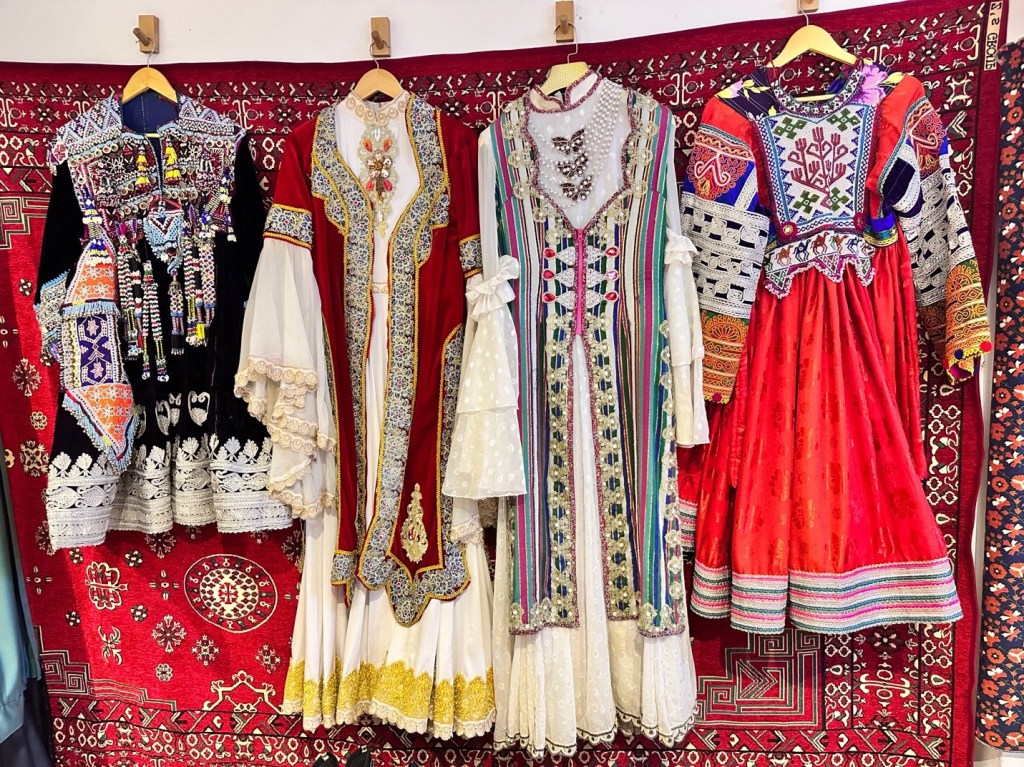
The rise of travel shoot services in Kashgar has unfortunately not always been a true representation of the authentic Uyghur cultural attire. Instead, merchants tend to cater to the desires of consumers, compromising authenticity in pursuit of profit. Many elements showcasing Kashgar’s Uyghur identity have been altered to meet tourist demands or the latest trends. In particular, traditional costumes are often modified, and many merchants from outside the regions unfamiliar with the intricacies of local culture unknowingly mix and match accessories from different ethnicities, creating a pretty – albeit disjointed – look. A store owner specializing in photography mentions, “Some customers seek an ethnic aesthetic, but they don’t want it to be too overpowering, so we mix and match for them.” Many photo-shooting shops also offer outfits representing regions like India or Central Asian locales, broadening the array of choices available to tourists.
Another issue confronting Kashgar’s rich heritage is the emphasis on looking good for the camera over genuine cultural appreciation and understanding. Frequently, photographers choose locations for photoshoots that do not truly represent Kashgar’s culture but are, instead, simply popular tourist attractions. As a local pointed out, “The colors of the Rainbow Alley (a popular photo-taking spot), for instance, do not harmonize with Kashgar’s intrinsic identity. Kashgar has an earthy, yellow tone, while the alley’s predominant blue tones are reminiscent of the Ili regions.” Consequently, many tourists that go to local photo shooting stores focus not on maintaining or understanding the local culture, but just on the visual appeal of the clothing they select for their photos. One of the interviewed tourists succinctly expresses this sentiment, stating, “I don’t know which ethnic group this outfit represents, I chose it because I don’t like very dark colors and it looks pretty.”
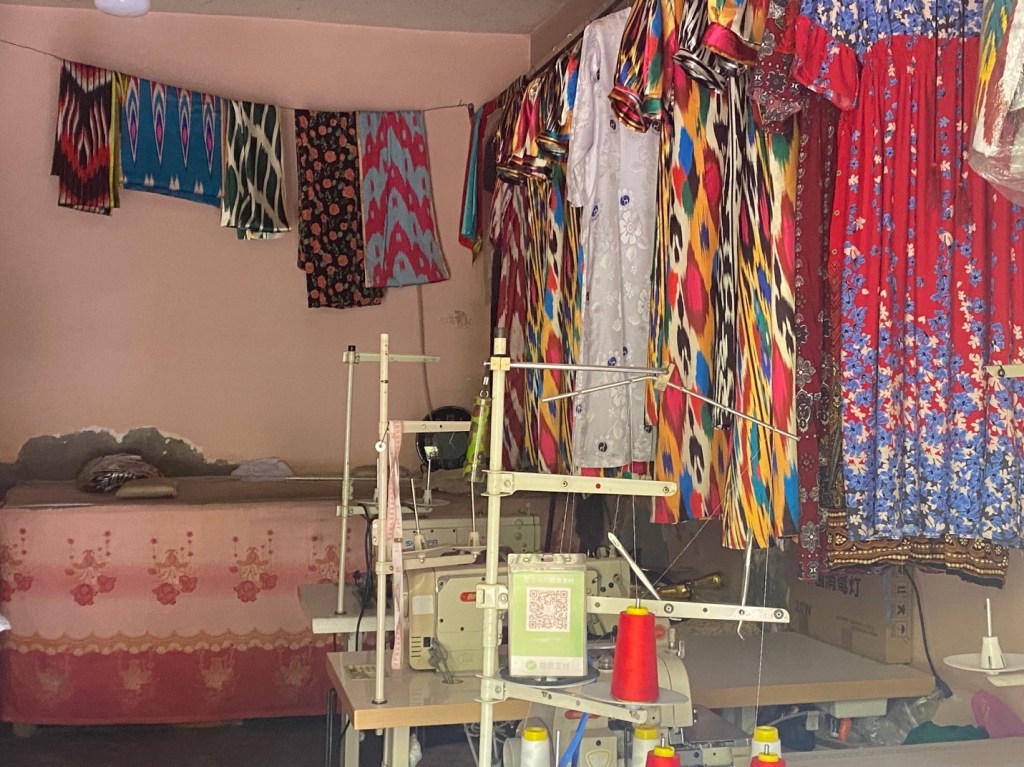
The legacy of Kashgar’s textile tradition, especially the renowned “Etles” fabric, also faces challenges in contemporary times, both in terms of production and cultural recognition. “Etles” meaning “tie-dye” in Uyghur, is a design using an ancient dyeing technique on the warp or weft threads, creating intricate, radiant patterns that blossom with fiery colors throughout the clothes made from it. During the dyeing process, the pattern naturally forms color gradations due to the seepage of the dye, creating an irregular yet miraculously organized appearance. Most tourists perceive it as just another ethnic costume or pattern, but in reality, it’s a weaving technique – the silk threads are dyed first and then woven.
However, the fabric itself is often promoted mainly as a local souvenir rather than an everyday textile. This is primarily because the textile emerges as impractical for daily wear due to its delicate nature and meticulous cleaning requirements, which is reflected in the habits of the locals, who reserve it for significant occasions like weddings and festivals.
The deeply traditional patterns of “Etles” add to its exclusivity, posing various challenges in both its design and its integration into contemporary daily fashion, so despite its long-lasting history, its cultural importance has slowly been eroded to “just another design” in many of the photo shooting stores that harbor it.
Another challenge lies in its high costs. A dwindling number of people are willing to learn how to make genuine “Etles”, as the process of learning how to proficiently make a beautiful piece of fabric is very time-consuming. The intricate techniques involved in “Etles” fabric production present a formidable learning curve. Growing labor costs, widespread machine efficiency, and the traditional labor-heavy use of plants to dye colors in the fabrics have caused handmade fabrics to tend to be more expensive. This has led to most of the fabric available both in and out of the ancient city to be a cheaper, synthetic type.
“Authentic handwoven ‘Etlas’ can only reach a width of 45 cm, but machine-printed versions can be up to 1.5 meters wide”, a professional designer educated in France says, it seems to be a clear advantage for shops to switch over to machine-made fabric. While the lower price does stimulate consumption and, in a way, spreads awareness of the fabric, it also hinders the cultural spread of the genuine material, the handmade product that embodies Kashgar’s soul.
Though the rise of the travel photo shooting industry has not significantly promoted the culture of the city, it has undoubtedly spurred local economic development and helped the people living within. Increased revenue for landlords, tailors, and photographers, which has positively impacted the locals.
During an interview with a photographer who once worked in the city, he mentioned, “This year, the aggregate demand in this industry has increased quite a bit, especially the demand for photographers.” Many locals have switched to open travel photo shooting studios, noting the lower initial investment and quicker returns, making the business less prone to losses. However, as travel photo shooting shops expand from dozens last year to hundreds this year, the fierce competition might make it difficult for these shops to achieve the same degree of profitability as they did the previous year.
Additionally, the development of local tourism and the expansion of travel photo shooting shops have resulted in an increase in rent within the ancient city, and along with it the income for landlords. In a conversation with the owner of a travel photo shooting shop, he shared, “The rent was cheaper last year, but it went up this year. I came here on February 11th last year and at that time, the tourism here wasn’t that popular, you know? When I rented this place around mid-March, the ‘Rainbow Alley’ had just been created in front, as you might know. With the completion of the Rainbow Alley, it became popular, leading to a significant increase in the rent fee of the surrounding area.”
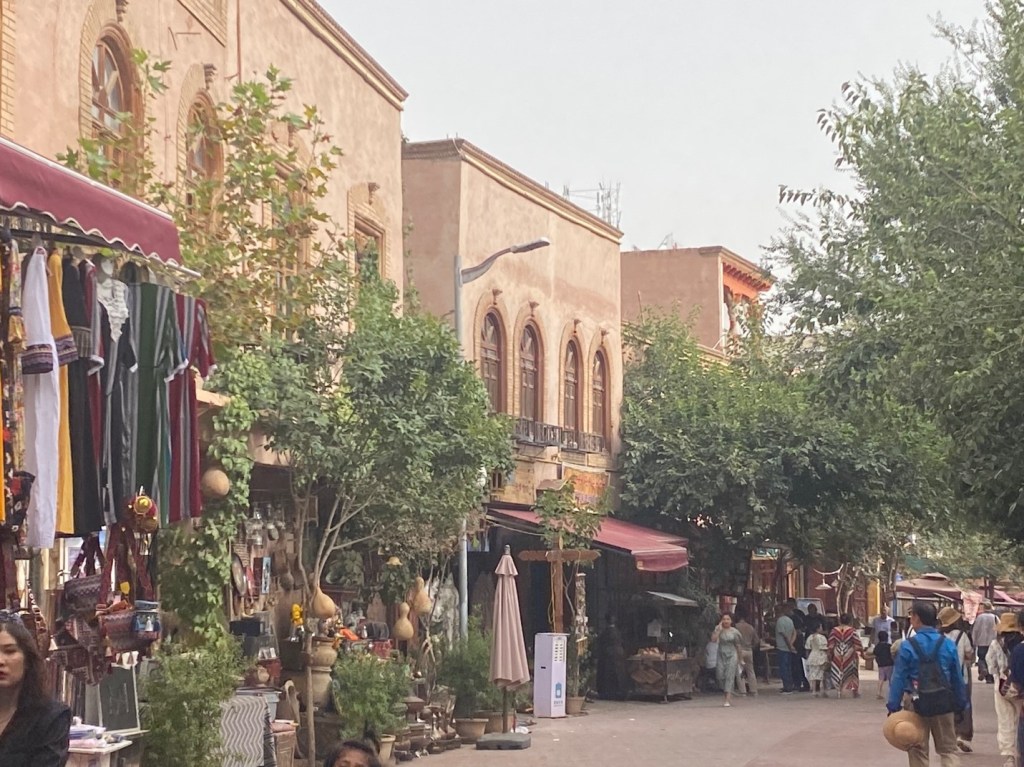
The backbone of the travel photo shooting industry is, undeniably, the shops and outfits. A designer seeking creative inspiration in Kashgar noted, “A lot of the tailoring work here originates from the needs of travel photo shooting shops.” Collaborations between tailors and photo-shooting shops are also becoming more common, with many tailors incorporating innovative elements into traditional outfits, creating a fusion of diverse cultures.
Tourists, while taking photos and wandering around, also contribute to the local economy by purchasing handicrafts and enjoying local cuisine. Conversations with tourists often revealed that their initial draw was the pictures they saw on social media like Xiaohongshu, but they eventually became enamored with the broader cultural tapestry of Kashgar, purchasing intricate souvenirs and savoring local delicacies along with a string of beautiful pics to take home.
This has transformed how people remember their trips and created fresh revenue streams for local photographers, makeup artists, and photo studios. Part-time photographers and makeup artists have also emerged from this industry, hopping from place to place, and making a living based on such. Since neither the price of rent nor the investment capital needed to start a business like this is too much of a burden, many can secure a modest income simply through this industry. A part-time photographer says, “It’s not a matter of losing or making money in a single day, it’s a matter of making a lot of a bit less money.”
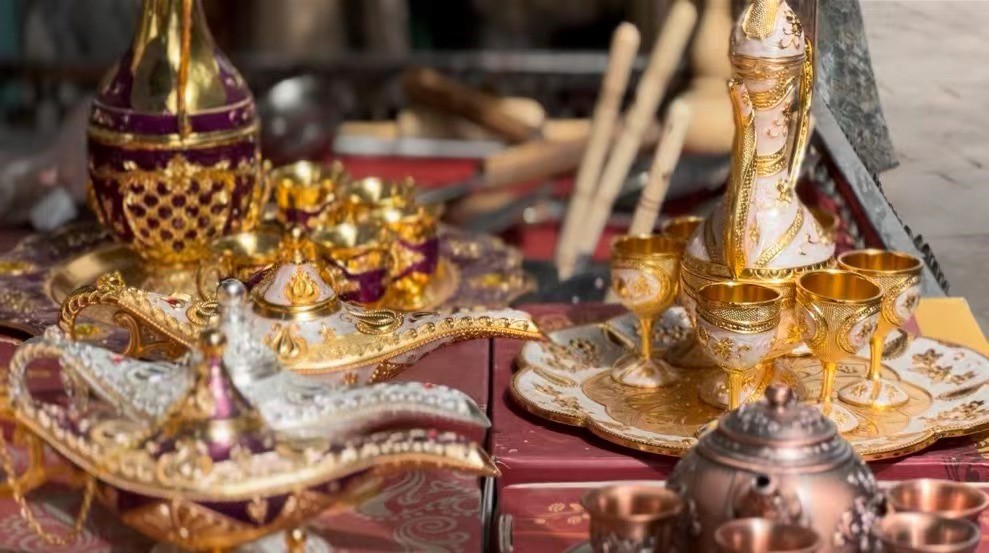
The emergence and wildfire-like spread of social media in China (Tiktok, Xiaohongshu) has played a pivotal role in the surge of this popularity. These platforms have democratized content creation, allowing anyone to become an instant content creator. Vendors and businesses can start their own accounts and display their best works for anyone to see, and the Chinese messaging platform WeChat also facilitates seamless communication between customers and sellers, along with effortless product promotion.
One example involves tourists from Wuhan impulsively booking early-morning flights to Kashgar, because they were so starstruck by the beauty of these “travel photographs” they saw on Xiaohongshu, and then flying back the same afternoon after having a brief lunch. These platforms have fueled trends, shaped consumer behavior and preferences, and encouraged people to show their creativity. With the rise of visually appealing and short, shareable content, there emerges a growing emphasis on aesthetics and experiences, thereby driving the demand for high-quality travel photography that captures the essence of destinations like Xinjiang.
The rapid growth of tourism in Kashgar, a city brimming with rich cultural heritage and historic marvels, has transformed the economic and cultural landscape of the city. While the influx of tourists, coupled with the resulting economic boom has led to the emergence of new industries like travel photo shooting, concerns persist over the preservation and authentic representation of Kashgar’s deep-rooted traditions.
Complicating this scenario is the burgeoning influence of social media platforms, such as Xiaohongshu and TikTok has intensified this dynamic, reshaping how visitors engage with and perceive the city. While these platforms do open avenues for economic opportunities and novel avenues for creative expression, they also pose challenges of cultural dilution and commercialization.
Ultimately, Kashgar stands at this crossroad, balancing the scales of tradition and modernity, while also managing the tensions between economic growth and cultural conservation. This equilibrium holds profound implications for Kashgar’s future, its cultural vitality, and its ability to negotiate the intricate interplay between tradition and progress.
 Youth For SDG