Author: William Wei
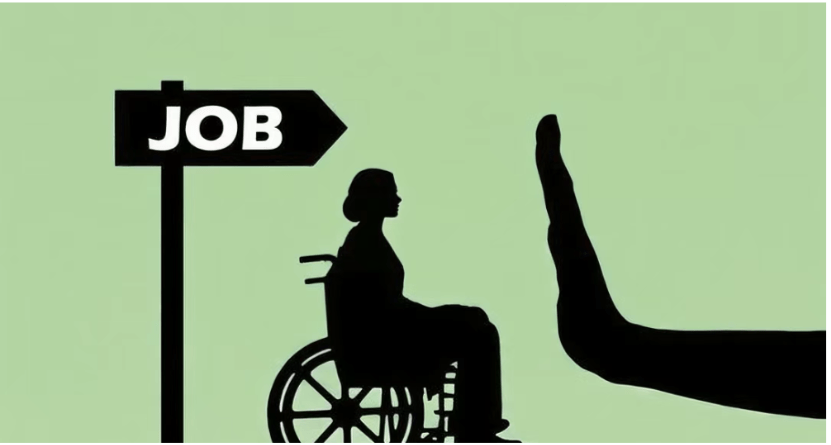
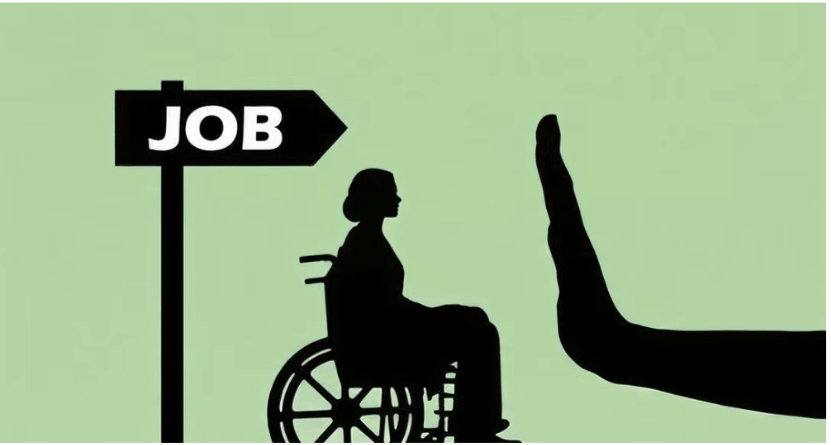
A real story from a person with a physical disability—who has a bachelor’s degree, excellent grades, and extensive internship experience—reveals a harsh truth. “If you tell HR about your physical condition before the interview, you’re almost guaranteed to be rejected. If you wait until the end to mention it, they won’t say no right away, but you can still tell from their expression that a rejection letter is on its way.”
The path to employment is tougher for women with disabilities than for others.
In China, there are 44.7 million women with disabilities, making up 52.2% of the total disabled population. They are constrained both by societal expectations associated with their identity as “women” and by the limitations imposed by the label of “disability,” which restrict their opportunities in life.
The 2022 Report on the Development of Women with Disabilities, jointly released by the Shanghai Youren Public Foundation and a research center, shows that over 54% of working-age women with disabilities are unemployed, while the employment rate for non-disabled women exceeds 90%.
Even when employed by a family-run business, women with disabilities may not find respect or a sense of security.
One woman with a disability, who worked for a family member’s company organizing files, had no employment contract or social insurance, and received a meager monthly subsidy of just over 1,000 yuan. As she put it:
“Those acquaintances might not bully you excessively, but they won’t genuinely respect you either. In the face of the employment challenges for women with disabilities, what can we do besides feel indignant, helpless, lost, and anxious?”
Status Quo and Challenges
The employment rate for women with disabilities is extremely low. Data from 2010 show that only about 26% of them were employed—significantly lower than the 92% employment rate for non-disabled women and the 38% rate for men with disabilities.
Even for those who do find work, it is often in fields like handicrafts, customer service, or massage therapy. These are typically temporary or informal jobs with little stability and a constant risk of being laid off.
The income of women with disabilities is generally low—less than half of the national average. In 2022, their average annual income was about 15,000 yuan, and as low as 10,000 yuan in rural areas, far below the national per capita income. Additionally, women with disabilities earn, on average, 17% less than their male counterparts in the same roles.
Furthermore, they face prejudice and discrimination even in “disability-specific roles.” Some of these positions involve similar responsibilities to regular jobs but pay only 3,000 to 4,000 yuan—well below market rates.
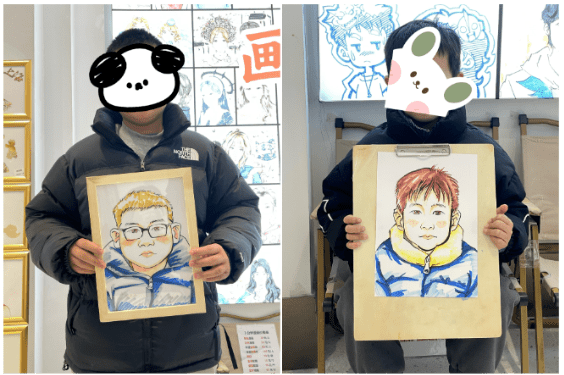
Some companies deliberately underpay employees with disabilities. For example, a trained art professional with a disability finally found a job as a comic artist. After completing four pieces in one afternoon for a total of 310 yuan, the shop owner took an 80% commission.
Analysis of the Causes
At the personal level, women with disabilities are often hindered by limited access to education and training, a narrow social circle, and conflicts between their social roles and family responsibilities.
In the past, educational opportunities for people with disabilities were very limited. “Only about one in 900 people with disabilities had a chance to go to school, and most were from first- and second-tier cities,” said a non-profit director. Before 2015, many students with disabilities were unable to write like others due to their physical conditions. At that time, there was no extra exam time, so many were unable to finish their test papers.
Policy changes introduced after 2015 allowed students with disabilities to apply for reasonable accommodations, such as a 30% extension on exam time and the use of barrier-free classrooms. “The more ideal situation,” said a non-profit director, “is to provide accommodations based on individual physical conditions. Some might only need a 10% time extension, while others with severe physical disabilities could require a 100% extension.”
However, family attitudes also significantly impact the education of people with disabilities. A 2023 survey showed that over 30% of respondents had been advised not to continue their studies, with more than 70% of that advice coming from parents and relatives, and about 10% from teachers.
“Why do you need to go to college? Why keep studying when you’re already like this?”—this is a common question they hear. The phrase “already like this” becomes a label that imposes a forced identity.
A narrow social circle is another significant barrier.
The head of a non-profit organization pointed out that, due to a lack of education and social integration, women with disabilities tend to have smaller social circles and less social capital, resulting in very limited access to external support. Many are also confined at home, which leads to growing self-doubt when they eventually face the outside world.
To parents, the idea of their child with a mobility disability moving to another city alone is almost unimaginable. They often say: “It’s too unsafe outside. You can’t handle all the uncertainties. Life at home is comfortable—you don’t have to worry about anything. You might not even earn more money out there than you would staying here.”
A limited social network not only restricts access to opportunities and information but also undermines their confidence and capacity to navigate the world independently.
Many people with disabilities strongly desire independence and want to break free from the label of “being cared for.” However, being confined at home for long periods fills them with self-doubt when they do step outside. One person with a disability shared:
“I have a limb disability. I can use a wheelchair if my legs aren’t working well, but if my hands aren’t good, I can’t even zip a zipper or button a button. I’ve never lived alone—how can I become self-reliant?”
Traditional social roles and family responsibilities also constrain women with disabilities. The belief that “women should take on more household responsibilities and be good wives and mothers” remains deeply ingrained. Even women with disabilities are often expected by their families to prioritize domestic life—expectations that directly limit their career choices and development.
Beyond personal factors, the lack of accessible environments and the poor implementation of employment support policies are major external barriers.
The absence of accessible facilities physically blocks women with disabilities from entering the workplace.
The journey from home to the office is often the biggest challenge, especially for those living in older buildings without elevators. This is not an isolated issue; some people have not left their homes for over a decade. Without an elevator, they need family members to help carry the wheelchair every time they want to go out, which often leads to family complaints.
Xia, a wheelchair user, was forced to give up her university admission after passing the college entrance exams because the school lacked accessible facilities. Her parents had hoped she could open a fruit store in their neighborhood to make a living, but that plan also fell through due to her mobility difficulties.
She shared: “The old buildings with no elevators trapped me at home, making it hard to even go downstairs. I was forced to lose my social life and suffered both physically and mentally during the best years of my life—like a flower that was about to wither before it could even bloom.”
Further implementation of employment protection policies is urgently needed. In some regions, the Disability Employment Security Fund has not been fully enforced—especially in second- and third-tier cities, where companies are more focused on hiring “top talent” to stay competitive and often disregard the policy’s intended support.
Even companies that do implement such policies and provide positions for people with disabilities may fail to offer a respectful or inclusive work environment.
“The so-called ‘disability-specific jobs’ offered by the company paid only enough to cover basic living expenses, and the work itself had no technical content. The boss treated it like they were ‘doing us a favor’ and even complained about other disabled colleagues who worked remotely. The non-disabled employee who was supposed to train me was also unwilling to teach me. This oppressive atmosphere—from both sides—was truly painful.”
NGOs’ Action
In response to these challenges, non-governmental organizations (NGOs) have been offering support in several ways.
They organize skills training and experience-sharing sessions to boost the employability of women with disabilities.
For example, since 2022, the social enterprise Rare & Roll has hosted the “Disabled Women’s Digital Economy Employment and Entrepreneurship Sharing Sessions.” To date, it has held ten online events and two in-person seminars, inviting over 30 guest speakers and reaching more than 800 people with disabilities, including over 500 women. The organization has built a platform for learning and connection.
NGOs are also actively partnering with companies to create more job opportunities.
Rare & Roll regularly recommends career and educational opportunities through its social media platforms. Since 2020, the organization has maintained a column called “Quick Guide to Disability Resources and Opportunities” on its official WeChat account. It publishes weekly updates featuring high-quality companies, job openings, and professional development resources. So far, it has posted over 800 updates, reaching between 30,000 and 40,000 people. Among them, 3,500 individuals have used the system’s back end to access job contact information and submit applications.
According to data from 188 job postings published in 2024 by Accessible Journey, the most common roles were administrative assistants (22), technical positions (18), and human resources (13). The highest average salary was for technical roles, ranging from 10,000 to 17,000 yuan, while administrative roles had the lowest average, at around 5,000 yuan. A majority of these positions were classified as “disability-specific” (101 roles), followed by “disability-friendly” roles (77), which are open to all but explicitly welcome applicants with disabilities.
In terms of geographical distribution, Shanghai, Beijing, and Guangzhou offered the highest number of jobs, accounting for a combined total of 115 positions.
Job seekers with disabilities tend to prefer foreign companies. Large and well-known corporations such as BMW, Apple, and Accenture are especially favored due to their comprehensive benefits, accessible infrastructure, and inclusive corporate cultures.
Moreover, job seekers show a clear preference for technical, data-labeling, and financial roles over administrative or HR positions. These roles typically require specialized skills, offer higher compensation, and are more likely to support remote or flexible work arrangements—making them particularly attractive to individuals with mobility challenges.
Conclusion
While progress has been slow, change is happening. Policies are improving, NGOs are taking action, and artificial intelligence is empowering people with disabilities—all of which are crucial forces in breaking through the employment barriers they face.
However, achieving true equality in employment requires society as a whole to dismantle prejudice and continue raising public awareness. When people with disabilities work alongside non-disabled colleagues, they don’t need pity—they need confidence, support, and encouragement.
“Who says people in wheelchairs can’t do in-person work? You can do it.”
This is the kind of encouragement that truly matters.
As one person with a disability shared: “When my colleagues taught me work skills and held me to high standards, I embraced the challenge and solved problems one by one. That’s what led to my career advancement.”
This is the life people with disabilities want: to be treated equally, to be encouraged, and to have meaningful goals to work toward.
Reference:
1. https://www.thepaper.cn/newsDetail_forward_22176409
2.https://m.thepaper.cn/newsDetail_forward_29953652
3.https://mp.weixin.qq.com/s/AH5aSSW8lpvk3UHbNUhuPA
4.https://mp.weixin.qq.com/s/M0ZYqVeIgt61ZcbMGuX7tw
5.https://mp.weixin.qq.com/s/u8LUN80iNWfct8qys-twIQ
6.https://mp.weixin.qq.com/s/SF2h0vz-JWZ7M2gqD1i1XQ
 Youth For SDG