Authors: Ruiheng Cao, Yucheng Li, Shiyi Yan, Yichen Xiong (in no particular order)
While agriculture ensures a stable food supply for humanity, it has also inflicted significant damage on global ecosystems and the Earth’s environment. In the pursuit of higher yields and efficiency, chemical fertilizers and pesticides have been widely applied. Although these inputs have boosted production, they have also caused the accumulation of harmful substances in the food chain, posing serious threats to both life and health.
Moreover, chemical-intensive farming has worsened soil and water pollution. Studies show that 70% of global farmland is at risk of pesticide contamination, with 30% classified as high-risk. Asia is the most affected region, with China topping the list—reportedly having 2.9 million square kilometers of severely polluted farmland. According to the United Nations Food and Agriculture Organization (FAO), by 2050, up to 90% of the world’s soil resources may be degraded due to erosion, excessive use of agrochemicals, and industrial pollution.
Ecological agriculture offers a promising pathway toward sustainable agricultural development. By establishing an ecological circular system, it transforms agricultural waste into reusable resources, thereby reducing pollution and enhancing resource efficiency. This model minimizes dependence on chemical fertilizers and pesticides, thus easing environmental pressures. In addition, by preserving natural ecological checks and balances among species, it contributes to the conservation of biodiversity and the stability of ecosystems.

“Organic farming and eco-agriculture serve as important complements to modern agriculture. Our goal is not to completely abandon chemical farming, but to develop agricultural models that respect biodiversity and promote environmental sustainability,” said Yang Xin, founder of Chengdu Pujiang Huatian Eco-Farm.
The State of Eco-Agriculture Development in China
The concept of “ecological agriculture” was officially introduced to China in the early 1980s. In 1981, Mr. Ma Shijun proposed the ecological engineering principles of wholeness, coordination, circulation, and regeneration at an academic symposium on agricultural ecological engineering, laying the foundation for the development of ecological agriculture theory in China.
In 1982, Professor Ye Qianji presented the article “Ecological Agriculture – A Green Revolution in Chinese Agriculture” at the academic symposium on agricultural ecological economics held in Yinchuan, formally introducing the concept of “ecological agriculture” to the public and academic communities.
In the 1990s, China’s Ministry of Agriculture implemented a two-phase national program to establish 120 ecological agriculture demonstration counties, launching over 1,000 pilot projects across the country. In recent years, the No. 1 Central Document issued by the CPC Central Committee — which outlines the country’s top priorities in agricultural policy — has consistently emphasized ecological transformation and green development in agriculture, alongside the goal of ensuring stable food production.
As a result, the ecological value of agriculture has received increasing policy attention, marking the transition toward ecological agriculture as a key component of China’s national development strategy.
Ecological agriculture is an integrated approach that simultaneously applies ecological and social principles to the design and management of food and agricultural systems. It aims to optimize the interactions among plants, animals, humans, and the environment, while also addressing the social challenges necessary for building a sustainable and equitable food system.
Its core characteristics include diversity, resilience, high efficiency, synergy, circularity, co-creation and sharing, an emphasis on humanistic and social values, respect for cultural and dietary traditions, responsible governance, and the development of a circular and mutually supportive economy.
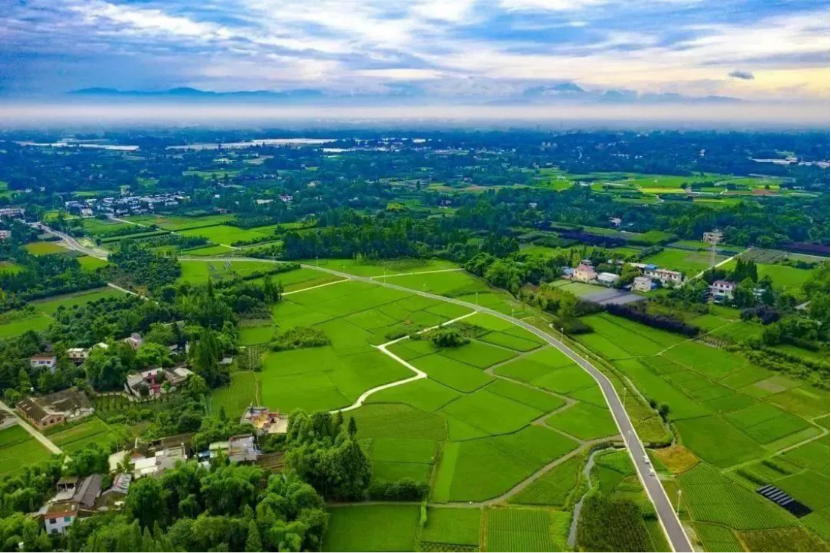
At present, ecological agriculture has been implemented in many regions across China, with Chengdu standing out as a particularly active hub for its development. Benefiting from unique geographical conditions—where one-third of the city’s area comprises plains, hills, and mountains arranged in a vertical distribution pattern—Chengdu experiences distinct vertical climate zones. This results in rich and diverse biological resources, providing a naturally favorable foundation for the advancement of ecological agriculture in the region.
Under these favorable conditions, several representative ecological farms have emerged in Chengdu. These include Hongling Ecological Farm, established in 2007; Defu Ecological Farm, established in 2012; as well as Huatian Ecological Farm, Tangjialiangliang Ecological Farm, Chinxin Lan Yuan Ecological Farm, and Yuanxiang Ecological Farm, which was founded in 2016. These farms have continuously explored innovative practices and developed distinctive models for ecological agricultural development.
Ecological cycle plays a vital role in eco-agriculture
The foundation of ecological agriculture lies in the establishment of a stable ecological cycle. Specifically, a complete ecological cycle comprises several key components. First, plants convert solar energy and inorganic elements into organic matter through photosynthesis. This organic matter then enters the food chain: herbivores consume plants to obtain energy and nutrients, and in turn, herbivores are preyed upon by carnivores. Eventually, the excrement and remains of all organisms are decomposed by microorganisms, which release stored energy and materials back into the environment—thereby initiating a new cycle.
This continuous process of material and energy transformation forms the natural basis for the sustainable development of ecological agriculture.
In the ecological cycle systems established by ecological agriculture, agricultural biological waste is fully utilized and its value regenerated. This process not only effectively reduces the discharge of waste and pollutants, but also enables the recycling of resources. At the same time, ecological cycles reduce reliance on chemical fertilizers and pesticides, thereby mitigating the negative environmental impacts caused by traditional agricultural practices. Moreover, ecological farms emphasize the establishment of natural regulatory relationships among organisms, which helps maintain the dynamic balance of the ecosystem and effectively protect biodiversity. Based on these advantages, constructing a scientific and reasonable ecological cycle has become a central component of ecological agriculture.
In actual farming processes, each ecological farm builds its own ecological cycle system tailored to its specific development needs. At Hongling Ecological Farm in Longquanyi District, Chengdu, farm owner Han Jianbin has developed a “plant–pig–biogas–soil” ecological cycle. In this model, cornmeal is used as pig feed. After consuming the cornmeal, the pigs produce manure, which is fermented by microorganisms and then filtered through activated carbon.
This process yields two valuable resources: on the one hand, the biogas generated through fermentation serves as high-quality fuel, meeting the farm’s daily energy needs such as boiling water and cooking; on the other hand, the remaining biogas residue and slurry are used as natural fertilizers, providing nutrients for the farm’s peach trees and various vegetables. “Biogas not only provides fuel for daily life, but also serves as fertilizer for our farm,” Han said.
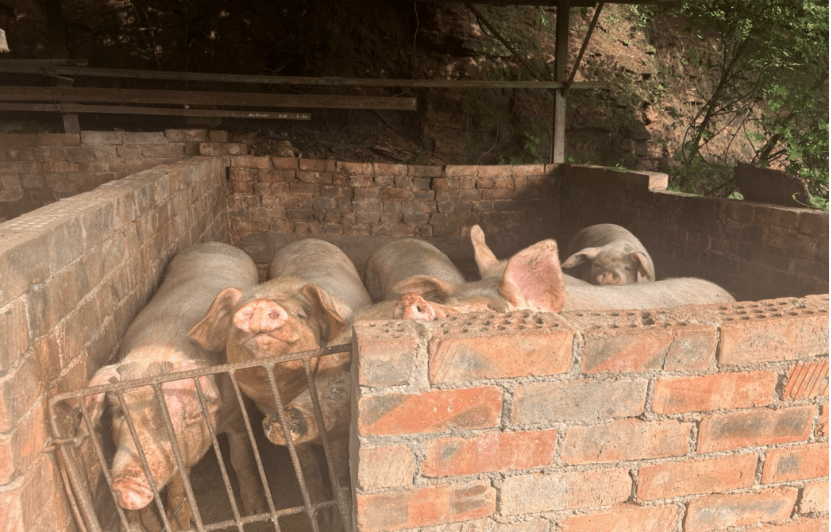
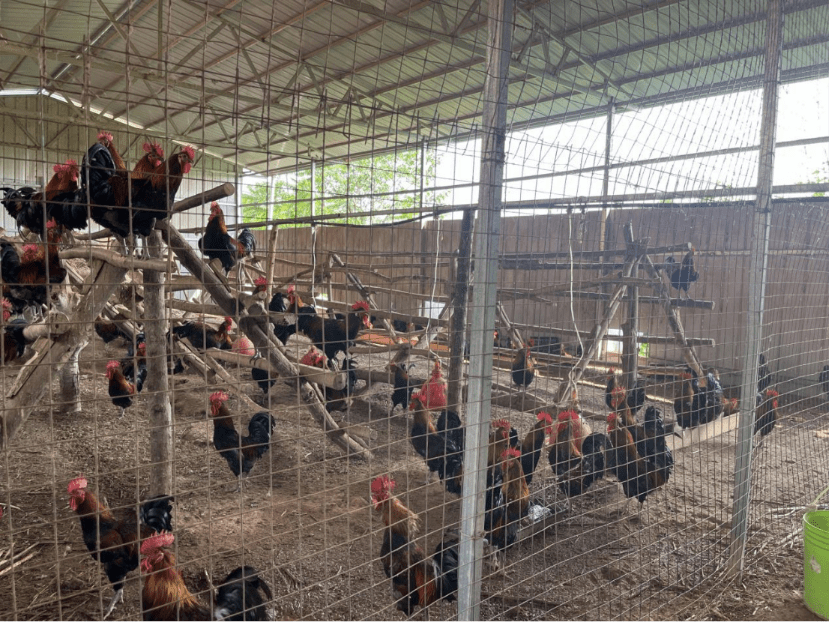
Farms like Hongling Ecological Farm that reuse animal waste for fertilization are not rare. Another example is Liangliang Ecological Farm in Fuxing Town, Jintang County, Chengdu. Farm owner Tang Liang has set up an enclosure specifically for chickens, where the chickens’ droppings are naturally spread over the soil, providing nutrients for the citrus trees planted within the enclosure. In addition, the farm systematically collects pig and sheep manure for composting, and the resulting organic fertilizer is used to nourish the farm’s fruit trees.
Although the two farms raise different types of animals, both Hongling Ecological Farm and Liangliang Ecological Farm follow the same scientific principles in building their ecological cycle systems: through microbial decomposition, the organic matter and proteins contained in animal waste are transformed into nutrients that plants can absorb, thereby achieving resource recycling.
However, building an ecological cycle involves more than just considering the organisms within the system—it also requires taking into account the farm’s environment and financial situation. Defu Ecological Farm, established in 2013 and founded by Lei Defu, initially focused on raising sheep. However, due to the limitation of having to sell the entire sheep while they are alive, the farm’s economic performance was poor. “Sheep are too large in size and can only be sold in bulk to livestock dealers, which drives the price down significantly,” explained Lei.
After carefully evaluating the farm’s environment and financial situation, Lei decided to shift toward poultry farming. Chickens can be sold in smaller batches, and eggs can be sold steadily throughout the year, effectively resolving the financial losses previously caused by sheep farming. Over time, Defu Ecological Farm gradually developed a mature “corn–chicken–soil–straw” ecological cycle. The farm grows corn, which, once harvested, is ground into cornmeal to feed the chickens. The chicken manure is fermented in underground pits into bioliquid, which then serves as fertilizer for the corn and other crops on the farm.
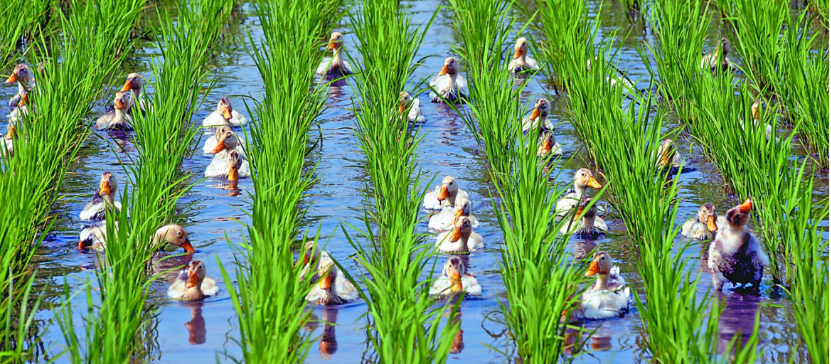
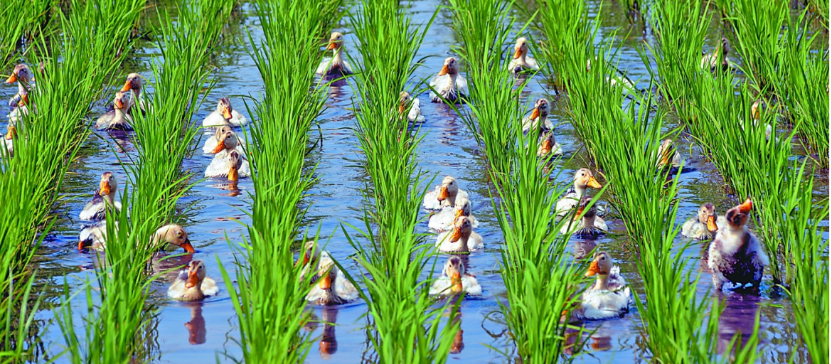
At Chuxin Lanyuan Ecological Farm in Pidu District, Chengdu, a “rice–duck” ecological cycle model is adopted. Around mid-May, after rice seedlings are transplanted, the farm waits about five days for the seedlings to establish before introducing one-week-old Digue ducks into the paddies. These ducks have a growth cycle that aligns well with the rice cultivation period and exhibit moderate activity levels. They feed on pests without damaging the tender rice shoots, and their droppings serve as natural fertilizer. Additionally, as the ducks move through the paddies, their webbed feet stir the water, increasing oxygen levels and further promoting rice growth.
In addition, there are several well-known ecological cycle models, such as rice–fish symbiosis, mulberry–fish pond systems, and plum–tea–chicken–bee integration. These models not only promote the recycling of materials but also play an important role in protecting the ecological environment.
However, ecological cycles can also encounter imbalances. Lei shared a familiar story: “What happens when there are too few wolves and too many rabbits? The rabbits will severely damage the grasslands, and the environment will gradually deteriorate.” When any link in the ecological cycle breaks down, the entire system can collapse, ultimately leading to environmental degradation.
Therefore, ecological agriculture also requires maintaining a balanced population of organisms on the farm. From a pig to a single bacterium, every living organism plays a crucial role in the stable operation of the ecological cycle. Lei noted that when raising chickens, they feed on various plants and insects on the ground. If the chicken flock stays in the same area for too long, the land can quickly become barren. To prevent this, Defu Ecological Farm relocates the chicken coop every two to three months, allowing the grassland time to recover and helping preserve the farm’s ecological balance.
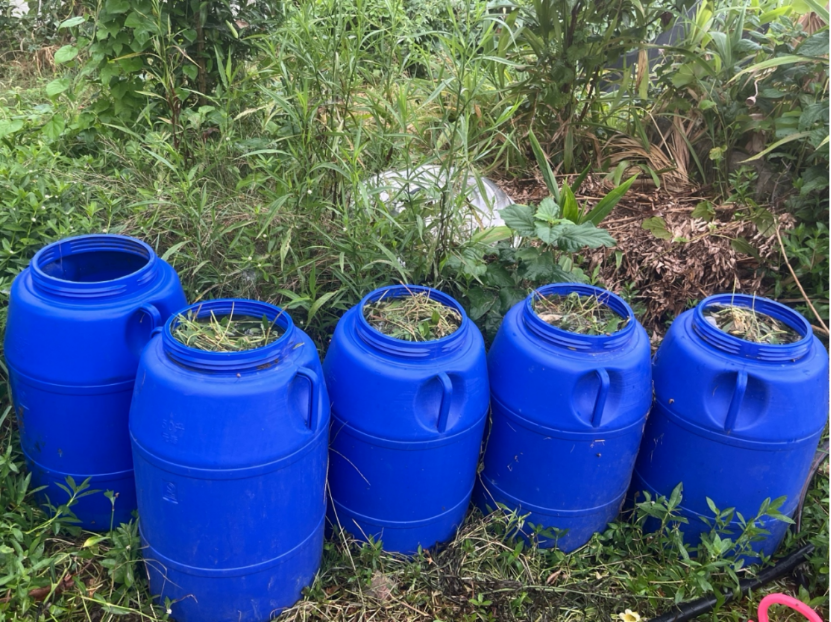
Microorganisms invisible to the human eye are just as indispensable in the ecological cycle. Both Hongling Ecological Farm and Defu Ecological Farm use EM (Effective Microorganism) cultures in their biogas systems. These microbes extract valuable organic matter from animal waste, transforming it into high-quality natural fertilizer. At Liangliang Ecological Farm, weeds are soaked in water to cultivate various types of bacteria and fungi, which are then used to irrigate the land and enhance soil fertility.
The vigorous growth of kiwifruit and a type of citrus called rake pomelo at Huatian Ecological Farm in Pujiang County, Chengdu, is also thanks to nitrogen-fixing bacteria. These microbes convert nitrogen from the air into nitrogen-containing organic compounds, providing plants with an abundant supply of this essential nutrient.
Ecology is inherently a chain of interlinked relationships, where every species plays a unique role within its ecological niche. Just as species are distributed across spatial and temporal niches, each link in the chain contributes to the cycling of matter and the flow of energy through its ecological position. If any part of this niche becomes ‘misaligned’ or ‘disappears’—like a cancerous mutation in human cells—the balance is disrupted, and the entire ecological cycle may begin to unravel.
“Every place in nature has its own ecological niche. If the organisms within that niche begin to disappear, and no new life comes to fill the gap, that place will turn into an inorganic environment, becoming a space that is devoid of life,” Lei summarized. Regardless of whether a species is seen as ‘good’ or ‘bad’ from our perspective, each one is a vital piece of the puzzle that maintains ecological balance. Without any one of them, the stable operation of the ecological cycle becomes difficult to sustain. Protecting the diversity of ecological niches is, in essence, protecting the very foundation of the ecological cycle.
Ecological Agriculture Promotes Sustainable Agricultural Development
(1) Producing Healthy and Safe Agricultural Products
Food safety has emerged as a critical societal concern in modern agricultural production. Recent research analyzing pesticide residue levels in Chinese vegetables and fruits revealed an overall exceedance rate of 5.09% in vegetable samples. The data showed significant variation among crop types, with legumes demonstrating the highest exceedance rate at 24.93%, followed by bulb vegetables (22.39%), root and tuber crops (8.53%), leafy greens (6.91%), melons and fruiting vegetables (4.29%), and solanaceous fruits (3.00%).
Notably, ecological agriculture completely avoids synthetic chemical inputs—including fertilizers, pesticides, plastic mulch, herbicides, and artificial hormones—thereby offering consumers safer and healthier food alternatives.
Regarding quality control, the absence of unified standards has led eco-farms to prioritize building long-term trust with customers. Li Yulan, owner of Chuxin Lanyuan Eco-Farm, explains: “It largely depends on trust. Many loyal customers have been buying from us since 2013—that’s over a decade.” In fact, most new customers at eco-farms come through referrals from existing patrons.
To strengthen consumer trust, ecological farmers employ various methods. They openly share their production processes on social media, such as posting short videos documenting daily farm life and the growth of crops and livestock, allowing consumers to see how agricultural products make their way from field to table.
(2) Developing Sustainable Business Models
Ecological farmers continuously innovate, exploring multiple economic development models.
Most ecological farms develop year-round marketable staple products. Hongling Ecological Farm primarily sells preserved eggs, Defu Ecological Farm focuses on chicken and eggs, while Tangjialiangliang Ecological Farm specializes in Yellow Ginger. “Peaches are seasonal—they’re only available for about two months a year—but preserved eggs can be sold year-round,” shared Han.
Meanwhile, many farms also engage in secondary production of plant-based goods such as hydrosols, soaps, and other daily necessities. At Chuxin Lanyuan Farm, Li cultivates aromatic herbs like roses, mugwort, rosemary, and lemon eucalyptus, using plant extraction methods to produce toners, insect repellents, mugwort balms, and similar products. By leveraging the biodiversity of the eco-farm for natural product processing, they generate additional income streams.

Parent-child and educational programs also serve as a significant revenue source for many farms. With increasing urbanization, younger generations have fewer opportunities to engage with nature and agriculture. As a result, more urban families and schools are organizing visits to eco-farms, allowing children to experience rural life while learning about sustainable farming practices—combining nature immersion with hands-on education.
Eco-farms are increasingly collaborating to foster mutual growth. They help sell each other’s products—Hongling Ecological Farm regularly participates in ecological farm markets and supplies preserved eggs to other farms, which in turn sell rice, pork, and other ecological goods. Huatian Ecological Farm attends organic and ecological agricultural trade fairs to promote its kiwifruit while networking with peers. Yuanxiang Ecological Farm has established an online marketplace for organic and ecological products, partnering with over 200 farms nationwide and utilizing livestreaming and community-based sales to drive collective growth.
(3) Practicing Environmental Protection Principles
“You can tell an ecological farm just by listening to its sounds,” said Tang, emphasizing the importance of biodiversity conservation.
Ecological farms do not categorize organisms as “pests, beneficial insects, weeds, or crops.” Instead, their fields are often filled with diverse plant life, and uncommon flora, insects, and wildlife frequently appear. “People often come to our farm to pick bitter buckwheat—it’s nearly extinct elsewhere, but it still grows here,” said Li.
In mitigating greenhouse gas emissions, ecological farms maintain low-carbon or even carbon-negative operations. Defu Ecological Farm primarily raises chickens but dedicates only one-fifth of its 500-acre land to poultry, with the rest reserved for crops and natural habitats. “Our farm operates at a carbon-negative level, contributing in a small way to reducing global warming,” shared Lei.
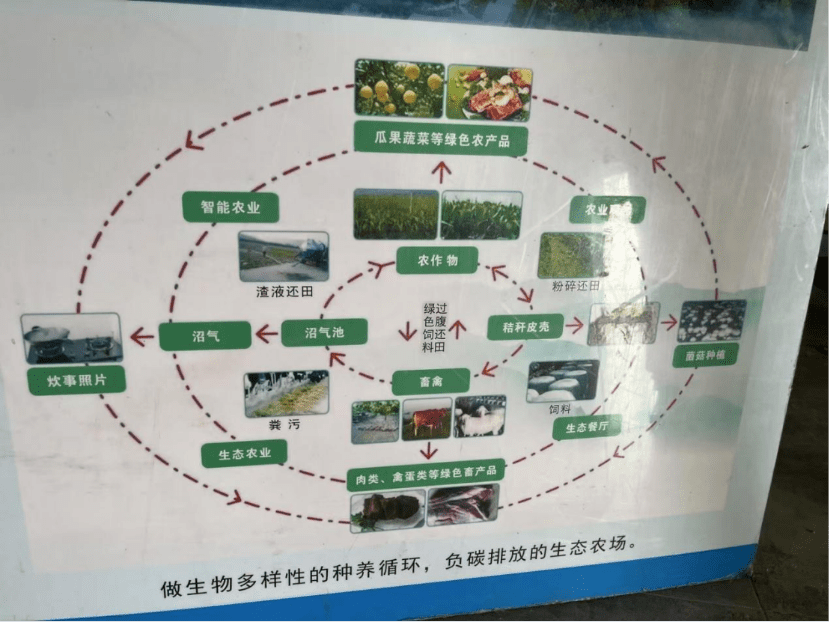
In waste management, ecological farms adhere to circular economy principles. Hongling Ecological Farm and Defu Ecological Farm follow a “plants–livestock–biogas–soil” cycle, fermenting animal manure in biogas digesters and using the resulting slurry for vegetable cultivation. Liangliang Ecological Farm practices strict waste sorting, converting all biodegradable waste into fertilizer. This approach reduces reliance on chemical fertilizers while enabling resource recycling.
According to Farmer’s Daily, the national consumption of agricultural chemical fertilizers stood at 50.217 million tons in 2023, marking the eighth consecutive year of decline—an achievement to which ecological agriculture has contributed through its persistent efforts. Through the joint endeavors of ecological agriculture practitioners, not only have healthy and safe agricultural products been provided to society, but diverse sustainable agricultural operation models have also been continuously explored, embodying the concept of environmentally responsible production.
As public awareness of food safety and environmental protection continues to rise, market demand for ecological agricultural products is steadily growing, making ecological agriculture a practical and viable pathway for the sustainable development of modern agriculture.
References:
1. China’s Agro-Ecological Engineering (《中国的农业生态工程》)
2. Sustainable Agriculture Journal, Issue 2, December 2016 (《可持续农业》)
3.https://www.nature.com/articles/s41561-021-00712-5
4.https://www.chengdu.gov.cn/cdsrmzf/c169552/detail_one.shtm
5.http://www.nyxxb.cn/article/doi/10.16801/j.issn.1008-7303.2023.0091
6.https://www.caas.net.cn/xwzx/mtxw/46db518b7e694c6fb7ef4404bcb6c9c0.htm
 Youth For SDG