By: Xinyi Cai,Leyou Hu,Manqi Luo,Tsz Ching Yeung
In the vast rural areas of China, a small loan to address urgent needs can often change a person’s fate more profoundly than a simple handout. However, the complex procedures of traditional banks are often intimidating for rural women. Ms. Wang from Wanglou Town shared: “Some lending policies of traditional banks, such as animal husbandry loans, are inaccessible to many people because they don’t meet the eligibility requirements. But with Grameen, you can receive a loan after just five days of training.”
As a social financial institution serving the poor, Grameen Bank operates in a fundamentally different way from traditional banks. The differences lie mainly in its loan recipients, operational focus, and risk control mechanisms. For traditional banks, the core concerns are loan risks and returns; but for Grameen Bank, lending is merely a means—its true focus is on building community bonds and empowering marginalized groups through that process.
Differences in Target Clients and Operational Focus
Grameen Bank and traditional banks serve fundamentally different client groups. While traditional banks screen for borrowers with proven repayment capacity, Grameen actively reaches out to those who are financially excluded.
Traditional banks typically conduct strict background checks to ensure repayment, often requiring proof of assets, credit history, or guarantors. Ms. Wang from Wanglou Town shared:
“Getting a loan from a bank requires finding a guarantor, but nowadays many people are unwilling to vouch for others. You also need to provide collateral, which is very troublesome.”
In essence, traditional banks allocate funds to individuals who already meet formal banking criteria—effectively excluding poor women who lack collateral but are in urgent need of credit.
Grameen Bank, on the other hand, proactively seeks out marginalized, impoverished women who truly need help.
These women often lack social resources and economic capital, yet Grameen sees them as promising loan candidates. Grameen staff go into villages, hold informational meetings, and visit households one by one to learn about each family’s circumstances and hardships. As one Grameen team member put it, “We don’t ask whether she has a guarantor; we listen to how she lives and whether she’s willing to change.” These visits aren’t one-offs but are repeated several times in short succession. As Ms. Zhu, the China center manager, explained: “We take photos of potential members, print them out, and then go back to find them with the pictures in hand. This increases meeting opportunities, builds rapport, and helps lower their guard.” Through this immersive, ground‑level approach, Grameen more easily uncovers those who may seem quiet on the surface but harbor a strong desire to change.
Secondly, Grameen Bank differs from traditional banks in its operational focus. Traditional banks concentrate on loan approval, often resulting in slow disbursement processes. In contrast, Grameen places less emphasis on the approval stage, making the lending process much more efficient. Grameen devotes more time to helping members develop self-governance mechanisms and empowering them to strengthen their ability to repay loans.
In the lending process, Grameen staff are responsible only for providing the funds and keeping records; the specific loan amounts are managed and decided by self-organized groups of five women. A significant portion of the staff’s time is dedicated to empowering members—helping them gain the ability to be self-employed, take control of their lives, and participate in society. This includes regularly organizing meetings, offering literacy education, encouraging children’s education, and promoting sixteen key commitments aimed at improving health and overall living conditions for rural women.
As Manager Zhu once shared: “One time, a member came to sign her loan documents, accompanied by her husband. He was amazed to see that his wife, who previously couldn’t even write her own name, was now signing fluently and confidently. Because the money was brought home through her own efforts, he began to recognize her abilities more, and she gained confidence and status within the family. In the five-people group, they not only learned how to earn money but also made new friends and became more open and outgoing.”
Grameen and traditional bank staff also differ in their attitudes toward rural clients. Traditional bank employees typically take a business-like approach, focusing on contract enforcement and risk avoidance. In contrast, Grameen staff are more personable and compassionate, immersing themselves in villagers’ daily lives and offering support that ranges from practical assistance to emotional care.
According to feedback from members in Lukou Village, Grameen staff often help with everyday issues. Ms. Cao, an 80-year-old member, recalled how Manager Liang (the center manager from Grameen) once assisted her: “One time, I got a suspicious phone call and immediately went to find Liang. He checked the number and told me the prefix wasn’t +86 and the length was off—it was likely an overseas scam. He warned me not to fall for it, helping me avoid being cheated.”
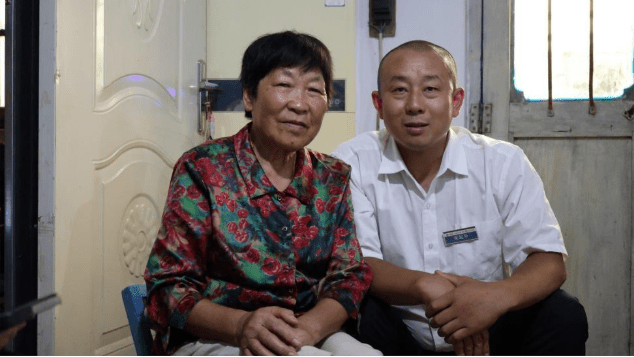
Staff members also pay close attention to members’ health, reminding them to get regular check-ups. Ms. Cao mentioned that after joining Grameen, she began voluntarily participating in the community health screening every April. Before that, she didn’t understand the importance of regular check-ups and thought they were a waste of money. This people-centered approach shows that Grameen not only empowers members economically but also demonstrates genuine care for the well-being of rural communities.
Differences in Risk Control Mechanisms
First, Grameen and traditional banks differ in their risk control mechanisms.
Traditional banks rely on credit checks and collateral to assess repayment ability, using clients’ financial histories to eliminate risks. But this filters out likely defaulters, it also excludes many marginalized people—especially rural women without stable assets or income.
Some women labeled as defaulters were victims of identity misuse, where someone else used their ID to apply for loans. These accounts were then exploited by criminals to take out loans, causing the women subsequently rejected by traditional banking systems. However, as Manager Zhu candidly acknowledged, “We all value our own reputation; no one wants to be a defaulter.”
Grameen’s risk control is based on trust and community. Unlike the traditional belief that “the poor have no credit,” Grameen believes in the integrity of the poor. Though their income is unstable, they care about keeping promises. Even without collateral, they repay on time. The book Banker to the Poor notes: “When poor people fail to repay, it’s usually due to external circumstances. They still want to repay and will do so eventually.” That’s why Grameen doesn’t rely on credit scores when screening members.
The five-member group mechanism empowers members positively through community, managing risk by enhancing members’ ability to repay loans. This improvement in repayment capacity partly comes from members sharing experiences and resources with each other. When Ms. Wang first arrived in the village, she knew nothing about raising rabbits or farming. She said: “I didn’t know how to raise rabbits. Luckily, group members taught me. Later when I started farming, they helped me figure out when and how much to fertilize or use pesticides.”
Group members also support each other during hardships. Ms. Shang from Lukou Village said if someone in the group struggles, others step in to help or find solutions together. This isn’t enforced liability but is encouraged by Grameen’s incentive policies. If members repay reliably and perform well individually and as a group, their loan limits increase the next year—helping expand their businesses. Moreover, emotional bonds and trust have formed within the group, encouraging everyone to repay on time as best as they can.

Secondly, Grameen and traditional banks use different lending and repayment strategies. Unlike traditional banks that issue large one-time loans, Grameen gives small, gradual loans. Initial loans rarely exceed 20,000 RMB. Only after timely repayment and good behavior, members are allowed to borrow more. Many members in Lukou Village started with just a few thousand yuan. After several repayments, they could borrow 10,000 to 20,000 RMB. The cap is around 30,000 RMB.
Grameen focuses mainly on lending to women. Manager Zhu mentioned that studies from Grameen Bangladesh showed that men often use loans for personal consumption or entertainment, with less than 15% going toward the family. Women, however, put about 90% into their families—buying clothes, health products, or school supplies. Also, as women have stronger ties with children, they have greater responsibility.
Grameen uses small, weekly repayments. Though traditional banks also allow installments, their high loan amounts and monthly repayments create too much pressure for rural women. If their business falters, they may default. Grameen’s weekly repayments—just a few hundred yuan—are more manageable and can build repayment habits. Members in Lukou Village said they feel no pressure. “I’ll never miss a payment,” said Ms. Wang. “Once my crops are sold to the buyers, a few hundred yuan is no problem.”
Moreover, Grameen’s repayment system is flexible and humane. Unlike banks that mark even a one-minute delay as overdue, Grameen allows repayment within the same day.“Bank loans are stressful—being three hours late gets you blacklisted,” said Ms. Wang. “With Grameen, it’s okay. If you miss the morning deadline, you can pay in the afternoon. It’s much less stressful.”
When borrowers can’t repay due to disasters or emergencies, traditional banks freeze accounts, chase debts, or blacklist them. But Grameen founder Muhammad Yunus believes that if borrowers face unavoidable difficulties, the bank should continue to support them until they recover and are able to repay. Gao Zhan, President of Grameen China, mentioned: “Within the five-woman groups, if a member is temporarily unable to repay due to reasons such as drought, Grameen does not immediately impose external pressure. Instead, it encourages continued participation through understanding and support.”

In Summary, Grameen and traditional banks differ fundamentally in goals and values. Traditional banks are capital-driven, seeking maximum profit and minimum risk. Grameen is people-oriented, aiming to eliminate poverty through small loans and empower women from low-income rural areas. Traditional banks make decisions based on numbers and contracts, focusing on a borrower’s past. Grameen bank makes decisions based on trust in human potential, looking to their potential members’ future.
Grameen believes poverty is not a personal failure, but a structural problem caused by the environment. It breaks away from the concept of traditional banking and builds a system tailored for the poor. Its aim is not profit, but rather to help excluded individuals rediscover their potential and reclaim their right to be trusted.
 Youth For SDG