Authors: Yuri Cai, Shuya Liao, Ellen (Yilin) Zong, Xingzi Wang
There is a disease, preventable but incurable: its victims can only watch as their breath is stolen from them, inch by inch, until death finally arrives. The root of this nightmare lies in long-term exposure to dusty work environments without adequate protection. This “silent bomb” is pneumoconiosis.
Pneumoconiosis is an irreversible occupational lung disease caused by prolonged inhalation of dust, such as coal, silica, asbestos, artificial quartz powder, diatomaceous earth, and other similar substances. Long-term inhalation of these substances leads to fibrosis and calcification of lung tissues, ultimately resulting in respiratory failure. Pneumonoconiosis typically has a latency period of 5 to 20 years, though highly toxic dust (e.g., silica) can trigger symptoms in as soon as 3 to 5 years. In China, pneumoconiosis accounts for 90% of all occupational disease cases, with over 600,000 patients, more than 95% of whom are migrant workers.
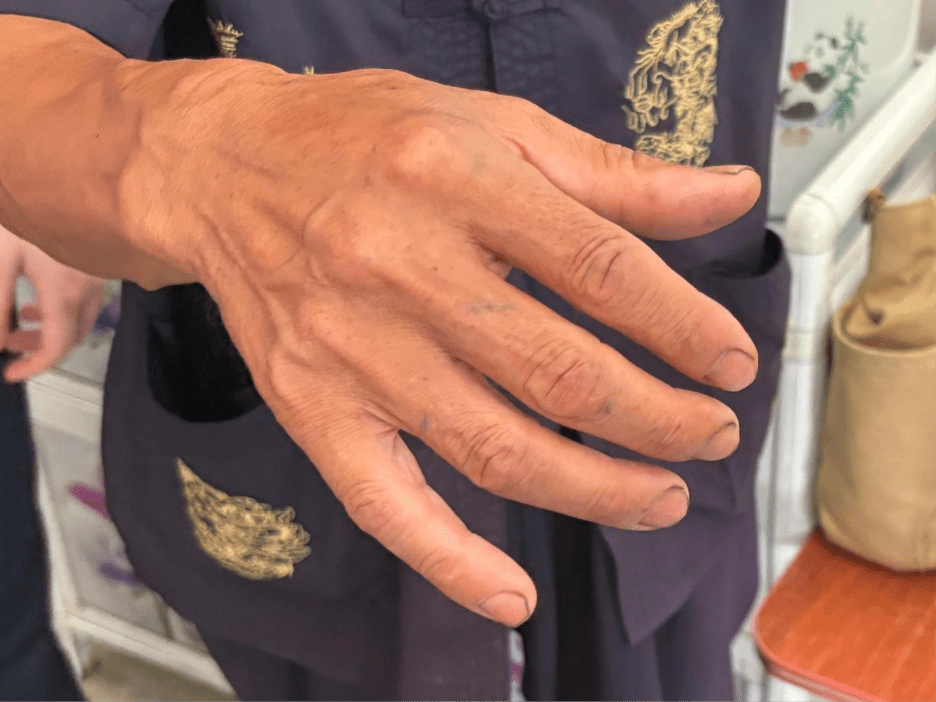
The progression of pneumoconiosis is brutal: In the early stages, patients experience coughing and chest tightness, often mistaken for a common cold or overexertion in work. As fibrosis worsens during the mid-stage, even climbing up stairs feels like scaling a mountain, and patients lose their ability to work. In the advanced stages of pneumoconiosis, patients can no longer lie flat to sleep, suffer from multi-organ failure, and ultimately die of suffocation.
“Our lungs are like overcooked rice—charred and lifeless, with no elasticity left. The condition worsens with age, like a slow-moving cancer,” described Mr. Liu, a patient at Liangfang Rehabilitation Center.
In recent years, growing attention has been directed toward pneumoconiosis patients. Medical institutions and nonprofit organizations have implemented various rehabilitation and assistance measures, including medical support, daily care, and psychological counseling for affected families.
Medical Rehabilitation as a Means of Helping Farmers with Pneumoconiosis
Pneumoconiosis is not only an incurable disease. What’s worse, pneumoconiosis also leads to numerous complications such as pneumothorax, pulmonary embolism, pulmonary heart disease, pulmonary nephropathy, pulmonary encephalopathy, and pulmonary hepatopathy. These complications arise due to the decline in lung function, which results in an insufficient oxygen supply to various organs in patients.
In the past, lung lavage was commonly used to treat pneumoconiosis. However, Doctor Li from Pingxiang Chinese Medicine Hospital explained that this technique not only fails to remove the hardened dust accumulated in the lungs but also causes significant damage to lung tissue. Since the progression of pneumoconiosis is irreversible, patients can only rely on medications and medical devices to manage complications, alleviate symptoms, improve their conditions, and prolong their lives.
Mr. Bai from Liangfang Rehabilitation Center said, “There are no drugs that directly treat pneumoconiosis. Patients usually take medications to relieve coughing and phlegm.” Mr. He, who was nearby, mentioned a common cough medicine he often uses: Tiotropium Bromide Powder (inhaled) (some patients also use Procaterol Hydrochloride Powder (inhaled)). Medication of these sort are administered twice a day, in the morning and evening.
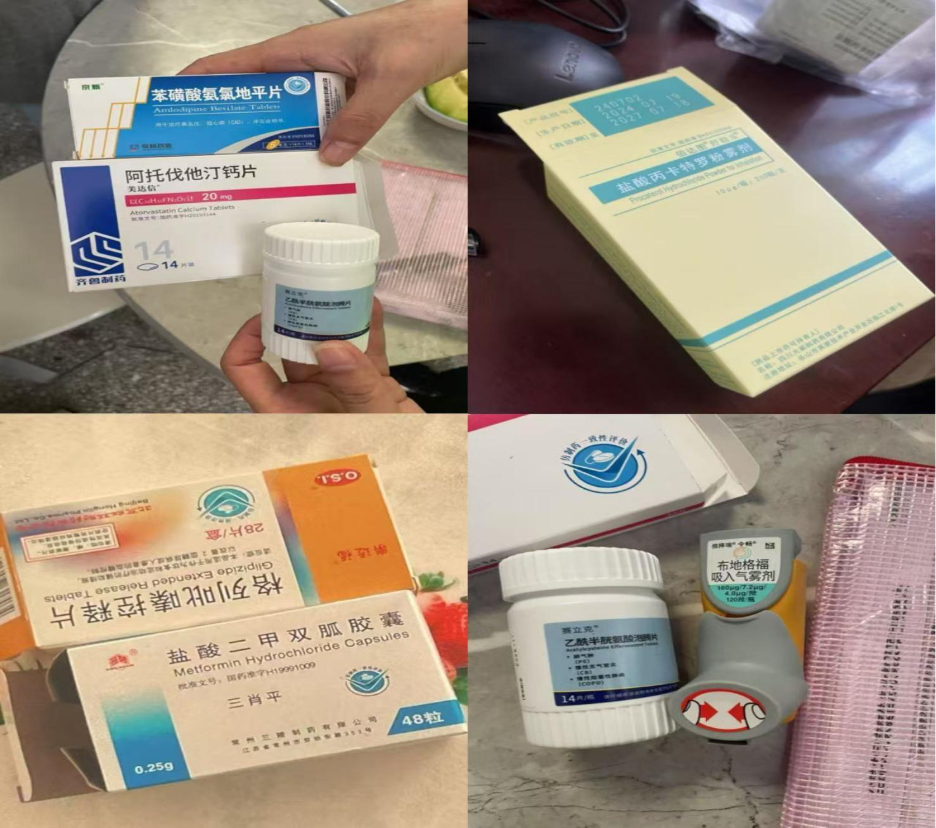
Although there are no drugs that can cure pneumoconiosis or its complications completely, there are still medical methods to alleviate conditions for patients. Patients with pneumoconiosis, especially those in advanced stages, heavily rely on oxygen concentrators to compensate for insufficient oxygen intake. Mr. Li, a rehabilitation specialist at Liangfang Rehabilitation Center, shared, “We donate oxygen concentrators to patients who need them.” Oxygen concentrators are crucial devices for treating hypoxia in pneumoconiosis patients. Ms. Wanxiang, a “pneumoconiosis mother” (wife of a pneumoconiosis patient), shared, “(My husband’s) oxygen concentrator is on 24 hours a day. He cannot even take it off while taking a shower. During the summer, he can only sit outside in a wheelchair for a short moment at noon before returning home to receive oxygen.”
Many pneumoconiosis patients mentioned that winter is the most challenging season for them. The significant temperature fluctuations between day and night, combined with their weakened immune systems, make them highly susceptible to colds, which can worsen their condition. Therefore, Mr. Li noted that the rehabilitation center administers flu vaccines to patients during late autumn and early winter, significantly reducing their chances of catching a cold during winter.
In addition to Western medicine, traditional Chinese medicine (TCM) is also used in pneumoconiosis rehabilitation. One such TCM therapy is the “ Sanfutie plaster “. Based on the TCM theory of “treating winter diseases in summer,” Sanfutie plaster is used to prevent illnesses that may occur in winter, such as the flu. It is also suitable for respiratory diseases like bronchial asthma, bronchitis, chronic obstructive pulmonary disease, recurrent upper respiratory infections, and emphysema, most of which are complications of pneumoconiosis.

Supporting Pneumoconiosis Patients Through Daily Care
Pneumoconiosis patients require long-term daily care and rehabilitation exercises to maintain lung function and slow disease progression. To support this, doctors and rehabilitation specialists have developed a set of scientific and practical daily care strategies aimed at improving patients’ quality of life.
During the winter, due to impaired lung function, patients with pneumoconiosis are especially sensitive to temperature changes. Therefore, maintaining warmth in the lungs and upper body is essential, for example, by wearing heated vests to protect the chest. At Liangfang Rehabilitation Center, Mr. Guo, a former miner with 20 years of underground work experience, shared: “When the cold winter comes, I feel like I’m frozen shut and can’t even breathe properly.” Many patients report only going outside on sunny days during cold weather, as even a slight chill can trigger severe coughing. Ms. Wanxiang added, “Cold weather makes it harder to breathe. One can’t lie flat but instead has to hunch over. My husband’s coughing only eases when I pat his back.” Clearly, staying warm and avoiding exposure to cold is crucial to prevent symptom flare-ups and hospitalizations.
Despite pneumoconiosis causing irreversible lung fibrosis, targeted exercises can help preserve remaining lung capacity. Dr. Li, head of the Respiratory Department at Pingxiang Hospital of Traditional Chinese Medicine, explains: “All rehabilitation exercises focus on expanding the respiratory muscles and chest.” Common rehabilitation methods include resistance band training and therapeutic breathing exercises.
In resistance band training, patients stretch the band outward with both hands to open the chest. During therapeutic exercises, Ms. Xiao, director of Xingjian Public Welfare Association, emphasizes proper form: “Let your breath guide your movements. Rotate your wrists outward to fully engage the muscles. Lift your arms to the highest point to expand the ribcage completely, and squeeze your shoulder blades together. Remember, the power should come from your back and chest—not just your arms.” Patients at Liangfang and Chishan Rehabilitation Centers typically perform these exercises twice daily for about 10 minutes per session.
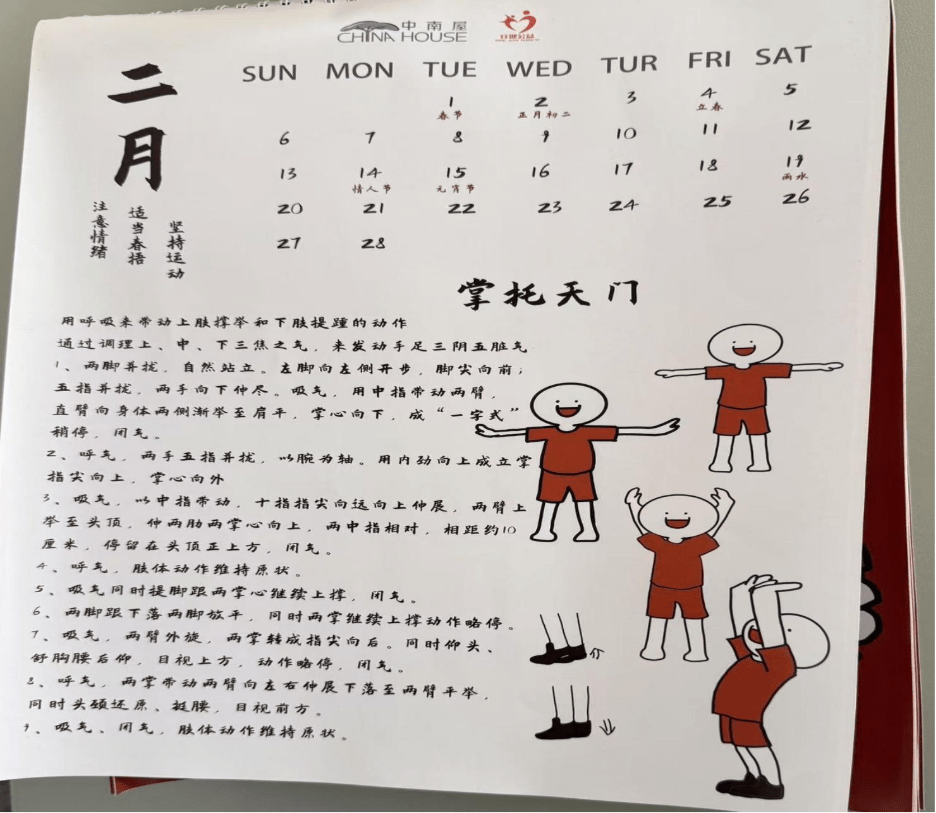
Ms. Xiao further notes: “The goal is to protect the remaining healthy lung tissue, slow or halt the fibrosis and calcification of the lungs, and allow the unaffected areas to function normally. Breathing exercises can at least help relieve shortness of breath.” To build up lung capacity, centers also provide harmonicas, whistles, and balloons. Dr. Liu from Liangfang Rehabilitation Center explains: “Wind instruments help patients learn breath control and strengthen the diaphragm, which significantly improves respiratory function.”
Dr. Li adds, “Many patients begin with severely hunched backs. For them, simply raising their arms or looking upward is a significant milestone. The key is to push personal limits.” Therefore, rehabilitation must be gradual, tailored to each individual’s ability, and above all—consistent.
Pneumoconiosis often leads to complications such as pulmonary encephalopathy or cor pulmonale, making regular monitoring of blood oxygen, heart rate, and blood pressure essential. To support this, rehabilitation centers include smartwatches in care kits for real-time tracking. These devices are user-friendly and durable. At Chishan Rehabilitation Center, Dr. Liang conducts routine check-ups every Saturday morning, including blood pressure and oxygen level monitoring, and prescribes medications to manage symptoms.
Nutrition also plays a vital role in recovery. Dr. Liang advises patients to avoid high-sugar, high-salt, and high-fat foods. Mr. Guo from Liangfang adds, “Drinking astragalus and goji berry tea also helps with lung function and breathing.”

Psychological Counseling as a Means of Supporting Families Affected by Pneumoconiosis
For pneumoconiosis patients, maintaining a positive mindset and stable emotions is crucial. Rehabilitation centers not only provide facilities for physical rehabilitation but also serve as important social venues for patients. At these centers, affected patients exchange information about the medications they use: such as various drugs that help to clear phlegm and cleanse the lungs, hospitals that have different medication in stock, and remedies that are effective for alleviating coughs. Such information would be inaccessible to patients if they were isolated at home.
Through these interactions, patients’ mental well-being also improves significantly. Mr. Liu, a patient at the Liangfang Rehabilitation Center, shared that while he often feels lonely when staying at home alone, at the center he can open up and talk with fellow patients, which brings him comfort and joy. Many patients also join WeChat groups where they check in daily to report their health status. When someone is unwell, group members send messages of encouragement and blessings, helping to motivate each other.
Mr. Xiao from the Chishan Rehabilitation Center, who worked in stone processing when he was young, joined the center in 2019 as one of its earliest members. Over the past two years, his health status has remained stable, which he attributes to his optimistic mindset and harmonious family relationships. Mr. Xiao said, “Your mindset must be positive. Don’t treat pneumoconiosis as a burden in your mind. Don’t dwell on how long you can live; instead, think that every extra day lived is a day gained. My wife and I take care of each other, and our children call us every day via video chat.”
In response, Xingjian Charity focuses on supporting patients’ families, working to foster a nurturing home environment for patients. This includes home visits to mediate marital conflicts and providing guidance on effective communication between patients and their caregivers. The “Mothers of Pneumoconiosis Cooperative Group” comprises wives of pneumoconiosis patients, who regularly gather to open up and share their feelings. On one occasion, Ms. Xiao assigned the members a “homework” assignment: ask their husbands to do a small favor for them. During the next sharing session, one previously quiet mother laughed openly for the first time when she recounted how her husband had made her a cup of tea. Ms. Xiao believes that it is essential to encourage these women to prioritize their own mental health and emotional well-being so that they can acquire new skills and care for their husbands more effectively. Patients, too, are encouraged to relieve their wives’ burdens and to be more considerate of their feelings. Only through such mutual understanding can family harmony be achieved.
Additionally, charitable organizations provide educational assistance to help the children of pneumoconiosis patients continue their studies, alleviating the financial strain on these families. By submitting the child’s personal information, enrollment certificates, and household background, families may be eligible to receive scholarships ranging from 1,000 to 3,000 RMB through Xingjian Public Welfare, funded by Love Save Pneumoconiosis, a charity organization dedicated to aid families affected by pneumoconiosis. This financial support helps families to avoid making the painful choice between purchasing essential medications and paying for their children’s education, bringing a sense of relief and a smile to their faces.

Current Challenges Pneumoconiosis Patients Face
At Pingxiang, despite the functioning system formed by hospitals and rehabilitation centers, there are still many lingering issues, the prime and most insurmountable being economic restraints. Mr. Guo shared that medication is costly, reaching around 1,000 RMB after reimbursement, which is equivalent to the monthly income of a pneumoconiosis family. Additionally, Mr. Liu from Chishan Rehabilitation Center mentioned that many patients are hospitalized at least four times each year, and each hospitalization costs at least 1,000 RMB. “The surgery I received last time cost 40,000 RMB, and after reimbursement, I still had to pay 20,000 RMB. This is too expensive for me.”
Moreover, many patients hold misconceptions about seeking medical treatment properly, or believe that there is no urgent need to see a doctor, enduring symptoms as long as possible. Many patients and their families are unaware of medications that they should use, and only purchase medications based on prescriptions provided by doctors. To alleviate financial aid, patients may go as far as deviating from prescription instructions or buying substandard medications. Ms. Xiao mentioned that in Stage I, pneumoconiosis does not exhibit many noticeable or alarming symptoms, making treatment and rehabilitation during this period critically important. Early and consistent rehabilitation may even allow Stage I patients to achieve a daily living standard comparable to that of healthy individuals. However, by the time patients are compelled to seek medical attention, the condition has typically progressed to Stage II or even Stage III, at which point the disease has already rendered patients unable to meet the demands of normal life.
At Pingxiang, through the comprehensive support of many aspects including medication, daily care, and mental assistance, an increasing number of patients have learned to coexist with pneumoconiosis, and even return to society. Through the cooperative effort of local medical and charity organizations, breathing freely is no longer an unachievable dream. Despite ongoing challenges, every step taken has proven that as long as one does not give up, life will always find a way. In the future, along with policy improvements and increased social awareness, Pingxiang’s system of pneumoconiosis rehabilitation and assistance may serve as a leading model for more regions, ensuring that every breath is taken with dignity.

References:
- Symptoms of the Earlier Stage of Pneumoconiosis: https://me.mbd.baidu.com/r/1FAQZll4ewU?f=cp&u=9be19741f9ef15f5
- National Health Commission of the People’s Republic of China: Pneumoconiosis Accounts for 90% of Occupational Diseases, with Long Diagnosis Cycles and Difficult Evidence Collection: https://news.cctv.com/2024/04/25/ARTI9SRdjhevVa7j9S5mTijT240425.shtml
- Sanfutie Plaster: https://baike.baidu.com/item/%e4%b8%89%e4%bc%8f%e8%b4%b4/10711516
- Procaterol Hydrochloride Powder for Inhalation: https://baike.baidu.com/item/%E7%9B%90%E9%85%B8%E4%B8%99%E5%8D%A1%E7%89%B9%E7%BD%97%E6%B0%94%E9%9B%BE%E5%89%82/1370317?fr=aladdin
 Youth For SDG