
Authors: Madison Zhou, Zoey Zhou, Kaylee Huang, Isabella Liu (in no particular order)
In rural China, trust is not granted—it is earned slowly, gesture by gesture, over time. For Grameen China, building that trust became the cornerstone of bringing financial empowerment to communities long underserved.
Grameen Bank, an organization founded by Nobel Laureate Professor Muhammad Yunus, offers an inclusive financing model through providing collateral-free microloans for people in poverty. At the heart of its approach is the “five-member group” model, which relies heavily on developing trust within the community. However, when Grameen China began expanding into rural China, earning the villagers’ trust proved to be its most significant and time-consuming challenge.
When Grameen staff first approached the villagers, many were skeptical about the project and its workers’ intentions. Ms. Wang from Wanglou Street recalled, “Back when I was running my breakfast stall, Grameen staff came up to me asking if I wanted to take out a loan. I didn’t believe them at all.”
According to Grameen China, the organization now has over 1,500 members in rural areas across the country. However, this trust was not developed overnight. Interviews with villagers and staff in Lukou Village, Pizhou, reveal that Grameen has gradually built, nurtured, and reinforced its relationship with members through three main methods: proactive outreach, word-of-mouth referrals, and mutual support.
Step 1: building trust through proactive engagement
When starting a center in a new village, Grameen staff take the initiative to visit the village’s key influential figures, also known as “elites.” This approach not only helps them gain official recognition and support, but also paves the way for further in-depth contacts.
These “elites” include village committee officials (political elites), well-connected shop owners (social elites), and respected retired teachers and doctors (cultural elites).
Ms.Zhu, the manager of Grameen China, stated “When we first launched the project, we needed to visit the village committee to introduce the Grameen project and get acquainted.” This initial key communication allowed the Grameen project team to secure permission to begin their work and establish a good impression within the village committee, making it easier to gain the trust of the villagers. Additionally, through discussions with village officials, Grameen was able to understand the community’s demographic situation and the economic conditions of the villagers, which are critical for their subsequent efforts.
Afterwards, Grameen staff conduct face-to-face visits with members in their homes and fields, building the foundation for trust.
This is done through the following key methods: utilizing a local guide to communicate with villagers, focusing on friendly interactions (rather than advertising the Grameen project), offering material support, and showing respect.
Before visiting the villagers, the Grameen workers will find a guide, typically someone the villagers already know and trust, to act as an intermediary. This guide accompanies the Grameen team to each household. The workers have explained the reasoning behind this method, noting that it helps reduce apprehension during visits: “This way, villagers feel more at ease because the introduction comes from someone familiar,” explained one Grameen staff member.

Additionally, they don’t begin with introducing excessive information about the project’s goal or purpose. The first visit mainly focuses on friendly interaction between the workers and the villagers, where the workers try to understand more about the family’s situation. “We try to understand the basic information about the family, such as what the husband does, how old the children are, and the main source of income,” explained Manager Zhu. She emphasized that “a single visit is not enough to build a strong relationship with villagers. The goal of the first visit is to leave a good impression, which is a crucial step in establishing trust between the two parties.”
Moreover, Grameen workers are encouraged to share personal information about themselves during these conversations. “We tell villagers information like where we are currently living and where we’re from,” they noted. This serves to further foster a sense of trust, as the villagers get the sense that they’re not the only ones divulging personal information.
The workers should also pay close attention to their style of clothing and transportation method. They should usually keep their clothes simple in a style similar to that of the villagers, and avoid using luxurious vehicles, with walking or riding electric scooters being preferred. These details are also an important factor in the process of gaining the villagers’ trust, as it helps convey the fact that the workers can be considered equals rather than outsiders.
After they visit, the staff often offer material support based on the household’s specific needs. For example, they often provide the children with toys, backpacks, or books. These continuous acts of support gradually encourage villagers to feel more comfortable and open to the idea of potentially working with Grameen in the future.
Step 2: spreading trust through word-of-mouth promotion and established relationships amongst villagers
Furthermore, most of Grameen’s staff are either locals or long-time familiar faces in the village. This inherent familiarity helps villagers feel more at ease, making them more open to learning about Grameen’s programs.
Villagers naturally place greater trust in local staff they are familiar with and are more willing to engage with them. For instance, Gao Zhan, the head of Grameen China, was born and raised in Lukou Village, the place that he later established the Grameen China Center in. Ms. Liu, a Grameen member from Lukou Village, attributes her decision to join the program directly to Gao Zhan’s relationship with her. “We’re from the same hometown,” she explains. “In fact, I sold my family’s house to him. There is a strong mutual trust between us – we trust him completely, and he trusts us in return.”
Staff members from outside the village can earn trust when they become active, familiar figures in the community. Ms. Wang’s experience with Mr. Liang, manager of Grameen’s Lukou Village center attests to this. “I already knew him before he first approached me,” she recalls, “He’s always around the village helping people and solving problems. Everyone knows him well.” Therefore, through regular interactions with villagers, Grameen staff successfully build genuine connections that foster trust. Their straightforward communication style and pre-established relationships make community members more receptive to learning about the program, more open to conversations, and ultimately more confident in the system.
Moreover, word-of-mouth recommendations spread naturally through villages when neighbors share positive experiences that exemplify Grameen’s trustworthiness. These suggestions encourage more community members to join or understand more about Grameen. Grameen’s unique value extends beyond providing unsecured loans – it fosters meaningful social connections that foster positive experiences for their members. When asked about potential drawbacks of the five-member group system, all respondents unanimously agreed there were no major issues. These experiences naturally inspire members to become Grameen advocates within their communities, enthusiastically recommending the program to their friends and other villagers.
Specifically, many recommend Grameen to neighbors and friends seeking loans. Ms. Liu, having been impressed by both the supportive five-member group model and the convenient loan repayment process, has referred numerous friends to the program. She states “When someone asks to borrow money, I recommend Gao Zhan and the Grameen bank. When they are hesitant and ask me if it is credible, I always say yes.”
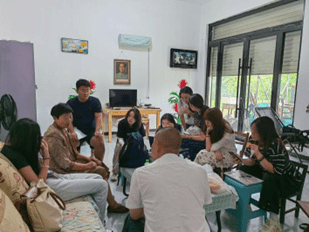
For other members, their introduction to Grameen came through casual conversations with friends even before they needed loans. As more village women joined the program, word about Grameen spread through daily interactions and chats. When financial needs eventually arose, Grameen became the natural solution for many women. When asked about her decision to join, Ms. Wang explained: “I needed money at the time, and I heard about Grameen from my friends, my neighbors, and the staff. That’s why I decided to join.”
This natural word-of-mouth endorsement – from trusted friends to neighbors, to Grameen representatives — is one of the key reasons that makes the bank a reliable choice for villagers.
Step 3: strengthening trust through frequent assistance from Grameen staff and other members
Trust is deepened and further developed through two ways. First, it is built through the frequent assistance that Grameen staff give to the community and potential members. These seemingly insignificant yet thoughtful acts, carried out over time, significantly strengthen emotional ties and mutual trust.
Both before the institution of the bank and during the search for members, Grameen employees have tackled community-wide issues that benefit the entire village, such as repairing public infrastructure. According to Ms. Liu, “Gao Zhan once helped install streetlights in Lukou Village, with him and his mother covering the entire 30,000 RMB installation cost and continuing to pay 30,000–40,000 RMB annually for electricity.” He also initiated and facilitated the construction of the village’s initial drainage system. Whether it be on purpose or not at those times, the actions of Grameen workers before they began inviting and attempting to convince individuals to join played an extremely significant role in building initial trust. This first impression also builds onto the aforementioned point about workers having strong connections with prospective members being a deciding factor when the latter decide to commit to the bank.
Subsequently, Grameen staff also address personal and family difficulties to reinforce trust within prospective members. Through frequent visits and regular assistance with household complications, employees prompt members to develop strong impressions and confidence in them. Both Ms. Liu and Ms. Wang reported that Mr. Liang, the Lukou Village Center Manager, aided them in mundane things like helping build restrooms and purchasing toilets. Ms.Wang remarked, “I’m very close with Mr. Liang and always call on him when I need help. When I was building a bathroom, I even asked him to fix the door.” Due to these actions, Grameen became the natural first choice for these women when they needed a loan. Its patient and authentic interactions, though seemingly minor, helped establish an initial impression of responsibility and genuineness in the minds of prospective members. This trust is ingrained into their consciousness and helps persuade the members to join when they are later introduced to the bank.
Second, the trust is built through the tight-knit community formed by Grameen’s small groups of five. The cross-member trust and exchanges of help fostered through Grameen’s platform often surpass the support and faith that these members have of their neighbors or other villagers. Ms. Wang shared that after weekly loan meetings, they “talk about farming, livestock, and even offer emotional support when needed. All the members are very friendly and considerate.”
Members also assist one another in their daily life. “When I didn’t know how to handle baby rabbits, another member of the group patiently taught me. When I was sick, she helped buy feed and carried it home for me,” said Ms. Wang; further, Ms. Liu once transferred 1,500 RMB to a fellow member struggling during an emergency without any hesitation. Both of these exemplify the sincere, genuine relationships that the members have built with each other. Thus, the weekly meetings serve not only as times to receive and repay loans, but also as gathering spaces for mutual aid and emotional support.
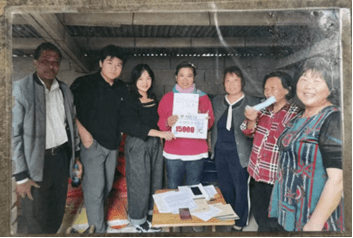
Many members described their group ties as deeper than those with friends, neighbors, or other villagers. One woman admitted, “I’m not that close to my neighbors. The members in my group of five are more dependable. I owe favors and have a strong sense of indebtedness when borrowing from my neighbors. It’s also not guaranteed that they will lend, and they often don’t open up or share information truthfully. The sisters in our group are willing to help repay loans when one of us struggles.” The five-member groups and weekly meetings help strengthen cross-member trust, something that is naturally transfered into faith in the system itself. This is because members often come to realize that Grameen bank is the most significant platform that helped initiate and cultivate these deep ties and relationships.
Conclusion
In essence, Grameen China has established and fortified trust in rural communities through long-lasting relationships, word-of-mouth referrals, and persistent outreaches or offerings of assistance.
Rome was not built in a day, and trust, too, does not grow overnight. It must be gradually developed, relying on years of dedicated visits from Grameen staff and the villagers’ own long-term observations and reflections. “Turning potential clients into actual members is a slow and careful process,” noted by one staff of Grameen China. “Sometimes, it takes four to six months just to form the first group.”
Yet that very patience results in profound rewards. Once the foundation for trust is established, the group formation process becomes more simple. “When people trust you [Grameen], they introduce you their friends. If the foundation is there, it can take as little as one month,” the staff said. Furthermore, Grameen China’s renewal rate stands impressively at 95%.
By weaving together staff commitment and the five-member groups, Grameen has successfully fostered a nurturing, secure environment—one in which villagers can share, support, and grow together. It is a testament to how, in any business environment, the quiet ripples of trust can sustain a vibrant, self-renewing ecosystem.
 Youth For SDG