Siqi Guo、Xiyue Deng、Liansong Wang、Ziyu Zhu
“The loan is just the medium; the aim is to change the quality of life.” – Muhammad Yunus
Imagine sitting in a bank, hopeful for a loan to start your first small business, yet every step forward feels like an uphill battle. Traditional banks often reject loan applications that lack collateral or a credit history – a harsh reality for many women in Bangladesh. They are often forced to turn to high-interest lenders, which only deepens their financial burden.
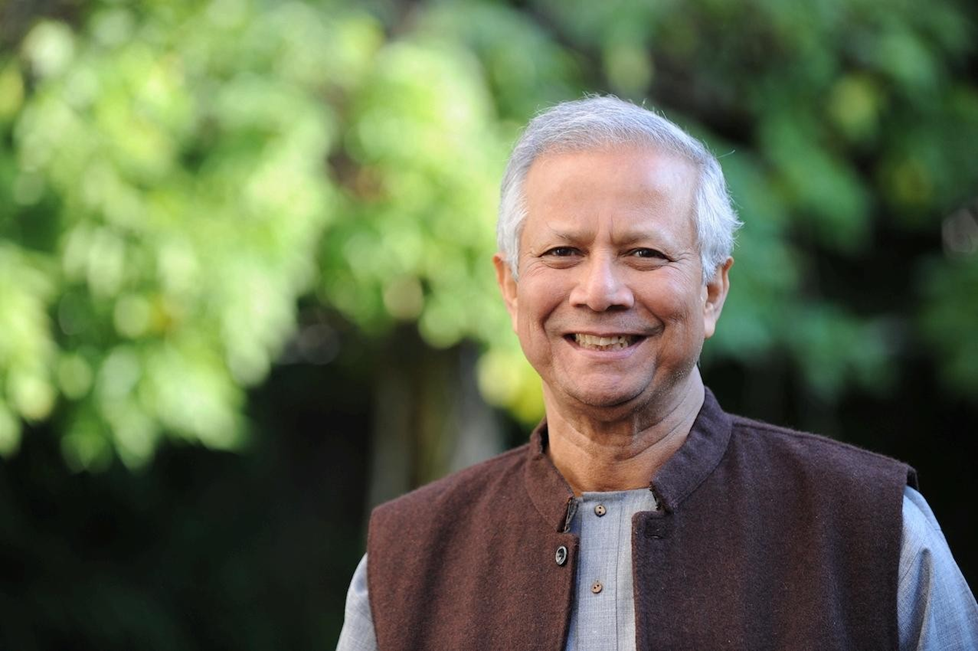
Source: Global Yunus Social Business
Grameen Bank was established to address this predicament. Founded by Nobel Laureate Muhammad Yunus in 1983, Grameen Bank is a microfinance institution in Bangladesh that serves impoverished women who lack financial understanding or access to traditional loans. By providing affordable financial services, Grameen aims to eliminate global poverty and empower the poor, particularly women.
To ensure repayment rates, Grameen Bank employs a unique community model known as the “mutual aid groups” (Yunus et al., 2010). Before officially joining Grameen, propsective members must form groups of five to eight people from their local communities who share similar socioeconomic backgrounds. These groups meet weekly to repay loans, exchange information and resources, and provide mutual emotional support. This structure not only reduces loan risks but also enhances borrowers’ sense of responsibility and belonging. The establishment and operation of these women’s mutual support groups provide members with a multifaceted support platform, enabling members to achieve economic independence, gain confidence, and actively participate in community lives.
Source: CHINA DEVELOPMENT BRIEF
Catalysts for Change: Economic Benefits of Grameen’s Mutual Aid Groups
The impact of women’s mutual aid groups on the economic aspect is profound and multifaceted. These groups empower women economically not only through financial support but also by promoting the sharing of valuable information among members.
Source: AFCA website
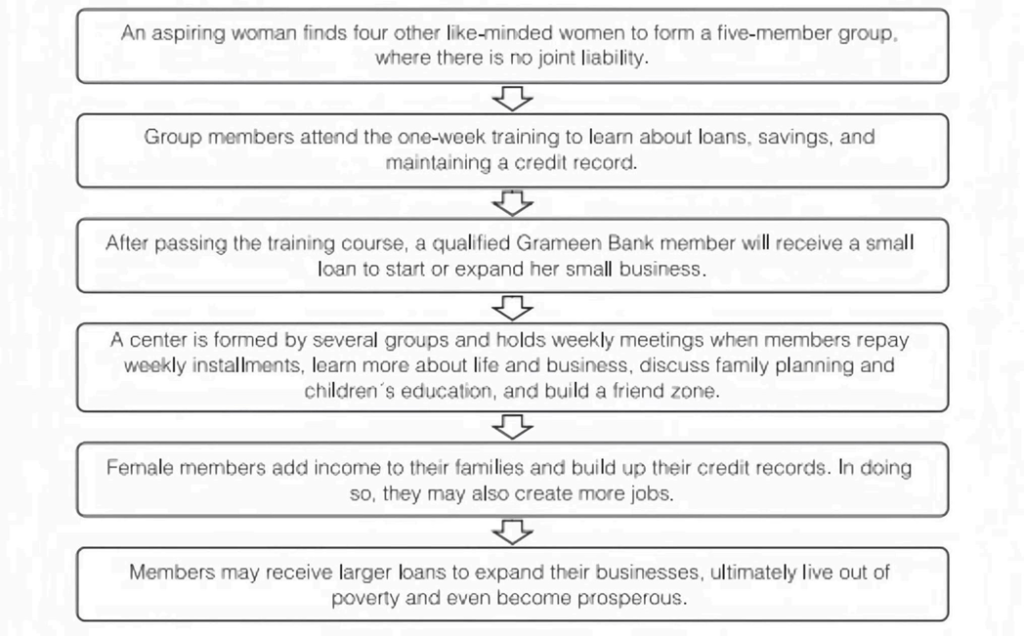
Firstly, in the Grameen model, forming mutual aid groups and receiving economic assistance is both necessary and beneficial. As shown in the graph, the five-member group is the basic unit for obtaining a loan. These groups ensure sustainability through mutual trust among their members. By adhering to a structured repayment and saving schedule, members may develop a long-term perspective on financial management. Strong bonds within the groups encourage members to supervise and support each other, ensuring timely repayments. This system of mutual accountability fosters financial discipline and enhances the overall effectiveness of the loans.
Moreover, active communication during weekly meetings is a cornerstone of these groups. These gatherings enable members to share valuable information and support each other’s businesses reciprocally. Ms. Li, for example, emphasized how the group’s members regularly share their working experiences and make use of such information. “If I knew a profitable business, I would recommend it to others.” This principle of mutual support strengthens the economic well-being of all members in the community. For example, Ms. Chen displayed her restaurant menu in the shops of fellow group members, which helped attract more customers to her business. Similarly, Ms. Li, who ran a foot massage shop, chose to purchase nutritious food from a fellow group member, supporting their business in return. By promoting each other’s ventures, they created a cycle of reciprocity, where everyone’s economic situation improved through collective effort.
Last but not least, women’s mutual aid groups provide crucial emergency financial support, which helps members navigate unforeseen financial challenges. Ms. Li recounted a time when a member’s daughter fell ill, and the group quickly pooled their resources to assist with medical expenses. Such solidarity ensures that members can help each other during crises. Ms. Chen also shared how the center manager of the group helped her negotiate a delay in repayment when she was short of money, demonstrating the compassionate support system within these groups. These financial safety nets are vital for maintaining stability and confidence among members, allowing them to continue their business activities without undue stress.
Empowered Minds: Psychological Boosts from Grameen’s Group Model
From a psychological aspect, women’s mutual aid groups significantly improve members’ sense of self- identity and self-efficacy, promoting their mental health.
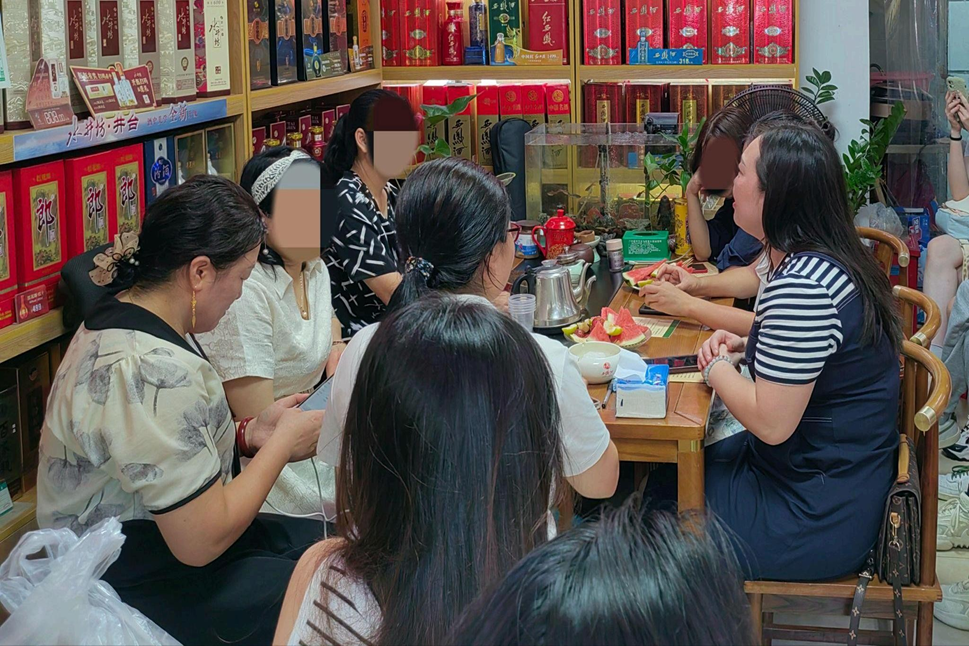
First, women’s mutual aid groups enhance members’ self-identity in multiple ways. Self-identity represents an individual’s understanding and acceptance of herself, which plays a vital role in mental health (Ellemers et al., 2002). Support groups offer additional business opportunities that encourage members to explore diverse social roles.This exploration leads to a deeper self-understanding and recognition beyond traditional roles. Particularly, Ms. Zhou, who previously identified only as a housewife, is now involved in stem cell beauty projects thanks to her group. If she didn’t know her fellow members, she would never do this job. According to her, having her own income alleviates her family’s financial burden and helps her realize her potential, boosting her confidence and gaining her husband’s support for her business.
Source: Yuanxingke Explorer
Second, group members take turns to be group leaders, which gives members a certain amount of power and enhances their self-efficacy (Paglis & Green, 2002). Self-efficacy refers to an individual’s belief in their ability to complete a task or deal with a certain situation. Group leaders coordinate activities, solve problems, and support members, demonstrating their abilities and talents. Specifically, according to Ms. Xia, one of the group leaders, “love and responsibility can boost my confidence.”
In addition, members often provide mutual support in daily life, such as advice on family matters, education, and health. A strong social support network has a positive impact on mental health, which can help individuals better cope with stress and difficulties, thereby reducing the occurrence of anxiety and depression (Strange et al., 2015). To be specific, Ms. Cai previously struggled with her husband’s unstable income, feeling depressed. However, after joining Grameen, members’ support has become her confidence and source of companionship in facing life challenges. when facing life changes, members’ support has become her confidence and source of companionship
Unity in Community: Social Bonds Forged by Support Groups
Women’s mutual aid support groups play a crucial role in creating social networks. Grameen’s group model facilitates frequent meetings and active communication, fostering a sense of community and trust among members. These interactions provide a platform for exchanging information, resources, and mutual support(Larance, 2001). Members discuss business progress, household affairs, and offer each other advice, enhancing both financial and emotional support.
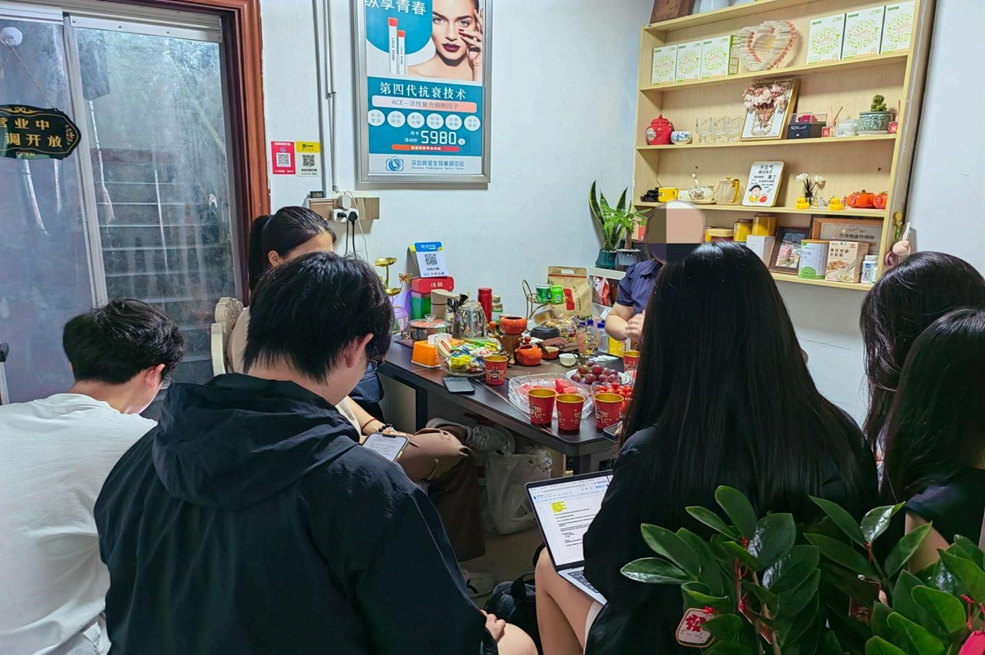
An experienced Grameen member, Ms. Zhou, serves as a prime example of how participation in these groups can significantly improve personal image and self-care practices. Before joining Grameen, Ms. Zhou did not prioritize skincare. She disliked beauty treatments, never applied sunscreen, did not use facial cleansers, and did not carry an umbrella when going out. However, after securing a loan from Grameen and joining a beauty company franchise, and through discussions within her mutual aid support group – many of whose members also worked in the beauty industry – she realized the importance of skincare. Group members, who had expertise in the beauty industry, shared their knowledge and practical advice on skincare. These exchanges were not merely superficial; they included detailed discussions on the effectiveness of their recent selling product, proper skincare routines, and the benefits of maintaining a good personal image. The regular communication about household affairs and life experiences helped her develop better social skills and establish a more polished personal presentation.
Source: Yuanxingke Explorer
More importantly, the support groups help newly joined workers adapt to the environment by expanding their social networks. Experienced members proactively assist new members, introducing them to others and helping them navigate through the community. For instance, during the initial stages of their involvement, expert members like Ms. Zeng often invited new members to informal gatherings such as lunches and work breaks, where they could meet and bond. New members thus feel welcomed and are provided with a crucial support network for opportunities and growth. Ms. Zhou also shared that during her child’s illness, support group members helped with daily tasks like cooking, offering invaluable support and warmth beyond what any other platform could provide. The strong connections formed within these groups create a supportive network that boosts their personal growth and empowers them to take on new challenges.
Furthermore, support groups organize various community activities, such as educational training and health lectures, which strengthen members’ connections and interactions in the Grameen community. For example, Grameen has organized a health awareness campaign where members participated in sessions about stem cell technology and health maintenance. This initiative provided valuable information and fostered a sense of unity and mutual support among the women. These activities enrich members’ lives and increase their participation and influence in the community.
In conclusion, by providing a platform for mutual support and knowledge exchange, women’s mutual aid groups enable women to enhance their businesses, strengthen their self-perception, and build resilient community networks.
As Manager Yin states, “I want to continue spreading this love in Shenzhen.” This sentiment summarizes the profound impact of Grameen Bank’s “Group of Five” model. Our vision is to extend this love globally and draw more attention to the Grameen model, especially in China. By highlighting its success, we aim to impart Grameen’s principles of economic empowerment and mutual support to wider audiences. We suggest that the model is an inspiration and a catalyst for change, fostering a world where financial inclusion and community solidarity are within everyone’s reach.
References
Ellemers, N., Spears, R., & Bertjan Doosje. (2002). Self and Social Identity. Annual Review of Psychology, 53( 1), 161–186. https://doi.org/ 10.1146/annurev.psych.53.100901.135228.
Gelaimin luodi Zhongguo de xianzhuang, tiaozhan, yu weilai [The current situation, challenges andfuture of Grameen in China]. (2023). Youth For SDG. https://youthforsdg.org/2023/11/12/grameen-bank/.
Grameen Bank. (2023). Stanford Graduate School ofBusiness. https://www.gsb.stanford.edu/faculty- research/case-studies/grameen-bank.
Larance, L. Y. (2001). Fostering social capital through NGO design. International Social Work, 44( 1), 7–18. https://doi.org/ 10.1177/002087280104400102.
Paglis, L. L., & Green, S. G. (2002). Leadership self-efficacy and managers’ motivation for leading change.
Journal of Organizational Behavior, 23(2), 215–235. https://doi.org/10.1002/job.137.
Strange, C., Bremner, A., Fisher, C., Howat, P., & Wood, L. (2015). Mothers’ group participation: associations with social capital, social support and mental well-being. Journal of Advanced Nursing, 72(1), 85–98. https://doi.org/ 10.1111/jan.12809.
The Microcredit Business Model of Grameen Bank-AFCA. (2020). Afca-Asia.org. http://www.afca- asia.org/Portal.do?method=detailView&returnChannelID=3&contentID=11 15.
Wakilur, R. M., & Luo, J. (2010). China: Comparing NGO-Type MFIs in Shaanxi, China, with Grameen Bank, Bangladesh. Ssrn.com. https://papers.ssrn.com/sol3/papers.cfm?abstract_id=2480939.
Yunus, M., Bertrand Moingeon, & Lehmann-Ortega, L. (2010). Building Social Business Models: Lessonsfrom the Grameen Experience. Long Range Planning, 43(2-3), 308–325. https://doi.org/10.1016/j.lrp.2009.12.005.
 Youth For SDG