He Yining, Liu Yu, Yu Youran
Recent data indicates a significant increase in community service participation among Chinese high school students, with volunteer enrollment numbers rising by 30% in the last five years. This surge reflects a shift towards a more socially responsible youth culture, highlighted by 70% of students in a nationwide survey expressing a keen interest in contributing to societal welfare. This enthusiasm for making a tangible difference signifies a positive change in youth social consciousness.
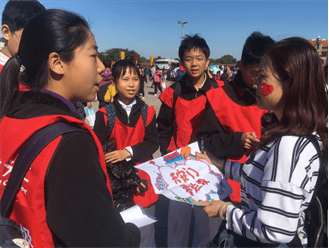
However, this enthusiasm has unveiled widespread misconceptions about community service, such as equating volunteer work with tourism-oriented activities (‘voluntourism’) and adopting a ‘savior complex.’ These misunderstandings misalign student perceptions with the core principles of authentic community engagement, potentially weakening the impact of their efforts and sometimes causing unintended harm.
This paper aims to reconcile students’ noble intentions with the realities of meaningful community service. By exploring the origins and effects of these misconceptions, we intend to elucidate the true essence of community engagement.
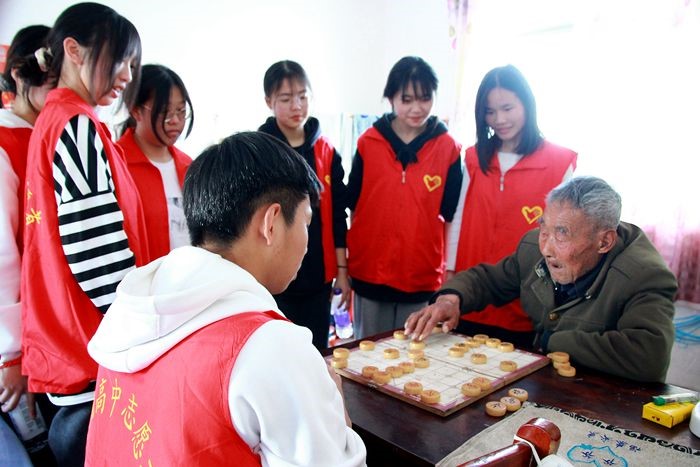
Correcting these misunderstandings is crucial. With proper knowledge and genuine motivation, student-led community services can bring about enduring positive change, nurturing a generation that is empathetic and socially conscious. This study intends to promote a more informed and effective approach to community service among high school students in China, thereby improving their societal contributions.
Methodology: Unpacking Misconceptions
To address the rising popularity and concurrent misconceptions of community service among Chinese high school students, our study was strategically designed to dissect and comprehend these misunderstandings. Through an extensive literature review, we pinpointed five key misconception areas as our research focus: 1) Volunteering vs. Voluntourism; 2) Savior Complex; 3) Underestimation of Research and Needs Assessment; 4) Career Opportunities in Philanthropy misconceptions; 5) Business-Philanthropy Relationship misunderstandings.
Our research employed a mixed-methods approach, blending qualitative and quantitative techniques to achieve a well-rounded understanding. This methodology enabled us to quantitatively measure students’ perceptions and qualitatively explore their misconceptions in depth.
The study first distributed a carefully crafted questionnaire to 105 high school students from diverse backgrounds, aiming to assess their views and misunderstandings about community service quantitatively. Based on their responses, participants were categorized into high and low understanding groups.
Subsequently, a subset of these students, representing both high and low understanding levels, was selected for qualitative in-depth interviews. This approach allowed us to gather a broad range of perspectives and insights. Through structured interviews, students shared their experiences and views on community service, shedding light on their personal misconceptions.
Findings and Analysis
Our study has revealed significant misconceptions about community service among Chinese high school students, highlighting critical gaps in understanding with far-reaching consequences. These misconceptions not only demonstrate a misunderstanding of volunteering and philanthropy’s nature and purpose but also pose challenges to effective community engagement among youth. Below, we delve into these findings and discuss their possible consequences.
Volunteering vs. Voluntourism Misconception
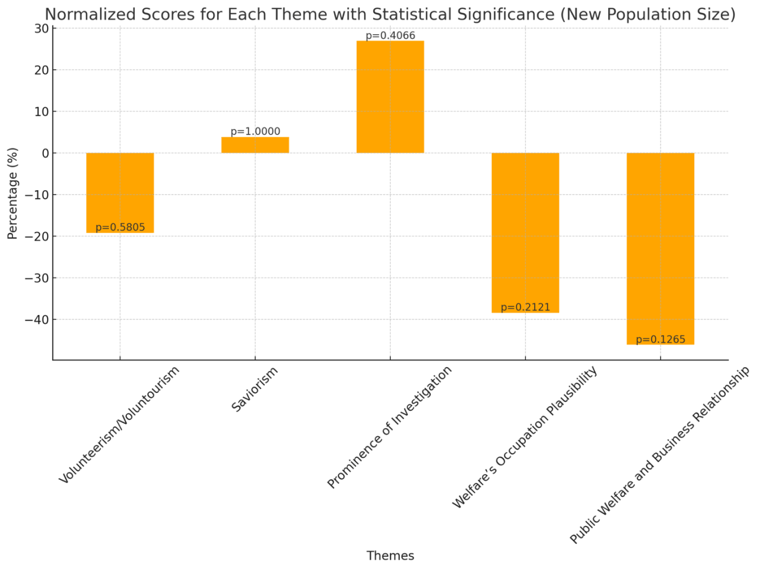
Approximately 80% of survey respondents displayed a misunderstanding of the key differences between genuine volunteering and voluntourism. Despite correctly answering the survey, 95% of interviewees were unable to articulate the distinctions between the two, often mistaking one for the other. Some participants had even engaged in short-term voluntourism projects in Africa, mistaking these experiences for volunteering.
Genuine volunteering involves selflessly dedicating time and resources to benefit others, without expecting any reward. In contrast, voluntourism combines volunteering with tourism, frequently prioritizing the volunteer’s experience over the actual needs of the community served.
This misunderstanding was exemplified when students participated in a supposed conservation project in Bali, Indonesia. Intending to help with sea turtle conservation, their lack of expertise inadvertently harmed the animals they aimed to protect. This contrasts sharply with genuine volunteering efforts, where projects are designed collaboratively with organizations to ensure sustainable and beneficial outcomes for the community.

The rise of corporate-driven voluntourism initiatives, marketed as charitable opportunities, has further blurred these lines. Often, these programs are more focused on profit generation than on providing genuine aid, repackaging tourism as altruistic work.
This confusion might lead students to choose projects based on personal or travel incentives, rather than on the basis of contributing to meaningful community service. Such misdirected resources could reinforce the support of voluntourism projects that offer minimal positive impact or even unintentionally harm the communities they intend to assist.
Savior Complex Misconception
Our study uncovered that approximately 74% of the students surveyed possess a limited understanding of the ‘savior complex,’ often failing to recognize its harmful implications. Among students who accurately responded to our survey, 80% significantly overestimate their contributions to volunteer efforts, characterized by brief engagements and a shallow understanding of the causes they support. This is frequently paired with an underlying sense of superiority towards the local communities they aim to assist.
The savior complex critically examines a mindset predominant among individuals from privileged backgrounds who aim to ‘help’ or ‘rescue’ those in less privileged communities. According to the data, this mindset is particularly common among students from urban, affluent regions such as Shanghai and Nanjing, who volunteer in Western China’s underdeveloped areas, like Gansu and Xinjiang. Here, volunteers not only participate but often assume a ‘savior’ identity, fully embracing their perceived role as benefactors. This behavior is not merely anecdotal but is substantiated by various behavioral and attitudinal indicators noted during and after their volunteer efforts.
This complex is often glamorized by media, simplifying the complex social, economic, and political challenges faced by these communities. Such oversimplification promotes the belief that goodwill alone can solve deep-rooted issues, fostering a patronizing attitude that overlooks global inequities, the origins of poverty, and the necessity for sustainable solutions. It ultimately undermines the capacity of local communities to address their challenges, diminishing genuine collaborative efforts for meaningful change.
Projects driven by the savior complex may inadvertently do more harm than good, overshadowing local initiatives with unsustainable solutions that fail to tackle the fundamental causes of the issues. Without sincere engagement and respect for local knowledge and leadership, these endeavors risk undermining local economies, disrupting social systems, and fostering dependency rather than empowering and encouraging self-sufficiency.
Importance of Research and Needs Assessment Misconception
Our research uncovers a troubling disregard among students for the critical role that research and needs assessment play in executing effective philanthropic projects. Notably, 68.57% of respondents underestimate or misunderstand the importance of these initial steps. And 90% of accurately responding students claiming they never conducted research to comprehend the actual needs or challenges of their target communities before or during community service.
Research and needs assessment are vital for making community service efforts relevant, effective, and sustainable. These involve gathering information about a community or specific issues to understand its needs, resources, and the potential impact of proposed activities.
The PlayPump water system serves as a stark example of the negative consequences stemming from inadequate research and needs assessment. Initially praised for its innovative approach to alleviating water scarcity in rural Africa by using children’s play to pump water, the PlayPump later encountered significant operational challenges. It proved less efficient than traditional hand pumps, required substantial maintenance, and imposed an unfair burden on children and elderly women. This case highlights the need for in-depth, context-specific needs assessments to ensure a project’s practical application meets its conceptual promise.

This misconception often arises from the impulsive pursuit of immediate results, aiming to address complex social problems with oversimplified solutions. This approach neglects the importance of detailed planning and research, potentially resulting in projects misaligned with the actual needs or capabilities of beneficiaries. Furthermore, a lack of awareness of the complex challenges faced by underserved communities contributes to the underestimation of comprehensive research and needs assessment essential for effective philanthropy.
Neglecting thorough research and needs assessment can divert valuable resources to projects that fail to address urgent needs or lack long-term sustainability. Such mistakes not only squander resources and efforts but may also aggravate existing problems or create new ones, doing more harm than good to the intended communities.
Job Opportunities-related Misconception in Philanthropy
Our study shows that 84.76% of students doubt the appeal and feasibility of philanthropy sector careers. Moreover, 98% of those who responded accurately to our survey believe that while working in the NGO sector is fulfilling, it offers lower salaries compared to corporate positions, which come with numerous benefits. Many also perceive a scarcity of career opportunities in the sector, viewing NGOs as suitable for part-time volunteering rather than full-time employment.
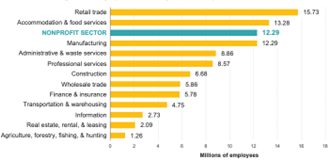
Contrary to these beliefs, charitable organizations operate similarly to corporates, with management, marketing, and recruitment departments, offering strong employment opportunities and competitive positions. “The 2019 Nonprofit Employment Report” analysis of U.S. labor data shows the nonprofit sector’s workforce grew by over 16% from 2007 to 2016. This growth positioned it as the third-largest employer in the U.S. Moreover, improvements in employment conditions within the sector have led to rewarding career prospects, effectively challenging and overturning previous negative stereotypes.
A key reason for this misconception is the societal and cultural emphasis on careers considered prestigious or high-paying, such as those in finance, technology, or medicine. This often reduces the perceived value of philanthropy work, ignoring its intrinsic rewards and significant societal impact. Moreover, there’s a common misunderstanding about the professional fulfillment and societal contribution non-profit careers can offer compared to for-profit ones, neglecting the essential role of non-profits and social initiatives in societal progress.
This undervaluation risks deterring students interested in societal improvement from philanthropy careers, potentially limiting the sector’s ability to innovate and effect social change. Without skilled and dedicated professionals, nonprofits might struggle to meet community needs and advance social progress.
Business and Philanthropy Connection Misconception
The prevalent skepticism among students regarding the interplay between business practices and public welfare—where 86.67% view this relationship with suspicion—highlights a widespread misunderstanding. Additionally, 60% of interviewed students believe that charity organizations should remain distant from businesses to preserve the purity of community-oriented initiatives. They argue that collaboration with corporations primarily serves the business’s mission and marketing objectives, rather than genuine philanthropic goals.
However, this view overlooks the importance of nonprofit and for-profit sector partnerships in achieving sustainable development. Nonprofits can benefit from adopting income-generating business models to ensure sustainability and growth beyond relying on donations. Increasingly, business-charity collaborations are emerging as potent forces for social impact. The Starbucks Ethos Water Fund exemplifies how companies can integrate philanthropic goals into their business strategies, using a portion of Ethos Water sales to improve children’s access to clean water, demonstrating a model that leverages business success for global good.

This misconception stems from dated stereotypes that categorize businesses as purely profit-driven, overlooking their potential societal contributions. The modern corporate landscape, with its emphasis on Corporate Social Responsibility (CSR) and social entrepreneurship, shows businesses incorporating social good into their essence. Yet, the lack of exposure to effective business-nonprofit models and successful partnerships exacerbates students’ misunderstanding. Without witnessing the impact of these collaborations, students might not see the crucial role businesses play in social change.
This perception risks undue skepticism, overshadowing the contributions businesses can make to philanthropy through innovation, resources, and networks. It also might block strategic alliances between nonprofits and businesses that could significantly boost social welfare efforts.
Understanding the Roots of Misconception
Our analysis of the misunderstandings about community service held by high school students reveals two main factors: the highly academic-focused nature of Chinese education and the dearth of practical community engagement opportunities. These elements significantly shape students’ perceptions and understanding of philanthropy and community service.
Academic-Focused Educational Practices
A primary factor in these misconceptions is the focus of Chinese educational systems on academics, often at the expense of including community service or philanthropy in the curriculum. This academic orientation means students receive little to no formal education about the values, ethics, and practicalities of engaging in community service. Consequently, students might leap into action without a foundational understanding of philanthropy’s broader societal implications. Integrating community service into the curriculum, emphasizing its ethical, societal, and strategic aspects, could cultivate a deeper, more nuanced understanding among students. Such an educational shift would encourage students to critically assess the role and impact of their community service efforts within a larger societal context.
Lack of Experiential Learning Opportunities:
Moreover, the scarcity of opportunities for in-depth experiential learning further hinders students’ ability to fully comprehend and engage with community service. Our findings highlight the importance of both the depth and duration of engagement in these activities. The prevalent model of short, sporadic participation fails to expose students to the complexities and nuances of effective philanthropy, limiting their understanding to a superficial level. On the other hand, providing sustained, meaningful opportunities for community engagement could allow students to witness firsthand the impact and significance of their contributions. Such experiences could deepen their appreciation for philanthropy, allowing them to see beyond immediate outcomes and understand the long-term benefits and challenges of community service.
Recommendations for Change
To rectify misconceptions about community service among high school students in China, a comprehensive strategy is needed. This strategy should focus on enriching the educational curriculum with detailed insights into philanthropy and amplifying engagement through practical, real-world experiences.
Embedding Community Service in Academic Curricula
- Integrate Community Service and Philanthropy Education: Revamp curricula to include comprehensive education on community service and philanthropy, covering the ethics, impact, and practices of philanthropic efforts, their historical importance, and volunteering ethics. Focus on the importance of sustainable initiatives and philanthropy’s socio-cultural aspects.
- Encourage Analytical Thinking and Reflection: Motivate students to deeply reflect and think critically about their community service participation. Use reflective journaling, classroom discussions, and feedback sessions to help students assess the broader effects of their activities, fostering personal and community growth.
- Introduce a Global Perspective: Incorporate global community service case studies and examples into the curriculum, providing insights into varied philanthropy approaches worldwide. This strategy aims to broaden students’ perspectives, challenge existing biases, and promote a globally inclusive view of community service.
Expanding Experiential Learning Opportunities
- Foster Long-term Engagement: Schools and community organizations are encouraged to offer more long-term community service projects. Such sustained involvement helps students witness the progressive impact of their efforts, thereby cultivating a deeper commitment to philanthropy.
- Diversify Community Service Opportunities: Enhance the variety of available community service projects to match different interests and capabilities, covering a broad spectrum of sectors and community needs. This diversity allows students to discover their passions and grasp the complex nature of community service.
- Build Partnerships with Local and Global Organizations: Form partnerships with non-profits, businesses, and educational bodies to enrich the community service experience. Collaborative projects introduce students to the challenges and teamwork required in addressing societal issues, emphasizing the value of multi-sector cooperation.
The prevailing misconceptions about community service among high school students in China significantly impact their participation and effectiveness. By reevaluating how community service is presented within educational frameworks, we can nurture a generation inclined towards meaningful engagement, driven by a desire to contribute positively to society. This shift necessitates viewing community service not as an optional activity but as an essential avenue for personal and societal improvement. Implementing reforms—integrating community service education into the curriculum, expanding practical engagement opportunities, and providing motivational support—can correct misconceptions. This approach aims to deepen students’ involvement in community service, benefiting both individuals and society.
References
- Coggins, C. (2020). What philanthropy can do now to promote education equity after the pandemic. The Thomas B. Fordham Institute. Retrieved from fordhaminstitute.org
- Graham, M. R. (2023). How Philanthropy Can Change the Landscape of Secondary Education. Mark R Graham. Retrieved from markrgraham.com
- Learning to Give. (n.d.). Teaching Philanthropy 101: A High School Course. Retrieved from learningtogive.org
- Mostafanezhad, M. (2013). The geography of compassion in volunteer tourism. Tourism Geographies, 15(2), 318-337.
- Sin, H. L. (2009). Volunteer Tourism—involve me and I will learn? Annals of Tourism Research, 36(3), 480-501.
- 黄金结. (2014). 谈大学生志愿者的救世主心态——基于对L县西部计划实施情况的调查. 江西师范大学学报:哲学社会科学版, 6, 25-29.
- Walsh, G. M. (2020). Challenging the Hero Narrative: Moving towards Reparational Citizenship Education. Societies, 10(2), 34.
- Forbes Nonprofit Council. (2022, February 8). 14 Common Misconceptions Holding Nonprofits Back. Forbes. https://www.forbes.com/sites/forbesnonprofitcouncil/2022/02/08/14-common-misconceptions-holding-nonprofits-back/?sh=39bb90566d22
- Seitanidi, M. M., & Crane, A. (2009). Implementing CSR through partnerships: Understanding the selection, design and institutionalisation of nonprofit-business partnerships. Journal of business ethics, 85(2), 413-429.
- Suárez, D. F. (2010). Collaboration and professionalization: The contours of public sector funding for nonprofit organizations. Journal of Public Administration Research and Theory, 21(2), 307–326.
- Salamon, L. M., & Newhouse, C. L. (2019). The 2019 Nonprofit employment report. Nonprofit Economic Bulletin, (47).
- McNeill, P. & Chapman, S. (2005). Research methods (3rd ed.). New York, NY: Routledge.
 Youth For SDG