俗话说,中国的金华,世界的义乌。
义乌是一座国际化、对外贸依存度高的城市。“在这里我们一般都是做外贸的,在东南亚及世界各地都有客户的。” 一位在义乌生活六年的老板说。
俗话说,中国的金华,世界的义乌。
义乌是一座国际化、对外贸依存度高的城市。“在这里我们一般都是做外贸的,在东南亚及世界各地都有客户的。” 一位在义乌生活六年的老板说。
“我们招的五十多个学徒,两三天以后,就剩下二三十个了。”吉伍五呷先生,一位彝族漆器非遗文化传承人紧皱着眉头,无奈地说。
Scott Montgomery, UCL Losing a parent during adolescence and young adulthood can be particularly damaging to mental health and wellbeing. Our latest research has now shown that young people who lost a parent were more likely to be admitted to hospital for treatment for substance misuse use problems or suicidal behaviour around the anniversary ofContinue reading “Drug misuse and suicidal behaviour more common on the anniversary of a parent’s death – new research”
Julia Schwarz, University of Cambridge While mask-wearing is no longer required in many locations, it remains in use as a way to limit the spread of COVID-19. One of the criticisms of masks has been that they make communication more difficult. A recent report by the UK Department for Education, for example, suggests that maskContinue reading “Face masks affect how children understand speech differently from adults – new research”
Paul Hunter, University of East Anglia The World Health Organisation (WHO) has declared the current monkeypox epidemic a global health emergency. The committee of independent advisers who met on Thursday July 21 2022, were split on their decision on whether to call the growing monkeypox outbreak a public health emergency of international concern (PHEIC) –Continue reading “Monkeypox: World Health Organization declares it a global health emergency – here’s what that means”
Helen Young, Deakin University When Mum was pregnant with me, Dad bought her a paperback copy of James Herriot’s All Creatures Great and Small because it was an easy, pleasant read. I read my mother’s Pan paperback copy, with its cover image of sheep, farmers, and the vet’s vintage car, when I was growing up.Continue reading “All Creatures Great and Small at 50: why these stories about a country vet still charm today”
Lorelle Holland, The University of Queensland and Maree Toombs, The University of Queensland In some Australian states, children can legally be detained from the age of ten years old. This has led to over-policing and over-incarceration of Aboriginal and Torres Strait Islander children. First Nations children represent 50% of youth incarcerated during 2021. Incarcerating childrenContinue reading “Raising the age of criminal responsibility is only a first step. First Nations kids need cultural solutions”
Caron Gentry, Northumbria University, Newcastle All too often, hope is equated to a desire for something fleeting: good results on an exam, the win of a favourite team, the wanted present. Quite whether something so insubstantial can actually be called “hope”, though, is a question that has taken on particular poignancy over the last twoContinue reading “Hope from despair: how young people are taking action to make things better”
Camille Khodor, The Conversation; Gemma Ware, The Conversation, and Thibault Lieurade, The Conversation As lockdown measures start to be eased in most countries around the world, the experts of The Conversation’s global network have focused this week on the major trends that are reshaping trade and the global economy. Just before the pandemic struck, theContinue reading “Coronavirus weekly: where next for globalisation after the crisis?”
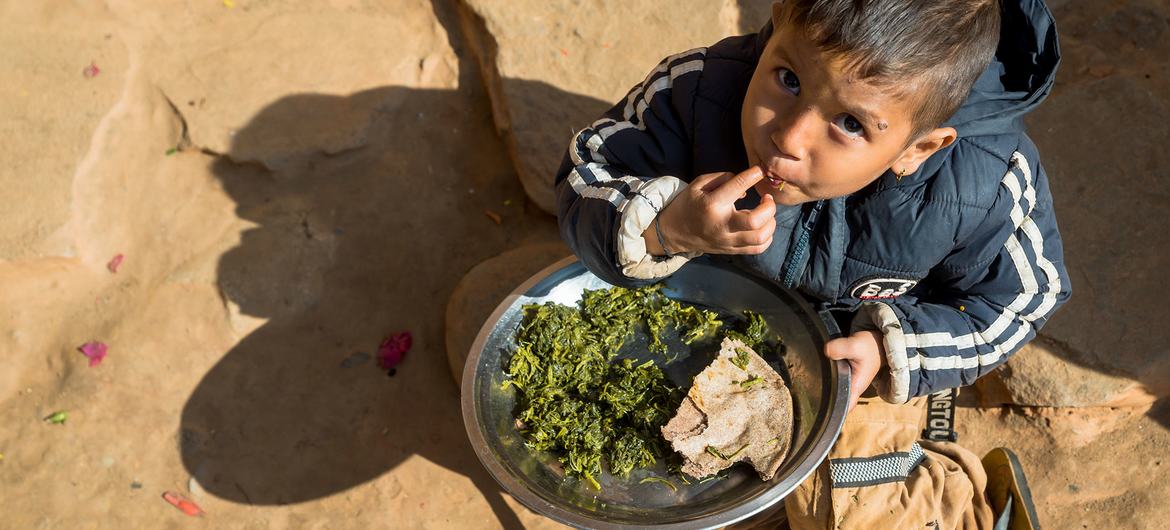
Ensuring everyone has access to a healthy diet is among the goals of a UN-backed initiative launched on Friday in line with efforts to transform food systems globally.
 Youth For SDG