“The dump killed my son,” Rammurti said.
Author Archives: youthforsdg
Treatment of wastewater in Nigeria’s oil fields is failing, raising the risk of health hazards
Kingsley Amakiri, University of Huddersfield People need both clean, safe water and sustainable energy. That means both resources must be properly managed. But when it comes to the oil and gas industries, there’s a problem. The water that comes out of the ground along with oil and gas during oil and gas exploration and productionContinue reading “Treatment of wastewater in Nigeria’s oil fields is failing, raising the risk of health hazards”
Climate change can be beaten – why some scientists are hopeful
Patrick Omeja, Makerere University; Abay Yimere, Tufts University; Desta Mebratu, Stellenbosch University, and Jennifer Fitchett, University of the Witwatersrand Can our planet recover from climate change? Commissioning Editor, Kofoworola Belo-Osagie, asked scientists to share the reasons they believe there is hope. Jennifer Fitchett, Associate Professor of Physical Geography, School of Geography, Archaeology and Environmental Studies,Continue reading “Climate change can be beaten – why some scientists are hopeful”
Community wildlife conservation isn’t always a win-win solution: the case of Kenya’s Samburu
Carolyn K. Lesorogol, Washington University in St Louis Community-based wildlife conservation is often promoted as a win-win solution. The idea behind this approach is that the people who live close to wildlife can be involved in protecting it and have an interest in doing so. This results in wildlife being protected (a win for globalContinue reading “Community wildlife conservation isn’t always a win-win solution: the case of Kenya’s Samburu”
Why is Grameen America Successful?
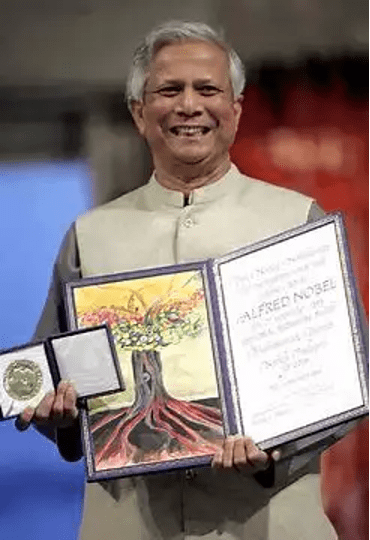
“Poverty does not belong in civilized human society. Its proper place is in a museum. That’s where it will be,” said Professor Muhammad Yunus, a Bangladeshi economist and founder of Grameen Bank.
Taxes on sugary beverages are not enough on their own to halt march of obesity in Asia
Asit K. Biswas, National University of Singapore and Kris Hartley, Cornell University Facing declining markets in Western countries, multinational food companies are targeting Africa, Asia, and Latin America as new consumers of packaged foods, in a move that may worsen the global epidemic of chronic illness related to diabetes. Governments are striking back at obesityContinue reading “Taxes on sugary beverages are not enough on their own to halt march of obesity in Asia”
Kyrgyzstan: migrant women workers and a ‘lost generation’ of children
Asel Murzakulova, University of Central Asia Dilya-eje, a secondary school teacher in the border village of Samarkandek, Kyrgyzstan, often visits the houses of her neighbourhood to record the children who should attend school the next year. She always indicates the status of their parents in her notebook. More than half of the parents are labelledContinue reading “Kyrgyzstan: migrant women workers and a ‘lost generation’ of children”
Underpaid at home, vulnerable abroad: how seasonal job schemes are draining Pacific nations of vital workers
Apisalome Movono, Massey University; Leilani Faaiuaso, and Regina Scheyvens, Massey University The economic impact of COVID on Pacific Island states, combined with major labour shortages in Australia and New Zealand, has created a perfect storm. A mass exodus means Pacific nations are now losing crucial workers at such volume that their own development prospects areContinue reading “Underpaid at home, vulnerable abroad: how seasonal job schemes are draining Pacific nations of vital workers”
Five options for restoring global biodiversity after the UN agreement
Henrik Svedäng, Stockholm University To slow and reverse the fastest loss of Earth’s living things since the dinosaurs, almost 200 countries have signed an agreement in Montreal, Canada, promising to live in harmony with nature by 2050. The Kunming-Montreal agreement is not legally binding but it will require signatories to report their progress towards meetingContinue reading “Five options for restoring global biodiversity after the UN agreement”
Avoiding climate breakdown depends on protecting Earth’s biodiversity – can the COP15 summit deliver?
Nathan Cooper, University of Waikato Thousands of delegates have gathered in Montreal, Canada, for a once-in-a-decade chance to address the accelerating pace of species loss and the dangers of ecosystem breakdown. COP15 brings together parties to the UN Convention on Biological Diversity (CBD) with a goal of negotiating this decade’s biodiversity targets and a newContinue reading “Avoiding climate breakdown depends on protecting Earth’s biodiversity – can the COP15 summit deliver?”
 Youth For SDG